Commercial Real Estate Investors Brace for a Rebound: Is 2026 the Turning Point?

Commercial real estate recovery image

The commercial real estate world has taken a beating over the past few years—pandemic disruption, remote work transitions, and unstable interest rates have kept investors cautious. Yet a new wave of optimism is taking shape, and many industry leaders believe 2026 may finally be the year the market stabilizes and accelerates again.

According to new insights highlighted by Chief Investment Officer, major investors are stepping back into the arena. Leasing activity is rising, confidence is rebuilding, and even the country’s toughest markets are beginning to turn the corner.

A Recovery Years in the Making

Joshua Scoville, Global Head of Research at Hines, notes that momentum is already in motion:

“2025 was shaping up to be the first year of a recovery… and I think in 2026, that uncertainty is in the rear-view mirror.”

He emphasizes that political turbulence—including tariff confusion—created hesitation but did not fundamentally weaken long‑term real estate demand. Even with the Supreme Court’s tariff reversal, investor confidence appears largely restored.

Investment Activity Is Climbing Again

CBRE projects commercial real estate investment to climb by an impressive 16%—reaching nearly $562 billion, approaching pre‑pandemic highs. The firm also recorded its strongest volume of new confidentiality agreements since 2022, a sign of investors preparing to re-enter the market aggressively.

Leasing is also expected to surpass 2019 rates as major tenants return with expiring leases and a renewed appetite for high‑quality space.

High‑Quality Space Takes Center Stage

“We’ve just lived through a nationwide repricing… That dislocation is ultimately what creates generational opportunity.”
—Chris Loeffler, CEO, Caliber Companies

Tenants are prioritizing modern, amenity‑rich, top‑tier properties—spaces that align with reimagined workplace strategies. Manhattan currently leads the rebound, while cities like San Francisco appear to be 12–18 months behind. Other major metros—Chicago, Los Angeles, Denver, and Seattle—continue to stabilize slowly.

Colliers also notes that AI‑driven industries are fueling leasing surges in the Bay Area, helping accelerate that region’s long-awaited rebound.

Vacancy Rates Are Finally Falling

Colliers forecasts U.S. vacancy rates to drop below 18% by the end of the year. While still above the pre‑COVID benchmark of 13%, this shift suggests tightening conditions, especially as new construction slows and demand concentrates in high‑quality, existing spaces.

Suburban markets in particular appear poised for strong performance—especially those offering a blend of convenience, quality, and thoughtful amenities.

“In 2026, the opportunity is less about ‘office is back’ and more about the best office winning.”
—Eric Hochman, CIO, PEBB Enterprises

Why This Matters for Real Estate Professionals

For investors, brokers, property managers, and aspiring agents, this emerging rebound represents a once‑in‑a‑decade opportunity. Those who stay proactive, informed, and credentialed will be best equipped to benefit from the next major cycle.

If you’re pursuing or upgrading your real estate license—or expanding into mortgage, insurance, or other professional fields—Cameron Academy is here to help you stay ahead. With flexible online licensing programs across all 50 states, it’s never been easier to elevate your career while the market rebounds.

Explore the Full Report

To dive deeper into the analysis, visit the original source:

More Articles

Getting licensed or staying ahead in your career can be a journey—but it doesn’t have to be overwhelming. Grab your favorite coffee or tea, take a moment to relax, and browse through our articles. Whether you’re just starting out or renewing your expertise, we’ve got tips, insights, and advice to keep you moving forward. Here’s to your success—one sip and one step at a time!

Artificial Intelligence in Diagnostics: A Revolution in Healthcare

The global market for artificial intelligence in diagnostics is poised for remarkable growth, with projections estimating it to reach USD 7.3 billion by 2032.

By |December 10, 2024|Categories: Article, Artificial Intelligence, Healthcare|Tags: , |0 Comments

Revolutionizing Medical Education with Extended Reality

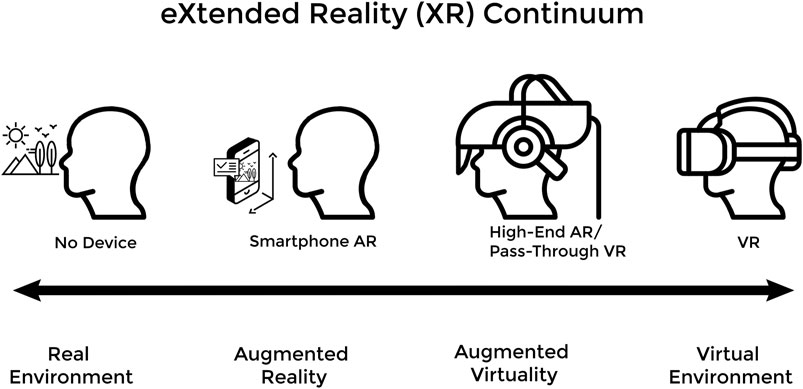
In the ever-evolving landscape of medical education, a new player has emerged, promising to revolutionize the way future doctors are trained. The integration of eXtended Reality (XR) technologies is reshaping the educational landscape by addressing the limitations of traditional methods.

Genetic Testing: A New Dawn in Healthcare

Genetic testing represents more than just a scientific advancement; it signifies a fundamental shift in how we approach health and wellness.

Sustainable Architecture: Blending Innovation with Ecological Responsibility

The journey toward sustainable architecture is ongoing, with each project serving as a beacon of what's achievable when creativity meets ecological awareness.

By |December 9, 2024|Categories: Architecture, Article, Sustainability|Tags: |0 Comments

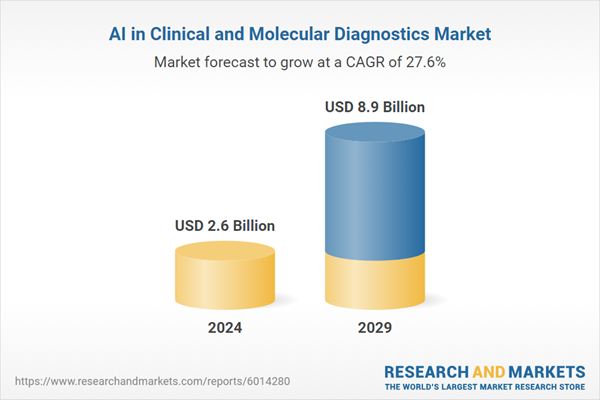
AI in Clinical and Molecular Diagnostics: A Market on the Rise

AI in Clinical and Molecular Diagnostics Market is set to experience remarkable growth, projected to surge from USD 2.6 billion in 2024 to USD 8.9 billion by 2029. This growth is driven by the integration of advanced AI technologies such as machine learning and deep learning into traditional diagnostic methodologies like imaging, genomics, and laboratory testing.

AI: A Revolution in Healthcare’s Future

AI is not a distant dream but a present reality, already integrated into everyday life through virtual assistants like Alexa and Siri. AI shows promise in enhancing medical accuracy, such as in predicting mesothelioma survival and improving colonoscopy accuracy, it is not intended to replace healthcare professionals.