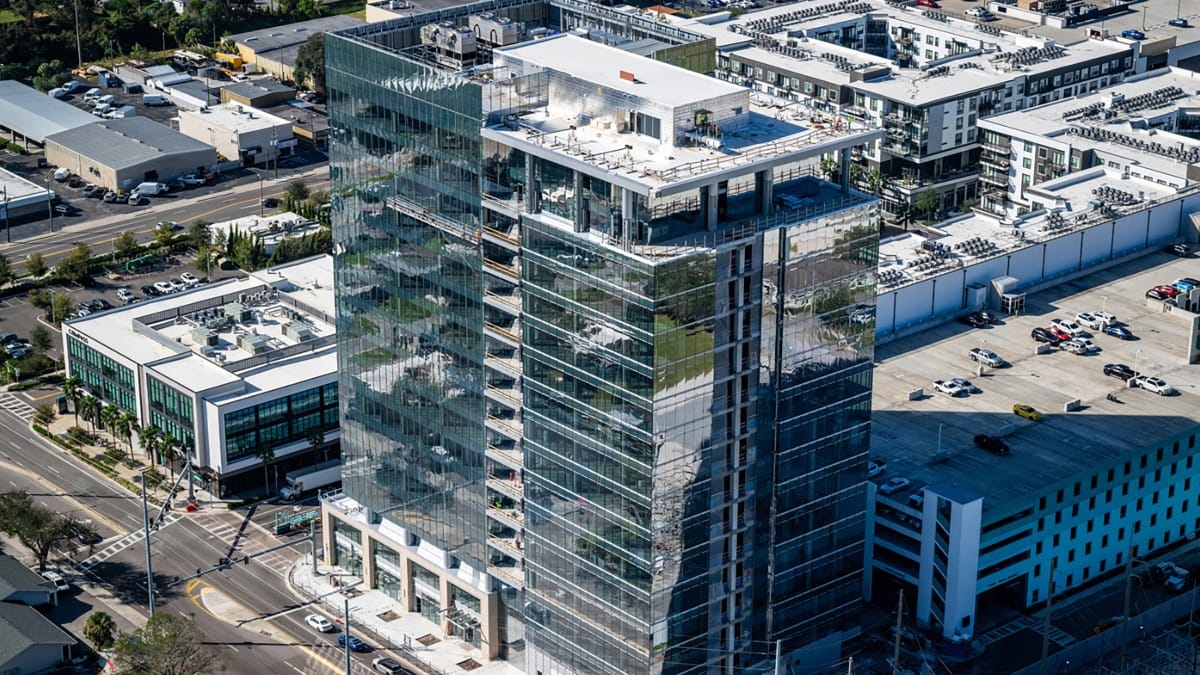
Confidence Returns to Phoenix’s Commercial Real Estate Market

Phoenix skyline at sunset

After a stretch of economic uncertainty, the Phoenix commercial real estate sector is showing strong signs of renewed confidence — and the data backs it up. The latest Commercial Broker Sentiment Index (CBSI) from Arizona State University’s Center for Real Estate and Finance has posted an impressive reading of 62.7, the highest optimism level local brokers have recorded since interest rates began climbing years ago.

Source Spotlight

This article draws inspiration from AZ Big Media’s insightful coverage of Phoenix’s rising commercial real estate confidence. Explore the original source at:

AZ Big Media – Phoenix CRE Confidence

The CBSI acts as a forward‑looking indicator of what may unfold over the next six months. A score above 50 reflects industry optimism — and Phoenix professionals have soared past that threshold with strength. For context, the index barely stayed above 30 in late 2022. With confidence climbing steadily for two years, Phoenix is entering an exciting new phase heading into 2026.

What’s Driving the Market?

ASU’s Center for Real Estate and Finance, part of the prestigious W. P. Carey School of Business, stands at the forefront of analyzing shifting market forces. Executive Director Tom Johnston highlights how the center serves as a bridge between students, seasoned experts, and the wider business community — delivering research, education, and industry engagement.

This year’s survey expanded to include seven asset classes, bringing more depth than ever before. Brokers across the Valley report:

Quick Market Takeaways

Multifamily: affordability pressures persist, but long‑term demand stays strong.
Retail: thriving due to years of underbuilding and fast lease‑ups.
Class A Office: outperforming older, less‑updated buildings.
Capital Markets: improving thanks to easing interest rates and compressed lending spreads.

AI, Interest Rates, and Economic Momentum

Professionals are keeping a close eye on broader economic trends. Interest rates are beginning to ease, unlocking deal flow that had stalled. Meanwhile, artificial intelligence continues reshaping the industry, improving research, analytics, and operational efficiency.

Even with lingering concerns — regulation, tariffs, and corporate layoffs — Phoenix’s rapid population growth and diverse economy provide a strong foundation for continued expansion.

What Phoenix’s Future Might Look Like

With the metro expected to welcome more than 1 million new residents in the next 15 years, the question is no longer whether Phoenix will grow, but how. Johnston points to critical factors: water, infrastructure, land management, and environmental impact — all shaping the region’s future development.

Major players in manufacturing and technology continue investing heavily in the Valley, fueling job growth and demand for housing, retail, and services. From the East Valley to downtown, momentum remains unmistakably strong.

What This Means for Real Estate Professionals

Whether you’re a broker, developer, investor, or someone aspiring to join the industry, Phoenix’s renewed commercial energy offers opportunities across nearly every asset class. This rebound in confidence signals a market worth watching — and worth participating in.

For professionals advancing or starting their careers, strong market cycles highlight the importance of quality education. If you’re in Florida exploring real estate, mortgage, insurance, or other licensing paths, Cameron Academy provides flexible, career‑driven training designed for both emerging and experienced professionals.


More Articles

Getting licensed or staying ahead in your career can be a journey—but it doesn’t have to be overwhelming. Grab your favorite coffee or tea, take a moment to relax, and browse through our articles. Whether you’re just starting out or renewing your expertise, we’ve got tips, insights, and advice to keep you moving forward. Here’s to your success—one sip and one step at a time!

Florida Judge Reopens Hundreds of Citizens Insurance Disputes, Triggering Statewide Arbitration Shake‑Up

A Leon County judge has ordered Florida’s administrative courts to restart arbitration on more than 400 stalled Citizens Insurance cases, reigniting a legal showdown over whether the state’s insurer of last resort can force policyholders out of traditional courtrooms. The ruling directly conflicts with a separate Hillsborough County injunction that called Citizens’ arbitration system “likely unconstitutional,” setting up a rare judicial clash that could reshape how Floridians fight denied or underpaid property claims.

Inhabit Unveils Cutting‑Edge AI, Fraud Prevention, and Compliance Tech Set to Transform Property Management in 2025

Inhabit has launched a powerful new suite of AI‑driven tools designed to modernize leasing, strengthen fraud prevention, and simplify compliance for property managers nationwide. From advanced leasing assistants and NYC‑specific regulatory AI to instant income verification and upcoming identity‑screening tech, these innovations aim to solve some of the industry’s toughest challenges. Real estate professionals—especially in multifamily—can expect faster operations, stronger safeguards, and a more efficient workflow as these technologies roll out.

The Coming Housing Surplus: How Baby Boomer Demographics Could Reshape the Real Estate Market

A growing body of demographic research suggests that today’s housing shortage may give way to a future surplus as millions of Baby Boomer–owned homes return to the market over the next two decades. With affordability at historic lows and inventory still tight, this long‑term shift could eventually cool prices and transform the landscape for real estate professionals. The analysis draws parallels to aging populations abroad and highlights why understanding demographic cycles is becoming essential knowledge for agents, brokers, and mortgage professionals preparing for the next era of the housing market.

Griffin Funding Elevates John Jones to SVP of Growth as Lender Targets $3B in Non‑QM Volume

Griffin Funding has appointed John Jones as Senior Vice President of Growth and EOS Integrator, a move aimed at accelerating the lender’s push toward $3 billion in annual non‑QM loan volume by 2030. Jones, previously the company’s fractional integrator and COO, will lead expansion strategies, operational optimization, and leadership development as the lender strengthens its position in the increasingly competitive non‑QM market.

Tampa Defies National Real Estate Slowdown With Nearly 20% Stronger Multifamily Returns

A new report shows Tampa outperforming the national real estate slowdown with a 6.5 percent annualized multifamily return, nearly 20 percent higher than the U.S. average. While many metros face oversupply or regulatory drag, Tampa’s balanced development pipeline, strong population growth, and investor confidence continue to fuel resilient performance heading into 2026.

Global Investors Are Re‑Entering the Market—and Their Next Moves Could Reshape 2026

A new Colliers outlook reveals that global capital is picking up momentum again, with investors shifting toward more active, hands‑on strategies. Data centers are surging, offices are rebounding, and value‑add plays like adaptive reuse are defining the next wave of opportunity. Regional markets—from the U.S. to APAC—are seeing renewed demand as fundraising spreads across continents and investors seek speed, control, and scale. This snapshot helps today’s real estate and finance professionals stay aligned with where global money is moving next.