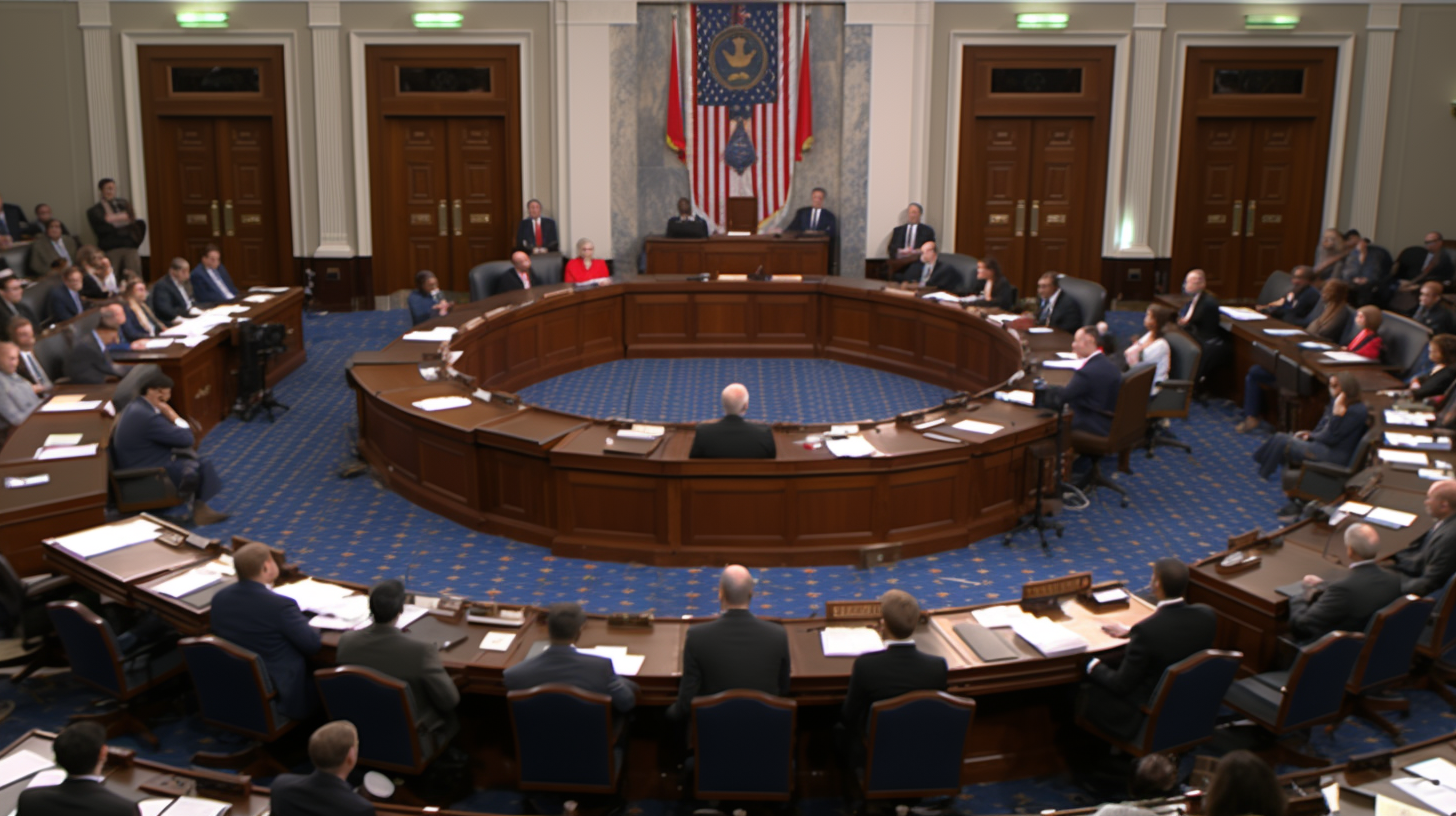
In a concerted effort to address the pressing housing crisis in the United States, Congress is demonstrating robust support for increased federal funding for the Housing Choice Voucher program, commonly known as Section 8. This initiative is the nation’s largest rental assistance program, providing essential support to low-income families, enabling them to afford modest housing in the private market. As the 2025 appropriations bills are being finalized, the urgency to prioritize housing assistance funding is more critical than ever. Currently, the stopgap funding measure is set to expire on March 14. Without an increase in funding, nearly 283,000 households, or approximately 645,000 people, could lose access to housing vouchers. This potential cut would mark the deepest in the program’s history, potentially leading to many families losing their homes. The Senate Appropriations Committee has already passed a bill with bipartisan support that seeks to increase funding above the 2024 level. However, due to rapidly rising housing costs, the proposed increase may still fall short, potentially affecting around 62,000 households. Affordable housing remains a basic human need, and research underscores the vital role of housing vouchers and rental assistance in preventing homelessness and housing instability. Despite this, only about a quarter of the families in need currently receive assistance due to underfunding. Full Article: To Better Meet Record Levels of Need, Keep Families Housed, Congress Must Increase 2025 Funding for Housing Assistance

The Choice in Affordable Housing Act: A Legislative Milestone

In a significant bipartisan effort, U.S. Senators Chris Coons (D-Del.) and Kevin Cramer (R-N.D.) have introduced the Choice in Affordable Housing Act. This legislation aims to streamline access to Housing Choice Vouchers and incentivize landlords to participate in the program. The bill, introduced in the House by Representatives Emanuel Cleaver (D-Mo.) and Mike Lawler (D-N.Y.), marks a continuation of efforts from the 117th Congress. Full Article Senator Coons emphasizes the transformative impact of secure, affordable housing on families, stating, “Families in the First State and across the nation need better options when they are looking for a home, and landlords need support to be able to bring their properties into the Section 8 market.” Senator Cramer highlights the pressing issue of rising housing costs, which has made it challenging for millions of renters to secure affordable housing, stating, “The success of the Housing Choice Voucher program is contingent on landlords providing adequate housing options.”

Key Provisions of the Choice in Affordable Housing Act:

  • Creation of the Herschel Lashkowitz Housing Partnership Fund: This fund, with an allocation of $500 million, will support Public Housing Agencies (PHAs) in offering signing bonuses to landlords in low-poverty areas, provide security deposit assistance, and retain dedicated landlord liaisons.
  • Increased Funding for Tribal HUD-Veterans Affairs Supportive Housing (VASH) Program: This provision aims to assist Native American veterans who are homeless or at risk of homelessness.
  • Fair Rent Calculations: The bill mandates the use of Small Area Fair Market Rents to ensure equitable rent calculations in specific metro areas.
  • Reduction of Inspection Delays: The bill proposes that units funded by other federal housing programs meet voucher inspection requirements if inspected within the past year.
  • Reform of HUD’s Evaluation Process: The bill encourages HUD to diversify neighborhoods where vouchers are used and mandates annual reports to Congress on the bill’s impacts.
Bill Summary The legislation has garnered support from a wide range of housing organizations, including the National Affordable Housing Management Association, the National Low Income Housing Coalition, and the National Apartment Association. Bob Pinnegar, President & CEO of the National Apartment Association, expresses readiness to collaborate with Congress to reform the program.

Addressing the Affordable Housing Crisis

In light of recent Republican budget proposals threatening to cut funding for housing vouchers, Congress’s renewed support for Section 8 is a crucial step toward ensuring more families can afford stable housing. Federal rental assistance currently plays a vital role in making housing affordable for over 10 million people, including nearly 3.3 million children, 2.6 million people with disabilities, and 2.1 million older adults. This assistance significantly reduces homelessness and other hardships, lifting close to 3 million people above the poverty line. Despite its proven benefits, inadequate funding means that only 1 in 4 low-income renters actually receive the federal rental assistance they need. By increasing federal funding, Congress aims to ensure that more families can afford stable housing, ultimately working towards a program that guarantees assistance to every low-income individual in need. Housing Choice Voucher Program Overview By reinforcing support for Section 8 and other housing assistance programs, Congress is taking a crucial step toward reducing poverty and homelessness, promoting fair housing opportunities, and fostering healthier, more equitable communities.

Conclusion

Congress’s support for increased federal funding for Section 8 is a pivotal move towards keeping families housed and addressing the nation’s housing crisis. Moving forward, it is essential for Congress to ensure that all people with low incomes who need rental assistance receive it, thereby preventing further deepening of housing inequities. The collaborative efforts between lawmakers and housing organizations reflect a commitment to transforming the landscape of affordable housing in the United States. Senate Appropriations Bill Analysis CBPP Article on Federal Funding and Housing Assistance

More Articles

Getting licensed or staying ahead in your career can be a journey—but it doesn’t have to be overwhelming. Grab your favorite coffee or tea, take a moment to relax, and browse through our articles. Whether you’re just starting out or renewing your expertise, we’ve got tips, insights, and advice to keep you moving forward. Here’s to your success—one sip and one step at a time!

New Policy by REBNY Mandates Direct Payment to Buyer’s Agent

The Real Estate Board of New York (REBNY) has announced a new policy requiring sellers to directly pay the buyer's agent, effective from January 1. This significant shift aims to enhance transparency and address potential conflicts of interest in real estate transactions. The policy comes amidst ongoing lawsuits related to commission sharing and allegations of unethical practices. The implementation of this policy is expected to impact the real estate industry significantly, with sellers needing to factor in the cost of the buyer's agent commission when pricing their properties.

By |October 27, 2023|Categories: Real Estate Policy|Tags: |0 Comments

Senate Decision Sparks Controversy Over Small Business Lending

In a significant development, the U.S. Senate has voted to block the implementation of the Consumer Financial Protection Bureau's (CFPB) small business lending rule. This decision has sparked a heated debate over the impact it may have on small businesses across the country. President Biden, in response, has threatened to veto the Senate's decision, emphasizing his commitment to fair lending practices and supporting small businesses. The CFPB's rule, implemented in October 2020, requires lenders to collect and report data on small business lending. This includes information on the race, sex, and ethnicity of borrowers, with the aim of identifying and addressing potential disparities in access to credit for minority-owned and women-owned small businesses. The Senate's decision to block the CFPB's rule has been celebrated by small business advocates and industry groups critical of the CFPB's regulatory approach. However, the implications of this decision remain uncertain, as President Biden's threatened veto looms large.

By |October 26, 2023|Categories: Small Business Lending|Tags: |0 Comments

Assessing the Merits of Class-Action Commission Lawsuits

The world of real estate has recently been shaken by a wave of class-action commission lawsuits, sparking a contentious debate. These lawsuits demand scrutiny to understand their implications and validity. A primary counter-argument is the freedom of consumer choice. In today's digital age, potential buyers and sellers have access to a wealth of online resources, enabling them to undertake real estate transactions independently. Another critical factor is the negotiability of commissions in the real estate sector. Commission rates are not fixed, they are subject to negotiation between the agent and the client. This flexibility allows for open discussions, leading to mutually agreeable terms. Despite the emergence of discount brokerage firms, consumers continue to place their trust in traditional real estate agents. This preference stems not only from cost considerations but also from the value of expertise, guidance, and personalized service that agents offer. Real estate transactions are complex and often involve significant financial investments. Trusted agents provide invaluable insights, market knowledge, and negotiation skills, helping clients make informed decisions and navigate potential challenges confidently.

Understanding the Current Housing Market: The Affordability of the Typical US Home

In the last two years, the housing market has seen a dramatic shift. Soaring mortgage rates and rising home prices have led to the fastest erosion in housing market affordability in modern history, with first-time homebuyers feeling the impact the most. The housing market has undergone significant changes over the past two years, leading to a substantial increase in the income required to purchase a median-priced home. According to recent data from Redfin, a homebuyer must now earn $114,627 to afford the typical U.S. home. This is a 15% increase from the previous year and more than 50% higher than pre-pandemic levels.

Unwavering New Listings Data Amid 8% Mortgage Rates

The housing market has shown remarkable resilience in the face of rising mortgage rates. Despite rates reaching 8%, new listings data remains steady, indicating a healthy supply of homes for sale. This stability is a positive sign for both buyers and sellers, demonstrating the strength of the housing market. Despite the increase in mortgage rates, sellers in the housing market have maintained their confidence. This confidence is reflected in the steady new listing data, as sellers continue to list their properties without hesitation. It indicates that sellers believe there is still strong demand from buyers and that the potential financial impact of higher mortgage rates does not outweigh the benefits of selling their homes.

Revolution in the Real Estate Industry: New Requirement for Sellers to Compensate Buyers’ Agents

The Real Estate Board of New York (REBNY) has introduced a groundbreaking requirement for sellers to directly compensate buyers' agents. This significant change has the potential to transform the real estate industry, eliminating conflicts of interest and promoting a more client-centric approach. This shift in the compensation landscape aims to create a more transparent and trustworthy environment for buyers. Moreover, this shift towards a client-centric approach aligns with the mission and values of Cameron Academy. As a leading provider of real estate education, Cameron Academy is committed to empowering professionals to navigate the evolving industry landscape and prioritize the best interests of their clients.

By |October 25, 2023|Categories: Real Estate Industry|Tags: |0 Comments