In the unfolding saga of cryptocurrency regulation, 2025 marks a pivotal year as the United States grapples with the challenges of integrating digital assets into its legal framework. The National Law Review’s recent article, “Crypto in the Courts: Five Cases Reshaping Digital Asset Regulation in 2025,” highlights five landmark cases that could redefine the landscape of digital asset regulation.

The legal battles are centered around the application of the Howey test, a longstanding legal precedent used to determine whether certain transactions qualify as investment contracts. This test is at the heart of the SEC v. Ripple Labs, Inc. case, where the SEC has accused Ripple of conducting unregistered securities offerings through the sale of XRP tokens. The district court’s decision to distinguish between institutional and programmatic sales of XRP could significantly impact the SEC’s enforcement strategy.

In a parallel development, the SEC v. Coinbase, Inc. case challenges the SEC’s authority over digital asset exchanges. The court’s certification for interlocutory appeal allows the Second Circuit to address the application of the Howey test to secondary market transactions, a critical issue that could reshape the regulatory obligations of trading platforms.

Meanwhile, the blockchain industry is pushing back against new IRS regulations through the Blockchain Association v. IRS case. The plaintiffs argue that the Treasury’s expanded definition of “broker” exceeds statutory authority, posing existential threats to DeFi participants who may find compliance impractical or impossible.

Adding to the complexity, Bitnomial Exchange, LLC v. SEC represents a direct challenge to the SEC’s oversight of cryptoasset security futures. The outcome of this case could determine the jurisdictional boundaries between the SEC and the CFTC, affecting how digital asset futures are traded in the U.S.

Lastly, the collective lawsuit Kentucky et al. v. SEC brings together 18 states in a challenge against the SEC’s regulatory reach over digital asset trading platforms. This case underscores the tension between federal and state regulatory frameworks, with states arguing that the SEC’s approach undermines their tailored crypto regulations.

These cases are unfolding against a backdrop of anticipated regulatory shifts under the Trump administration, which has signaled a more pro-crypto stance. President Donald Trump’s nomination of Paul Atkins as the next SEC chairperson reflects a strategic pivot towards innovation-friendly policies. As these legal battles progress, they promise to define the future of digital asset regulation in the United States.

For more detailed insights, you can read the full article on the National Law Review website.

More Articles

Getting licensed or staying ahead in your career can be a journey—but it doesn’t have to be overwhelming. Grab your favorite coffee or tea, take a moment to relax, and browse through our articles. Whether you’re just starting out or renewing your expertise, we’ve got tips, insights, and advice to keep you moving forward. Here’s to your success—one sip and one step at a time!

Massachusetts Investment Firm Makes Strategic Move Into Connecticut With $3.65M Red Robin-Anchored Purchase

Newman Properties, a Massachusetts-based investment firm, has expanded its footprint into Connecticut with the $3.65 million acquisition of a 6,350‑square‑foot retail building in Enfield. Anchored by national restaurant chain Red Robin, the property offers the type of stable tenancy investors seek when entering new markets. The deal underscores growing confidence in anchored retail assets and provides a valuable real-world example for real estate professionals studying market analysis, investment strategy, and portfolio expansion.

JPMorgan Flags a Sunbelt Slowdown as Florida and Texas See Sharp Home Price Drops

JPMorgan now expects national home prices to flatten in 2026, but the Sunbelt is telling a very different story. Florida home values are down 5.1%, Texas is down 2.4%, and analysts warn that years of rapid building are finally catching up to the region. As demand stabilizes and inventory swells, real estate professionals — especially in Florida — face a market full of challenges, opportunities, and critical timing decisions.

AI Is Reshaping Mortgage Underwriting in 2026 as Industry Pros Brace for Major Change

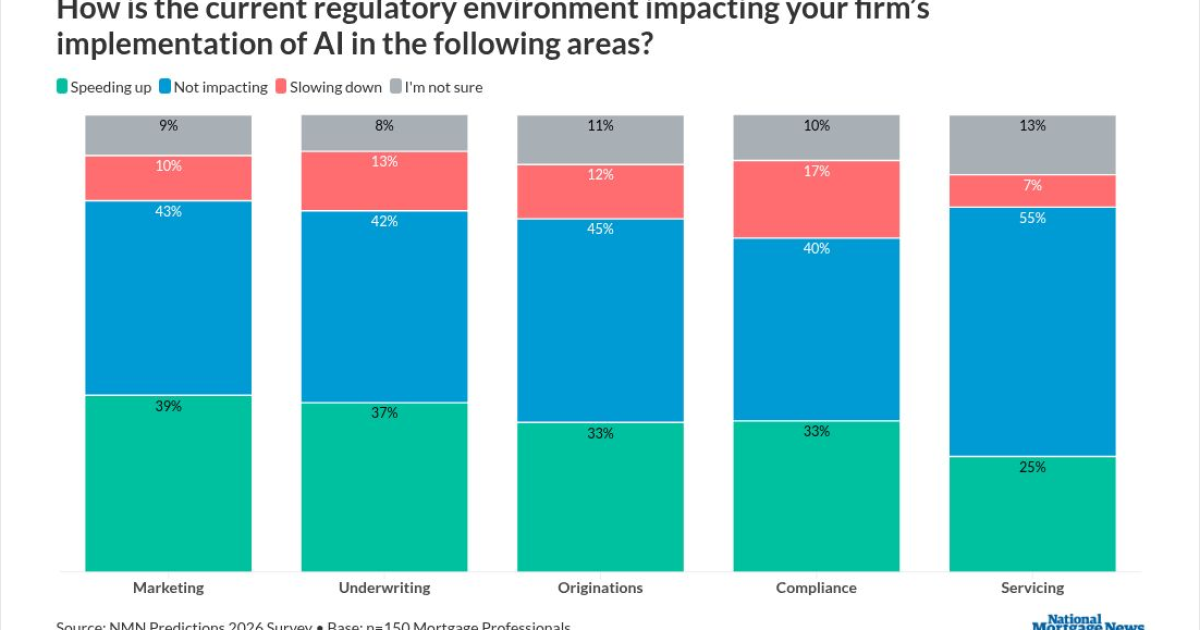
Artificial intelligence is finally stepping into the mortgage underwriting spotlight, with 57% of mortgage professionals predicting it will drive the most transformative industry shift in 2026. Thanks to major advancements in language models and workflow automation, AI is now capable of navigating the messy, document-heavy realities that have long slowed underwriting. From faster preapprovals to improved credit analysis and real‑time income verification, AI is streamlining processes while allowing underwriters to focus on true risk management. As regulatory winds shift and grassroots pressure builds within lending teams, the industry is entering a pivotal era where AI‑powered underwriting becomes not just an advantage — but an expectation.

Portland’s Commercial Market Suffers a Historic $2 Billion Collapse

Portland’s top 20 office towers have lost an unprecedented 70% of their value since 2019—plunging from $3 billion to under $1 billion—triggering tax revenue shortfalls, budget crises, and a surge in appeals as the city grapples with its biggest commercial real estate reset in modern history.

When Virtual Reality Becomes the New Penthouse Tour: Miami Students Step Inside a $1M Tech-Driven Luxury Tower Experience

South Florida’s luxury real estate market just raised the bar again — this time with a $1 million virtual reality system that lets buyers walk through Dolce & Gabbana’s upcoming Miami tower long before construction wraps. Real estate master’s students were given an immersive look inside the project, discovering how VR is transforming high‑end development, influencing buyer psychology, and shaping the future skills today’s professionals need.

Long Island’s Latest Commercial Moves: From Pizza Huts to Auto Parts Warehouses

Long Island’s commercial real estate scene is kicking off 2026 with a surge of activity—industrial leases in Medford, neighborhood retail trades in Bohemia, Pizza Hut’s new DELCO expansion in Centereach, mixed‑use acquisitions in Melville, and major investor interest in bank‑leased and franchise-backed properties. From warehouses to restaurant rebrands, these deals highlight a region evolving fast and offering fresh opportunities for agents, investors, and professionals looking to stay ahead in the market.