Cryptocurrencies have emerged as a groundbreaking innovation in the financial landscape, offering a decentralized alternative to traditional currencies. These digital or virtual currencies are secured by cryptography, which makes them resistant to fraud and double-spending. They operate on decentralized networks using blockchain technology, a distributed ledger enforced by a network of computers. This system provides both advantages and challenges, as detailed in a recent Investopedia article.
Understanding the Basics
At the core of cryptocurrencies is the concept of decentralization. Unlike traditional currencies, they are not issued by any central authority, making them theoretically immune to government interference. This decentralized structure allows for faster and cheaper transactions, as it eliminates the need for third-party intermediaries like banks.
Blockchain technology is central to the functionality of cryptocurrencies. It consists of a series of connected blocks of information, each containing a set of transactions that are independently verified by a network of validators. This makes it nearly impossible to forge transaction histories, as the contents must be agreed upon by a network of computers.
Types of Cryptocurrency
There are various types of cryptocurrencies, each serving different purposes. For example, Ethereum’s ether is used for validating transactions on its blockchain. Other types include transactional tokens like Bitcoin, governance tokens like Uniswap, and security tokens representing ownership of assets.
Investing in Cryptocurrency
Investing in cryptocurrencies requires careful consideration due to their inherent risks. While they offer potential for high returns, they are also known for their volatility and regulatory ambiguity. Investors can purchase cryptocurrencies through exchanges or invest in crypto ETFs, which provide exposure to the asset class without the need for a digital wallet.
The legal status of cryptocurrencies varies worldwide. In the United States, they are considered securities when purchased by institutional buyers but not by retail investors. In Asia, countries like Japan recognize Bitcoin as legal property, while China has banned cryptocurrency exchanges and transactions.
Advantages and Disadvantages
Cryptocurrencies offer several advantages, including the removal of single points of failure, easier fund transfers, and the elimination of third-party intermediaries. However, they also pose challenges such as pseudonymous transactions, which can be used for criminal activities, and high energy consumption for mining.
Despite these challenges, cryptocurrencies continue to gain popularity, with a total market capitalization reaching trillions of dollars. As digital assets, they appeal to those interested in speculative investments, but they require a cautious approach due to the risks involved.
The Bottom Line Cryptocurrencies represent a new financial paradigm, offering both opportunities and challenges. While they have the potential to disrupt various industries, they also require investors to understand the risks involved. As highlighted in the original article, it is crucial for investors to approach this innovative technology with caution and awareness of its potential and limitations.
More Articles
Getting licensed or staying ahead in your career can be a journey—but it doesn’t have to be overwhelming. Grab your favorite coffee or tea, take a moment to relax, and browse through our articles. Whether you’re just starting out or renewing your expertise, we’ve got tips, insights, and advice to keep you moving forward. Here’s to your success—one sip and one step at a time!
"AI and machine learning are emerging as powerful technologies to address this issue, improving the accuracy of medical diagnosis and revolutionizing healthcare with their myriad applications."
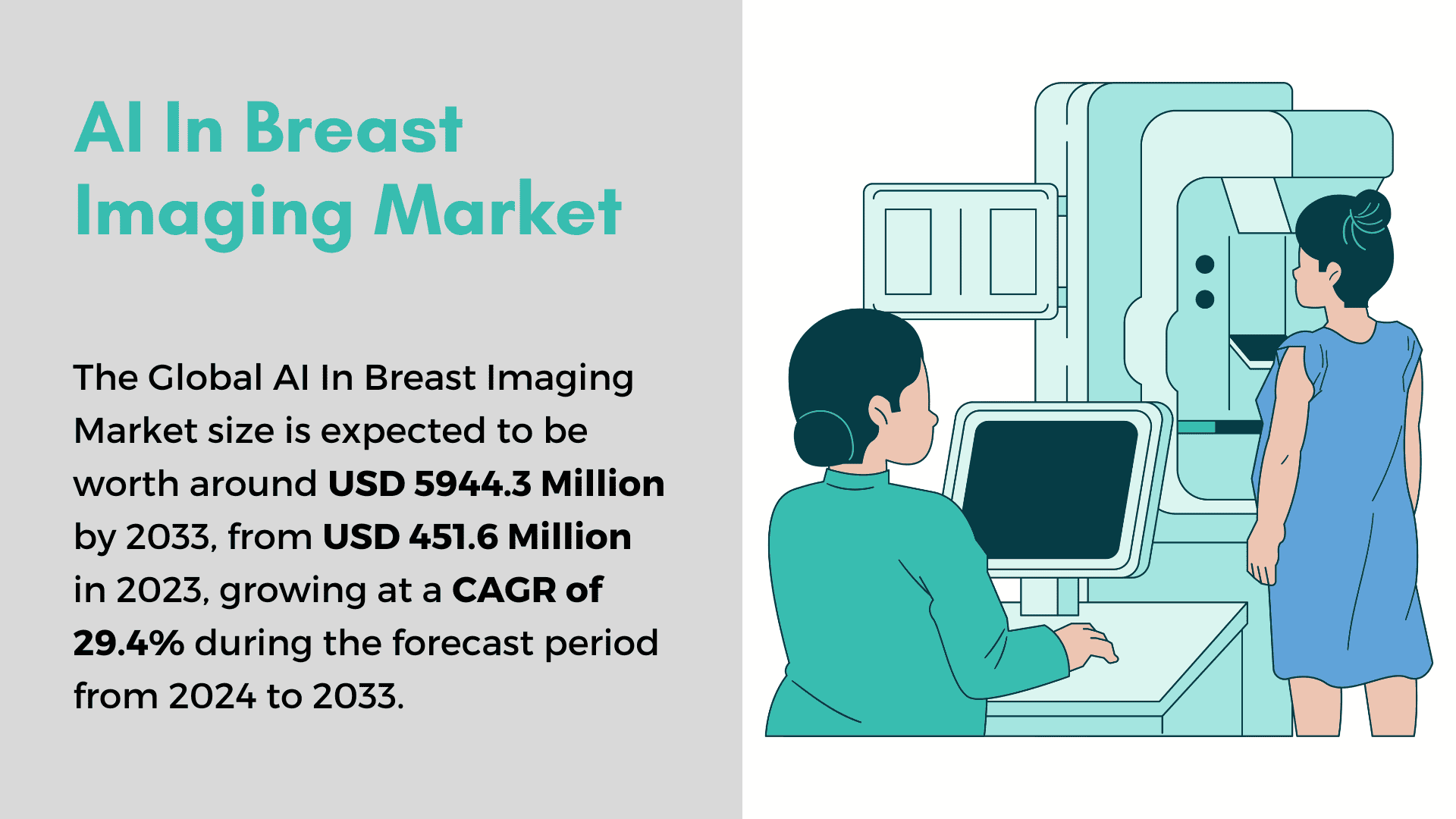
The global AI in breast imaging market is on a remarkable growth trajectory, projected to swell from USD 451.6 million in 2023 to an impressive USD 5944.3 million by 2033. This represents a compound annual growth rate (CAGR) of 29.4%, primarily driven by cutting-edge advancements in AI technologies that significantly enhance diagnostic accuracy, facilitate early detection, and boost healthcare efficiency.
Virtual real estate in metaverses is becoming a focal point for investors worldwide, with digital plots of land mirroring traditional real estate value based on location, size, and platform popularity.
Artificial intelligence (AI) and machine learning are at the forefront of revolutionizing in-vitro diagnostic (IVD) tools, redefining diagnostics and enhancing healthcare outcomes on multiple fronts.
As we edge closer to 2030, the life sciences industry stands on the threshold of transformative changes. With a global valuation exceeding $2 trillion, the sector is poised for significant growth, driven by technological advancements and an aging population.
The advent of telehealth has revolutionized the way patients, particularly those in rural areas, access health care. By offering remote consultations and follow-up care, telehealth provides a convenient alternative to traveling long distances to urban hospitals. However, this technological advancement brings with it a set of challenges that could reshape the rural health care landscape.

:max_bytes(150000):strip_icc()/TermDefinitions_crypto_final-940e93a6cb5341999a5d735fbf04fbfe.png "Cryptocurrency: A New Financial Frontier 2")