
Dallas–Fort Worth Real Estate Enters a New Era: What the Next Construction Cycle Really Looks Like

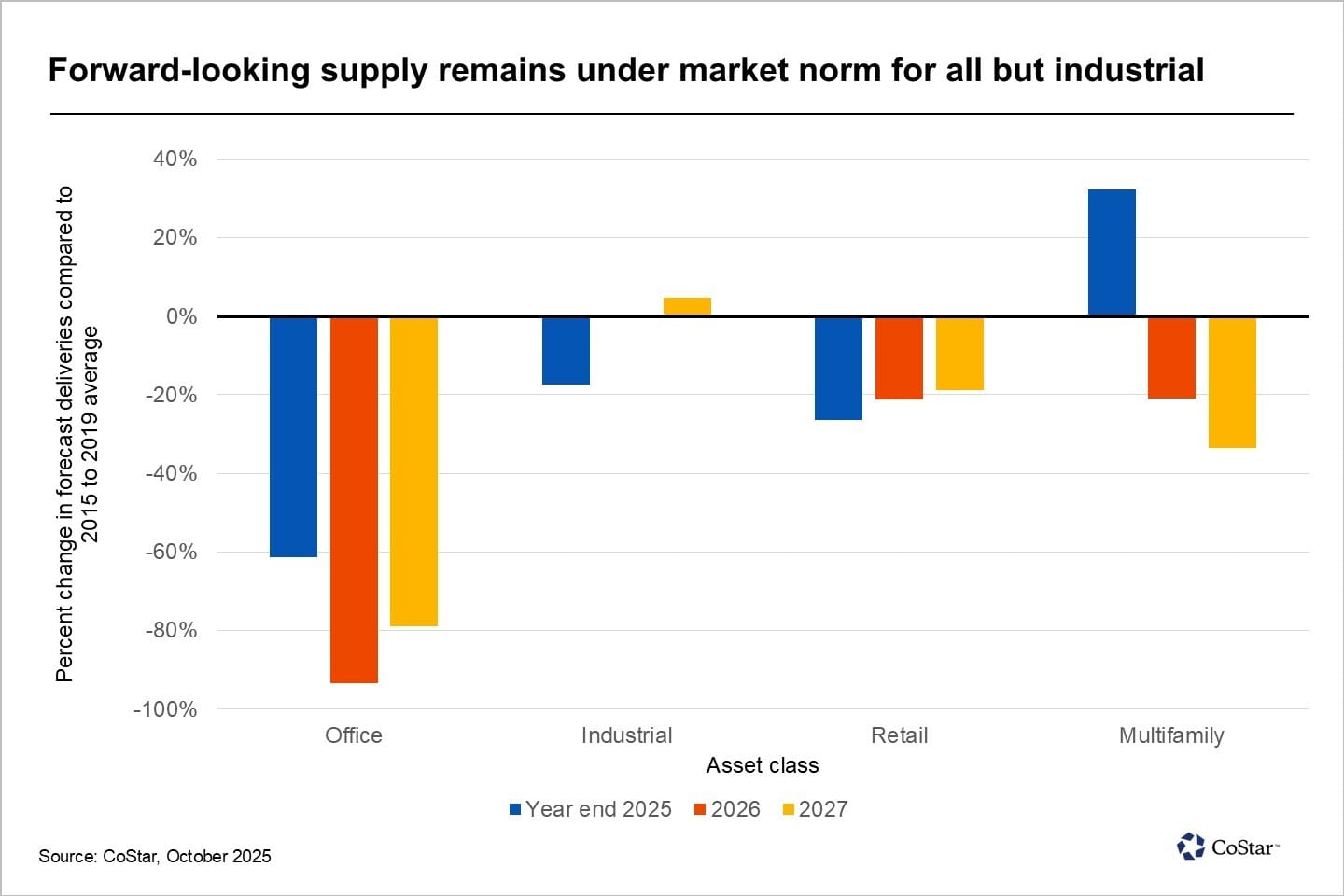
Forward-looking real estate supply by asset class

The Dallas–Fort Worth real estate market is undergoing one of its most intriguing shifts in years — and if you’re a current or aspiring professional in the field, this is the kind of moment that defines careers. According to a recent CoStar Insight report, developers across the metroplex are rethinking their strategies as offices cool, industrial demand recalibrates, and housing evolves in response to demographic shifts.

A Pullback in Office Construction

Office construction — once a dominant force in DFW’s skyline ambitions — is seeing a decisive slowdown. Developers appear cautious as hybrid work models and shifting corporate priorities reshape the need for large, traditional office footprints. The cranes haven’t disappeared, but they are noticeably fewer than in the boom years.

Industrial and Housing: Still Growing, but Resetting

Industrial space, which surged during the post-pandemic e-commerce explosion, is beginning to stabilize. Developers are becoming more selective, focusing on strategic logistics corridors rather than mass expansion. Meanwhile, the housing market is adjusting to affordability pressures, population growth, and shifting buyer expectations — all of which are pushing builders to innovate rather than simply scale.

Why This Matters for Real Estate Professionals

Periods of change can be challenging, but they are also moments of massive opportunity. Understanding construction cycles, asset-class shifts, and local market behavior makes the difference between reacting and leading. Professionals who stay informed — and stay licensed and trained — position themselves at the front of these evolving trends.

This is especially true for students and professionals expanding their credentials through Cameron Academy, where staying ahead of the market isn’t just encouraged — it’s built into the learning experience. Whether you’re deepening your real estate expertise or branching into mortgage, insurance, or other licensed fields, understanding shifts like the ones happening in DFW helps you operate with strategy and confidence.

A Final Look Forward

DFW remains one of the most resilient and opportunity-rich markets in the country. While developers pause, pivot, and reallocate, the market’s evolution is still underway — and those paying attention now will be the ones who benefit later.

For deeper insights, you can explore the full report directly from CoStar. And remember — staying educated is the most consistent way to stay competitive.

Visit the original CoStar article

More Articles

Getting licensed or staying ahead in your career can be a journey—but it doesn’t have to be overwhelming. Grab your favorite coffee or tea, take a moment to relax, and browse through our articles. Whether you’re just starting out or renewing your expertise, we’ve got tips, insights, and advice to keep you moving forward. Here’s to your success—one sip and one step at a time!

Unlocking Real Estate Wealth in 2025: Strategies for Success

Step into 2025, where the real estate market emerges as a resilient beacon amidst economic unpredictability. Investors are increasingly drawn to secondary cities like Austin and Manchester, attracted by their growth potential, affordability, and enhanced quality of life.

By |February 18, 2025|Categories: Article, Investment Strategies, Real Estate|Tags: , |0 Comments

AI and Urbanization Drive Home Services Market Growth

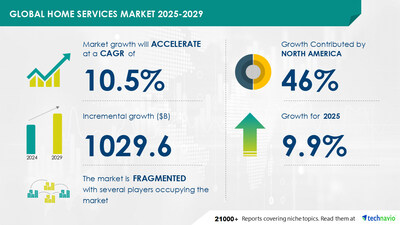
The global home services market is poised for significant growth, with projections indicating an increase of USD 1.03 trillion from 2025 to 2029. This forecasted expansion is attributed to increasing urbanization and the transformative impact of AI on market trends, according to a recent report by Technavio.

Decoding the U.S. Housing Crisis: A Study of Historic Policy Missteps and Demographic Shift

In a revealing study by USC, the roots of the current housing crisis in the United States are traced back to policy missteps and demographic changes that have been unfolding since the early 2000s. The study highlights how these factors have left millennials and people of color disproportionately affected.

Best Real Estate Crowdfunding Platforms for February 2025: Investopedia’s Top Picks

Fundrise stands out for offering investors a chance to diversify their portfolios with real estate exposure through proprietary funds. With a minimum investment as low as $10, it opens doors to beginners and seasoned investors alike.

Top Real Estate Investment Apps of 2025: A Guide for First-Time and Experienced Investors

Business Insider has reviewed a range of platforms available in 2025, focusing on key factors like fees, accessibility for accredited vs. non-accredited investors, and the types of real estate investments offered.