Dallas–Fort Worth Real Estate Enters a New Era: What the Next Construction Cycle Really Looks Like
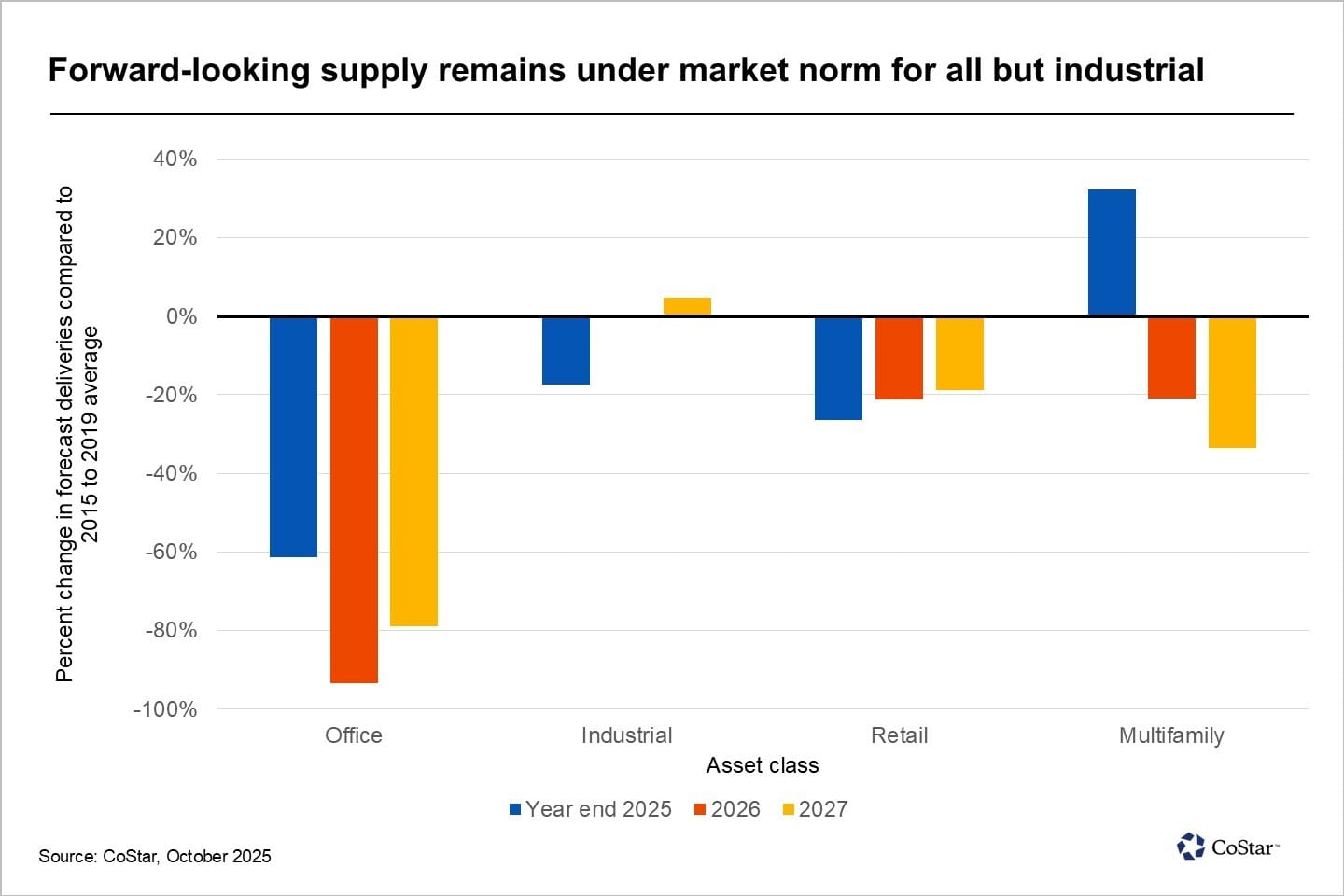
The Dallas–Fort Worth real estate market is undergoing one of its most intriguing shifts in years — and if you’re a current or aspiring professional in the field, this is the kind of moment that defines careers. According to a recent CoStar Insight report, developers across the metroplex are rethinking their strategies as offices cool, industrial demand recalibrates, and housing evolves in response to demographic shifts.
A Pullback in Office Construction
Office construction — once a dominant force in DFW’s skyline ambitions — is seeing a decisive slowdown. Developers appear cautious as hybrid work models and shifting corporate priorities reshape the need for large, traditional office footprints. The cranes haven’t disappeared, but they are noticeably fewer than in the boom years.
Industrial and Housing: Still Growing, but Resetting
Industrial space, which surged during the post-pandemic e-commerce explosion, is beginning to stabilize. Developers are becoming more selective, focusing on strategic logistics corridors rather than mass expansion. Meanwhile, the housing market is adjusting to affordability pressures, population growth, and shifting buyer expectations — all of which are pushing builders to innovate rather than simply scale.
Why This Matters for Real Estate Professionals
Periods of change can be challenging, but they are also moments of massive opportunity. Understanding construction cycles, asset-class shifts, and local market behavior makes the difference between reacting and leading. Professionals who stay informed — and stay licensed and trained — position themselves at the front of these evolving trends.
This is especially true for students and professionals expanding their credentials through Cameron Academy, where staying ahead of the market isn’t just encouraged — it’s built into the learning experience. Whether you’re deepening your real estate expertise or branching into mortgage, insurance, or other licensed fields, understanding shifts like the ones happening in DFW helps you operate with strategy and confidence.
A Final Look Forward
DFW remains one of the most resilient and opportunity-rich markets in the country. While developers pause, pivot, and reallocate, the market’s evolution is still underway — and those paying attention now will be the ones who benefit later.
For deeper insights, you can explore the full report directly from CoStar. And remember — staying educated is the most consistent way to stay competitive.
Getting licensed or staying ahead in your career can be a journey—but it doesn’t have to be overwhelming. Grab your favorite coffee or tea, take a moment to relax, and browse through our articles. Whether you’re just starting out or renewing your expertise, we’ve got tips, insights, and advice to keep you moving forward. Here’s to your success—one sip and one step at a time!
For commercial real estate leaders, the insights from Deloitte's report are invaluable for strategic planning. By understanding the economic conditions and emerging trends, organizations can better position themselves to capitalize on opportunities and mitigate risks in this evolving landscape.
In a year marked by significant geopolitical tensions and a post-pandemic recovery, the aerospace and defense industry is gearing up for a transformative 2025.
Following the Supreme Court's June 2023 decision to overturn the initial student debt cancellation plan, President Joe Biden swiftly introduced a comprehensive "plan B." This new approach seeks to establish clear guidelines on eligibility and debt cancellation limits, potentially impacting around 27.6 million borrowers.
The average down payment fell to 14.5% in Q3 2024 from the historical peak of 14.9% in Q2, representing a modest decrease but still ranking as the third-highest percentage in recent history.
In a transformative era for U.S. cities, federal infrastructure funding opportunities, anchored by the Bipartisan Infrastructure Law (BIL) and the Inflation Reduction Act (IRA), promise to reshape urban landscapes for resilience, sustainability, and equity.
In a state where the cost of living continues to skyrocket, Californians are once again faced with crucial decisions on housing policies. This November, voters will find two propositions on the ballot that address rent control, each with its own distinct approach and implications.