Dallas–Fort Worth Real Estate Enters a New Era: What the Next Construction Cycle Really Looks Like
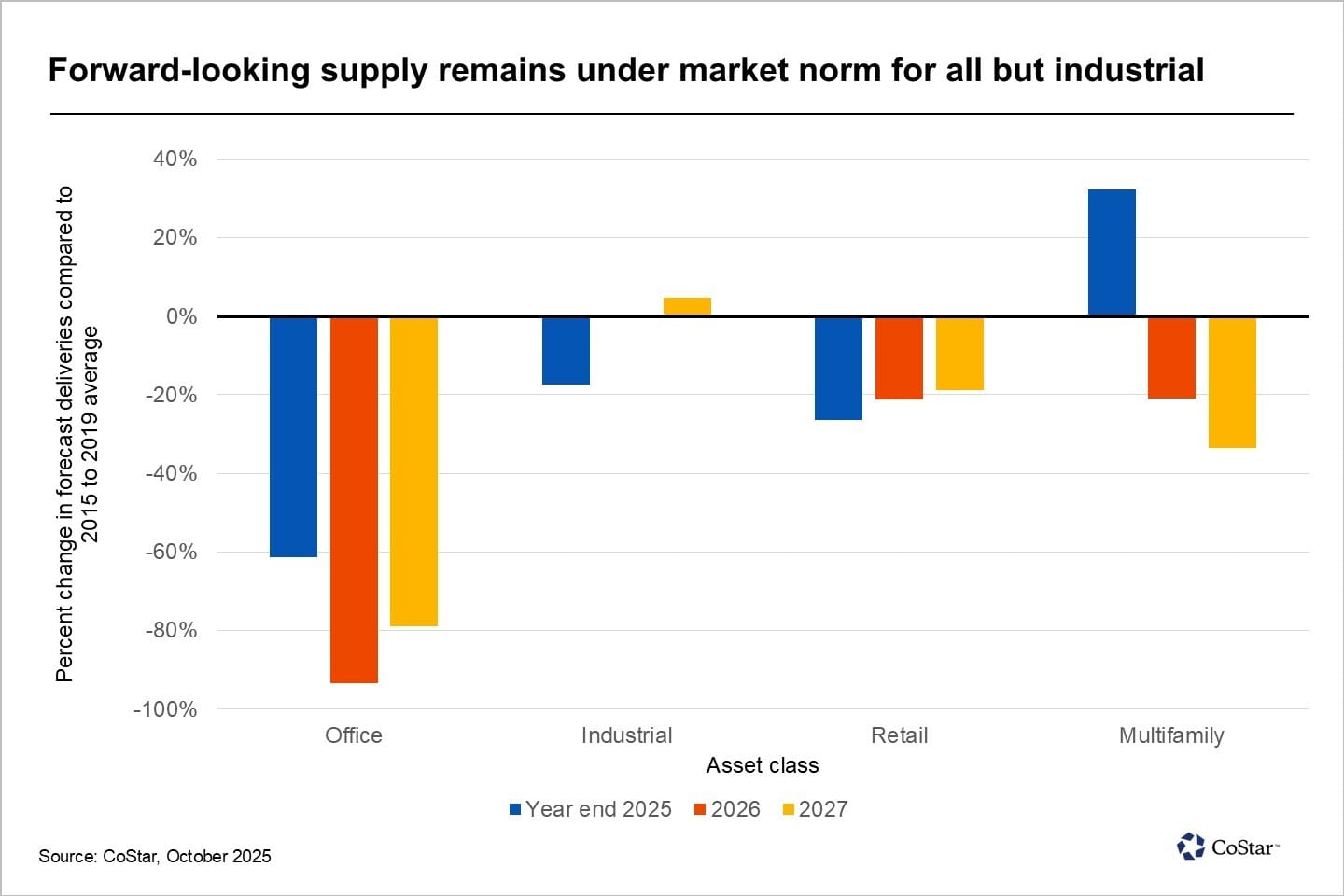
The Dallas–Fort Worth real estate market is undergoing one of its most intriguing shifts in years — and if you’re a current or aspiring professional in the field, this is the kind of moment that defines careers. According to a recent CoStar Insight report, developers across the metroplex are rethinking their strategies as offices cool, industrial demand recalibrates, and housing evolves in response to demographic shifts.
A Pullback in Office Construction
Office construction — once a dominant force in DFW’s skyline ambitions — is seeing a decisive slowdown. Developers appear cautious as hybrid work models and shifting corporate priorities reshape the need for large, traditional office footprints. The cranes haven’t disappeared, but they are noticeably fewer than in the boom years.
Industrial and Housing: Still Growing, but Resetting
Industrial space, which surged during the post-pandemic e-commerce explosion, is beginning to stabilize. Developers are becoming more selective, focusing on strategic logistics corridors rather than mass expansion. Meanwhile, the housing market is adjusting to affordability pressures, population growth, and shifting buyer expectations — all of which are pushing builders to innovate rather than simply scale.
Why This Matters for Real Estate Professionals
Periods of change can be challenging, but they are also moments of massive opportunity. Understanding construction cycles, asset-class shifts, and local market behavior makes the difference between reacting and leading. Professionals who stay informed — and stay licensed and trained — position themselves at the front of these evolving trends.
This is especially true for students and professionals expanding their credentials through Cameron Academy, where staying ahead of the market isn’t just encouraged — it’s built into the learning experience. Whether you’re deepening your real estate expertise or branching into mortgage, insurance, or other licensed fields, understanding shifts like the ones happening in DFW helps you operate with strategy and confidence.
A Final Look Forward
DFW remains one of the most resilient and opportunity-rich markets in the country. While developers pause, pivot, and reallocate, the market’s evolution is still underway — and those paying attention now will be the ones who benefit later.
For deeper insights, you can explore the full report directly from CoStar. And remember — staying educated is the most consistent way to stay competitive.
Select options
This product has multiple variants. The options may be chosen on the product page
Details
More Articles
Getting licensed or staying ahead in your career can be a journey—but it doesn’t have to be overwhelming. Grab your favorite coffee or tea, take a moment to relax, and browse through our articles. Whether you’re just starting out or renewing your expertise, we’ve got tips, insights, and advice to keep you moving forward. Here’s to your success—one sip and one step at a time!
The debut episode of NAR’s Change Agents podcast highlights why real estate expertise is more valuable than ever in an AI-driven world. eXp Realty CEO Leo Pareja explains that while technology accelerates communication and connections, consumers still rely on seasoned professionals to guide them through life’s biggest financial decisions. From the Everest analogy to real-world AI success stories, the conversation reveals how trust, transparency, and expert guidance remain the core of the real estate experience.
U.S. 30‑year mortgage rates have dipped to 5.98%, breaking below 6% for the first time since 2022. This third consecutive weekly decline signals a potentially energized spring buying season as lower Treasury yields and easing market anxiety push rates down. Buyers, sellers, and real estate professionals may see renewed activity as affordability slightly improves and refinancing picks up momentum.
A sweeping federal reporting requirement is about to impact how companies, trusts, investors, and even cash buyers purchase residential real estate. FinCEN’s new rule closes long‑standing loopholes that allowed anonymous all‑cash property deals, requiring many entity-based buyers to disclose their true beneficial owners. Real estate agents, brokers, and advisors should brace for workflow changes and increased compliance responsibilities, while investors are urged to review their acquisition structures now to avoid delays once the rule takes effect.
After briefly dipping below 6 percent for the first time in years, mortgage rates have surged again following U.S.-Israeli military strikes on Iran. Rising oil prices and a jump in Treasury yields have pushed the average 30-year fixed rate back to 6.12 percent, creating fresh uncertainty just as the spring housing market was gaining traction. Experts warn that continued geopolitical instability could keep rates elevated, while upcoming U.S. employment data may determine whether relief is on the horizon for buyers and sellers.
New 2026 data reveals that the average life insurance policy costs just 26 dollars a month—less than most lunch outings—making it more affordable than many professionals expect. Rates vary based on age, health, gender, smoking habits, and term length, with younger and healthier applicants paying significantly less. As real estate, mortgage, insurance, and finance professionals plan long-term financial stability, understanding these pricing factors is crucial.