Dallas–Fort Worth Real Estate Enters a New Era: What the Next Construction Cycle Really Looks Like
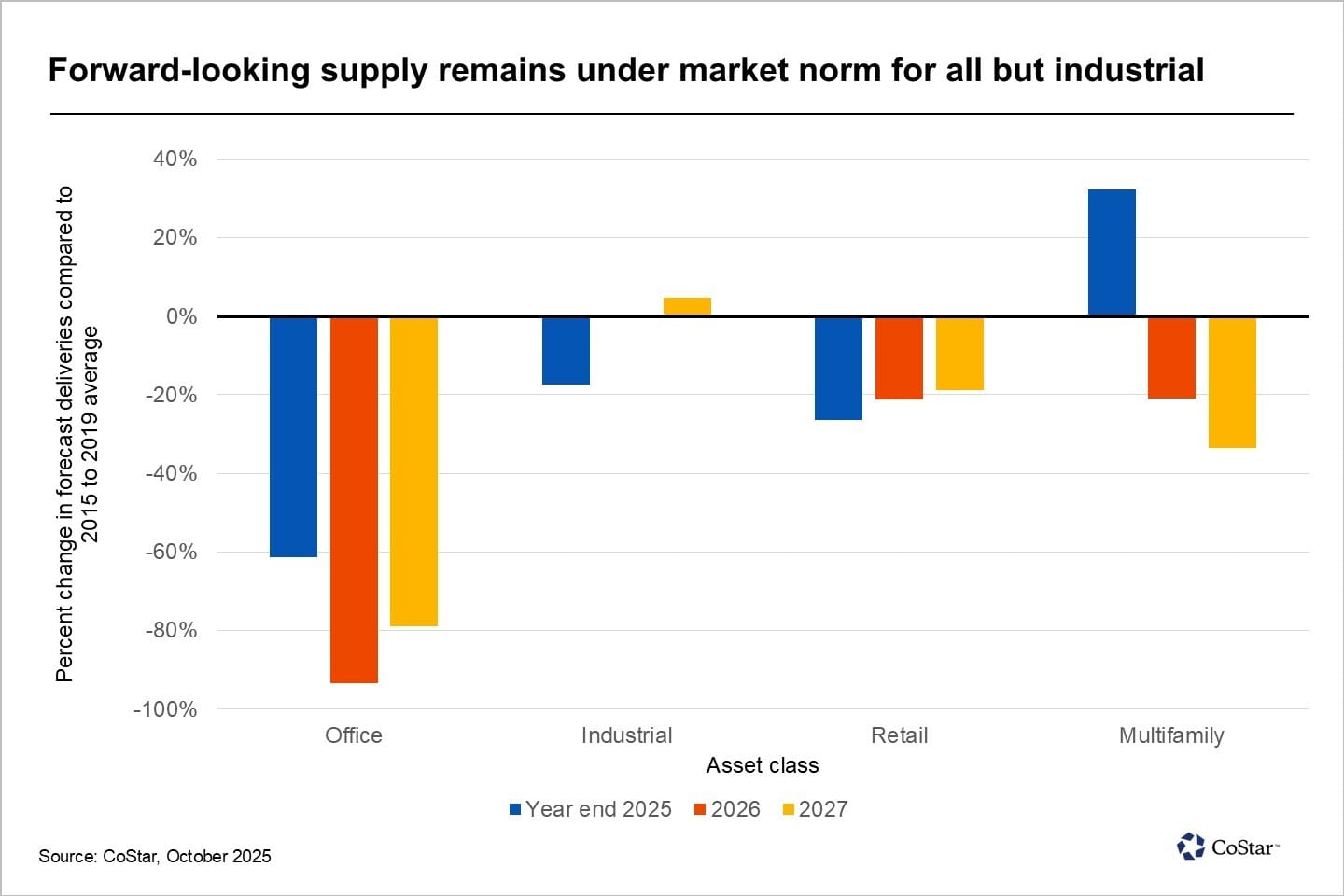
The Dallas–Fort Worth real estate market is undergoing one of its most intriguing shifts in years — and if you’re a current or aspiring professional in the field, this is the kind of moment that defines careers. According to a recent CoStar Insight report, developers across the metroplex are rethinking their strategies as offices cool, industrial demand recalibrates, and housing evolves in response to demographic shifts.
A Pullback in Office Construction
Office construction — once a dominant force in DFW’s skyline ambitions — is seeing a decisive slowdown. Developers appear cautious as hybrid work models and shifting corporate priorities reshape the need for large, traditional office footprints. The cranes haven’t disappeared, but they are noticeably fewer than in the boom years.
Industrial and Housing: Still Growing, but Resetting
Industrial space, which surged during the post-pandemic e-commerce explosion, is beginning to stabilize. Developers are becoming more selective, focusing on strategic logistics corridors rather than mass expansion. Meanwhile, the housing market is adjusting to affordability pressures, population growth, and shifting buyer expectations — all of which are pushing builders to innovate rather than simply scale.
Why This Matters for Real Estate Professionals
Periods of change can be challenging, but they are also moments of massive opportunity. Understanding construction cycles, asset-class shifts, and local market behavior makes the difference between reacting and leading. Professionals who stay informed — and stay licensed and trained — position themselves at the front of these evolving trends.
This is especially true for students and professionals expanding their credentials through Cameron Academy, where staying ahead of the market isn’t just encouraged — it’s built into the learning experience. Whether you’re deepening your real estate expertise or branching into mortgage, insurance, or other licensed fields, understanding shifts like the ones happening in DFW helps you operate with strategy and confidence.
A Final Look Forward
DFW remains one of the most resilient and opportunity-rich markets in the country. While developers pause, pivot, and reallocate, the market’s evolution is still underway — and those paying attention now will be the ones who benefit later.
For deeper insights, you can explore the full report directly from CoStar. And remember — staying educated is the most consistent way to stay competitive.
Getting licensed or staying ahead in your career can be a journey—but it doesn’t have to be overwhelming. Grab your favorite coffee or tea, take a moment to relax, and browse through our articles. Whether you’re just starting out or renewing your expertise, we’ve got tips, insights, and advice to keep you moving forward. Here’s to your success—one sip and one step at a time!
Bluerate.ai—formerly MyMortgageRates—is stepping into 2025 with a mission to modernize a mortgage process that has barely changed in decades. Built by Zeitro, the platform equips both borrowers and loan officers with powerful AI tools, from online pre‑qualification and automated financial data extraction to instant guideline answers and scenario analysis. With more than 3,000 verified NMLS‑licensed loan officers and real‑time rate comparisons from major lenders, Bluerate.ai is quickly becoming a must‑know platform for mortgage and real estate professionals seeking speed, clarity, and a fully digital lending experience.
After the longest government shutdown in U.S. history, key federal housing programs such as FHA, VA, USDA, and NFIP are officially back in operation—offering long‑awaited relief to agents, lenders, and insurance professionals. But with a six‑week backlog slowing everything from loan guarantees to flood-insurance renewals, real estate pros should brace for delays and focus on resetting client expectations. A new federal spending deal restores funding through early 2026 and gives the market room to breathe, while NAR’s aggressive advocacy helped push the government toward reopening. Now, professionals who communicate clearly and stay on top of regulatory updates will be best positioned to guide clients through the temporary turbulence.
Commercial real estate is rapidly shifting toward a digital-first model, with platforms like Crexi leading the charge. By unifying property data, AI-driven insights, transparent bidding, and streamlined transaction tools, digital marketplaces are becoming essential to how modern CRE deals are sourced, analyzed, and closed. With more than 2 million monthly users and over $1 trillion in facilitated transactions, Crexi showcases how technology is reshaping the industry and giving real estate professionals a powerful competitive edge.
Europe’s biggest landlords—including Aroundtown, Vonovia, and top global investors—have teamed up to launch ATechX, a powerful new accelerator giving proptech startups something they rarely get: access to real buildings, real customers, and a clear path to scale across multiple countries. Designed to move founders beyond “pilot purgatory,” ATechX offers a true sandbox for innovation in Europe’s aging, regulation‑heavy property market, helping promising technology reach commercial traction faster than ever.
Mortgage rates are finally easing, inventory is climbing, and buyers are gaining leverage for the first time in years — yet sky‑high prices and economic jitters are keeping many on pause. With economists warning that inflation could push rates higher again, this fall may offer a rare window for well‑prepared buyers. Here’s what’s driving the shift, where opportunities are emerging, and how real estate professionals can stay ahead.
Griffin Funding has appointed John Jones as Senior Vice President of Growth and EOS Integrator, aiming to scale the company toward a $3 billion annual non-QM volume goal by 2030. After serving in fractional leadership roles since April 2025, Jones now steps in full‑time to lead organizational structure, efficiency, market expansion, and cross‑department alignment. Backed by strong liquidity and rising deal volume, Griffin Funding appears positioned for major industry impact in the years ahead.