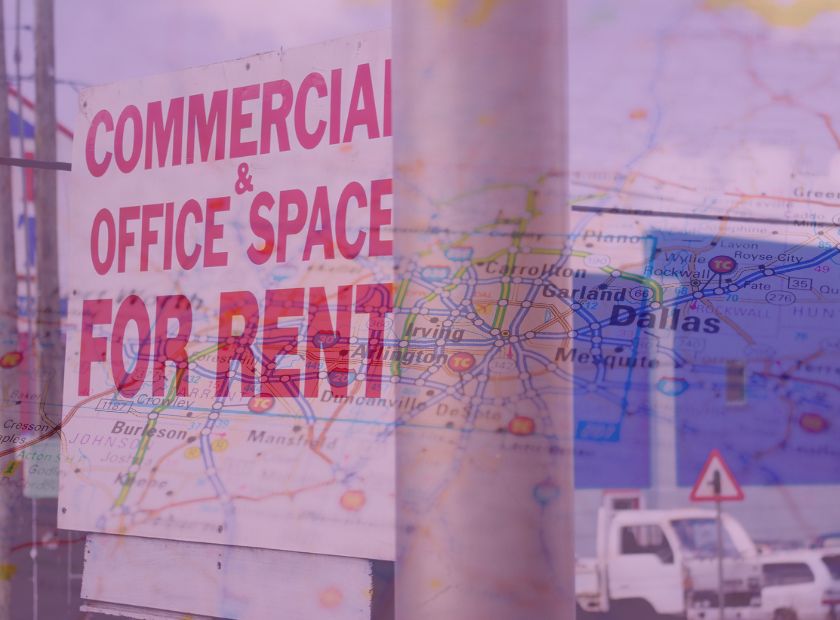
DFW CRE in 2025: Industrial Roars, Retail Holds Strong, and Office… Still Hurting
With 2025 officially in the rearview mirror, we’re getting a clearer picture of how the final quarter played out for commercial real estate in the Dallas–Fort Worth Metroplex. And while some sectors flexed their muscle, one category continued to limp along: office.
According to fresh Q4 reports released by Partners Real Estate, office performance lagged behind both industrial and retail yet again—no shock to anyone following the long-term fallout of remote and hybrid work.
Office: Another Quarter, Another Struggle
Leasing activity plummeted 31.7% from Q3, and net absorption collapsed by nearly 80%, dropping from 1.4 million square feet to just over 285,000. Vacancy held flat at 25.3%, but that’s hardly a win given the years-long struggle to fill outdated layouts with tenants hungry for flexible, modern environments.
The trend is clear: companies want less space—but better space. And tenants are willing to pay for it. Class A absorption stayed positive while Class B dipped negative, and Class A rents hit a record-breaking $36.20 per square foot.
Meanwhile, one half-empty 36‑story tower in Downtown Dallas—built in the early 1980s—failed to secure a winning bid at auction, despite the potential for conversion, according to The Dallas Morning News.
Uptown and Turtle Creek continue to command the highest rents in the Metroplex at $62.10 per sq. ft., reinforcing their status as Dallas’ premier live‑work‑play districts. Full story via CandysDirt.com.
Industrial: The Unshakeable Powerhouse
While office owners adjust expectations, the industrial sector remains the region’s golden child. Developers delivered 6.7 million square feet in Q4—a massive 82% jump from Q3. Even with the flood of new supply, leasing activity surged 23.6% quarter-over-quarter and an astonishing 70.6% year-over-year.
Warehouse and distribution centers remain the backbone, driven by North Texas’ unmatched logistics advantages. Rents continue climbing, too. Northwest Dallas Outlying leads at $19.13 per square foot, according to the industrial market report.
As reported by CandysDirt.com, industrial strength has also fueled Dallas’ expanding tax base—especially in the booming northwest corridor.
Retail: Quietly Consistent, Impressively Strong
Retail continues its steady rise, posting some of the healthiest fundamentals in the Metroplex. Vacancy stayed at a low 5.1% while net absorption skyrocketed from 278,000 square feet in Q3 to 1.26 million square feet in Q4.
Asking rents saw a strong year-over-year gain of 22.6%, with North Central Dallas leading at $29.31 per sq. ft. Full submarket breakdowns are available in the retail market report.
What Does This Mean for Professionals?
The CRE landscape in DFW is becoming increasingly divided. Industrial is booming. Retail is steady and strong. Office continues its uphill reset. But for professionals—brokers, investors, analysts, and property managers—this environment is rich with opportunity.
Whether you’re adapting to new office‑use trends, exploring industrial investment, or riding the retail wave, deep market knowledge is becoming more essential than ever.
For those building or advancing their commercial real estate careers, programs at Cameron Academy offer flexible, skill‑focused pathways to stay competitive in a rapidly changing market.
2026 Outlook: A Plot Twist or More of the Same?
Will 2026 bring a surprise resurgence in office demand? Some hope so. But with remote work holding firm and AI reshaping business operations, office recovery may still face headwinds.
Industrial and retail, however, show no signs of slowing—setting the stage for another year where the Metroplex continues redefining what modern commercial real estate performance looks like.
For full details, charts, and data, explore the original reporting at
CandysDirt.com.
More Articles
Getting licensed or staying ahead in your career can be a journey—but it doesn’t have to be overwhelming. Grab your favorite coffee or tea, take a moment to relax, and browse through our articles. Whether you’re just starting out or renewing your expertise, we’ve got tips, insights, and advice to keep you moving forward. Here’s to your success—one sip and one step at a time!
Commercial real estate is entering a decade of major transformation driven by interest rate pressures, evolving work culture, rapid proptech innovation, and growing demand for AI-focused infrastructure. While the global CRE market is projected to reach $133.5 trillion by 2028, rising rates, shifting office demand, and increasing sustainability requirements are reshaping how professionals invest, manage, and develop properties. By 2030, the biggest opportunities will center on mixed‑use conversions, data center growth, premium office spaces, and ESG‑driven upgrades.
The National Association of Realtors’ landmark antitrust settlement is transforming how real estate agents negotiate compensation, work with buyers, and handle transparency in transactions. With MLS‑posted buyer‑broker commissions eliminated and written buyer agreements now required, both consumers and professionals are navigating a new, more transparent landscape. While commission levels have only dipped slightly, the real shift is in how openly compensation is discussed and negotiated—creating new challenges and opportunities for agents who adapt quickly.
Artificial intelligence is no longer a novelty in real estate — 2025 marks its breakthrough year as a dependable pillar of the proptech industry. With investors pouring capital into AI‑powered forecasting, security, automation, and property management tools, the sector is shifting from experimentation to full‑scale adoption. Brokerages, developers, and institutional players now rely on AI to streamline due diligence, enhance market modeling, reduce risk, and optimize building operations. As adoption accelerates, professionals who understand and leverage these technologies are gaining a decisive competitive edge in fast‑moving markets like Florida.
A new episode of Current Account breaks down why the insurance industry is heading into 2026 with more uncertainty — and more opportunity — than ever. From shifting global regulations and rising catastrophe risks to FSOC’s evolving role in the U.S., industry leaders Jérôme Haegeli and Philippe Brahin explain how insurers are being pushed to rethink strategy in real time. With global premium growth expected to slow and regulatory pressures rising, professionals in insurance and financial services are turning to education and new skills to stay ahead in a rapidly changing market.
New Jersey is quietly becoming one of the hottest commercial real estate markets in the nation, with Jersey City and North Jersey breaking into the top 10 in PwC’s 2026 Emerging Trends report. Fueled by redevelopment momentum, data‑center demand, mixed‑use transformations and a surge in health‑care projects, the state is drawing major investors while still battling rising construction costs and municipal fatigue. For real estate professionals, the Garden State’s evolution signals fresh opportunity—and a market worth watching closely heading into 2026.
The National Council of Insurance Legislators is pushing back against President Trump’s new executive order on artificial intelligence, arguing that it threatens decades of state‑based insurance oversight. NCOIL leaders say federal attempts to centralize AI authority could disrupt markets, weaken consumer protections, and limit states’ ability to innovate—setting the stage for a significant legal and political battle with major implications for insurance professionals who rely on AI‑driven tools and regulatory clarity.