
Driverless Shuttles: A New Era of Mobility in Rural France

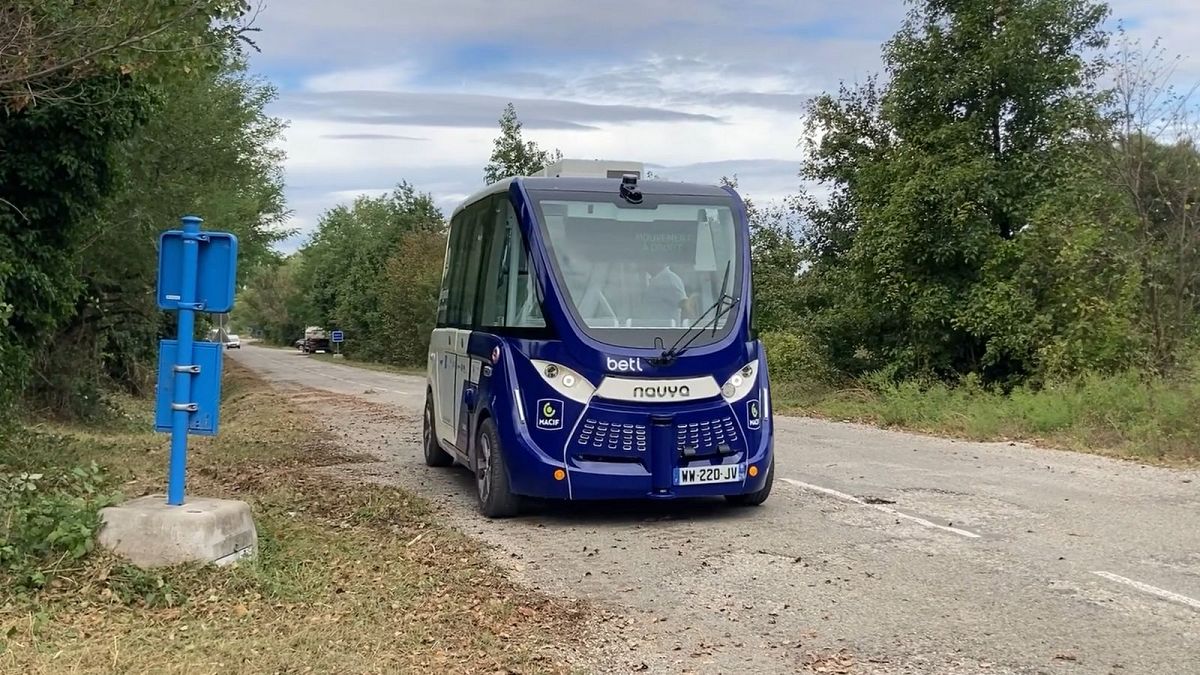
In the picturesque yet sparsely populated region of Val de Drôme – Crest in southeastern France, a quiet revolution is underway. The deployment of self-driving shuttles is transforming the way residents navigate their rural surroundings. This initiative, launched in 2020, is part of a broader European effort to harness automated electric vehicles (EVs) as a viable public transport solution in areas where traditional services are often lacking.
Yann Arnaud, director of responses to customer needs and innovation at the French insurance company MACIF, emphasized the potential of these shuttles during a conversation with Euronews. “We are trying to ensure that this is a new means of travel and mobility for people living in suburban or rural areas,” he stated, highlighting the project’s aim to reduce isolation and improve accessibility.
Driverless shuttle in operation

Technology and Safety

The shuttles operate on a predefined 5 km route, making seven stops over a 20-minute journey. A control operator oversees the operation to ensure safety. Benjamin Beaudet, general director at Beti, the operator of the automated shuttles, explained that the technology aligns with the European vision for automated vehicles. The shuttles “learn” their routes and compare real-time observations with pre-learned data to navigate safely.
In contrast to American and Chinese companies like Waymo, Uber, and Tesla, which focus on self-driving taxis with flexible routes, the European approach prioritizes defined paths, enhancing safety and predictability.

Addressing Rural Needs

The introduction of these shuttles in Val de Drôme – Crest, where the population density is significantly lower than the national average, has been met with positive feedback. Residents appreciate the newfound mobility options, especially in areas where alternatives are limited. Arnaud noted, “The question of acceptability arises when you have the luxury of having other options. When you don’t have a choice, you’re very happy to have [the shuttle].”
This sentiment underscores the potential of driverless vehicles to address mobility challenges in rural areas, particularly for the elderly and those without access to personal transportation.

Challenges and Future Prospects

Despite the promising start, scaling these projects to permanent services remains a challenge. High costs, logistical hurdles, and technological requirements, as outlined in an Open Research Europe article, pose significant barriers. The EU has invested €159 million in research and innovation related to automated mobility since 2021, yet achieving commercial viability continues to be elusive.
The success of initiatives like AVENUE and SHOW, which have conducted pilot projects across Europe, including in Crest, offers hope. However, transitioning from pilot programs to sustainable, everyday solutions requires overcoming substantial obstacles.
As Europe continues to explore the potential of automated vehicles, the experiences in rural France provide valuable insights into the future of mobility. With continued innovation and investment, driverless shuttles could become a cornerstone of public transport in remote areas, offering a greener, more accessible alternative to traditional car use.

More Articles

Getting licensed or staying ahead in your career can be a journey—but it doesn’t have to be overwhelming. Grab your favorite coffee or tea, take a moment to relax, and browse through our articles. Whether you’re just starting out or renewing your expertise, we’ve got tips, insights, and advice to keep you moving forward. Here’s to your success—one sip and one step at a time!

Maximizing Your Real Estate Impact: A Guide to Facebook Pages in 2025

Despite the rise of platforms like TikTok, Facebook remains a powerful tool for real estate professionals aiming to generate leads and build their personal brand.

Urban Revival Sets Stage for Real Estate Boom in Major Cities

The return to office environments is reshaping urban markets, with cities like San Francisco and New York witnessing a resurgence in property demand.

Gen Z’s Innovative Approach to NYC Living: A New Era of Co-Living

In the bustling metropolis of New York City, where rent prices often soar beyond the reach of many, a new trend is emerging among Gen Z: co-living in upscale, amenity-rich spaces for an average of $1,600 a month. This innovative approach is spearheaded by Belgian co-living company, Cohabs, which currently operates 14 properties in the city, housing over 400 members.

By |March 7, 2025|Categories: Article, Lifestyle, Real Estate|Tags: , |0 Comments

Real Estate Market in 2025: Key Trends to Watch

In the ever-evolving landscape of real estate, 2025 is shaping up to be a landmark year. With a new administration in place, the market is poised for significant changes that will impact buyers, sellers, and renters alike.

By |March 7, 2025|Categories: Article, Housing Trends, Real Estate|Tags: |0 Comments

AI in Real Estate: Revolutionizing the Industry

In the ever-evolving world of real estate, artificial intelligence (AI) is not just a tool; it's a revolution. As the digital frontier expands, AI is fundamentally transforming how properties are acquired, sold, and managed. This shift is not merely theoretical; it's a practical upheaval that is reshaping the landscape of real estate with unprecedented precision and efficiency.

Houston’s Real Estate Market in 2025: Stability Amid Change

Local brokerage executives have shared their predictions for Houston's real estate market in 2025. Leaders from renowned agencies foresee a relatively stable market with certain regions experiencing an upward trend.


By |March 6, 2025|Categories: Article, Market Predictions, Real Estate|Tags: |0 Comments