Embracing Innovation to Thrive in a Shifting Mortgage Market
The mortgage market is shifting quickly, and lenders who embrace innovation now will be the ones positioned to win. Today’s most resilient lenders aren’t rewriting the rulebook—they’re leveraging proven technology, building smarter workflows and improving customer experiences without disrupting what already works.
Why Innovation Matters Right Now
In today’s market conditions, strategic innovation is the greatest competitive advantage a lender can cultivate. Historically successful lenders have prioritized customer experience, operational efficiency and the flexibility to pivot when markets move unexpectedly.
Innovation doesn’t always mean changing everything. Companies like Stripe and Square scaled by building on Visa and Mastercard’s existing infrastructure. Stripe’s simple payment API empowered online businesses, while Square’s mobile card reader transformed small merchant transactions.
This lesson applies directly to mortgage lending: you don’t need new infrastructure—you need to innovate on top of your solid foundation.
Start with a Stable Foundation
One standout example of resilience comes from Gilchrist, Texas, where a yellow house survived Hurricane Ike because it was rebuilt with reinforced concrete and deep pilings beyond code requirements. When the storm hit, everything around it washed away—except the home built on a stronger foundation.
For lenders, this foundation is technology. A reliable LOS that integrates the entire lending process into one seamless system provides stability when the market becomes turbulent. Strong platforms offer data flow, integrations and a broad network of partners without creating a fragile tech stack.
The alternative—using multiple disconnected systems—creates breakpoints, data issues and risky dependencies, especially when partnering with undercapitalized startups in a volatile market.
Drive Efficiency and Scale Through Automation
Mortgage origination costs are approaching $12,000 per loan, driven largely by manual labor. Automation isn’t optional anymore—it’s the path to staying competitive.
Amazon’s journey proves this. They evolved from manual fulfillment centers to robotics, AI-driven inventory systems and predictive logistics. The result? Faster delivery, lower costs and a scalable operation capable of handling surges effortlessly.
Mortgage lenders can replicate this transformation with intelligent automation tools that streamline verifications, data handling and document management. Faster decisions, lower costs and better customer interactions are all within reach.
“Encompass provides automated enhanced conditions and automated service ordering that’s helped us cut back on manual workload for employees, so they’re able to provide a hands-on customer experience.” — Meredith Williams, COO of GMFS Mortgage
Start Small, Iterate and Expand
Innovation doesn’t have to happen overnight. When Microsoft introduced Office 365, they allowed users to gradually adopt cloud features while still working in the familiar desktop environment. This approach made adoption simpler and less disruptive.
Similarly, ICE enables lenders to use Encompass innovations through desktop or web interfaces, allowing for gradual adoption without reworking existing configurations. This leads to faster value with far less stress on teams.
Transform with Confidence
Lenders who innovate now will be ready for whatever market conditions come next. A strong technology ecosystem gives lenders the tools to acquire customers, validate loan quality, reduce origination costs and stay resilient through market cycles.
With strategic, incremental innovation—and the right technology partner—mortgage lenders can modernize confidently without starting from scratch.
More Articles
Getting licensed or staying ahead in your career can be a journey—but it doesn’t have to be overwhelming. Grab your favorite coffee or tea, take a moment to relax, and browse through our articles. Whether you’re just starting out or renewing your expertise, we’ve got tips, insights, and advice to keep you moving forward. Here’s to your success—one sip and one step at a time!
A growing share of American homeowners now carry mortgage rates above 5%—a dramatic shift that’s reshaping refinancing, inventory, and buyer behavior nationwide. With more than 30% of borrowers locked into rates over 5% and 20% above 6%, the market is split between owners holding on to low pandemic‑era loans and new buyers taking on higher‑rate mortgages. Federal efforts to push rates down could unlock millions of refinancing opportunities, while buyers see only modest monthly savings. For real estate professionals, understanding these rate dynamics is crucial as they increasingly drive inventory levels, affordability, and market activity.
New Moody’s data shows commercial real estate deal volume slipped 20% in December, marking a second monthly decline. Yet the full year tells a different story: 2025 ended with a 17% gain, signaling a quiet but resilient recovery. The biggest surprise came from the office sector, which posted a 21% jump in activity as return‑to‑office trends and AI‑driven job growth boosted demand. Multifamily, retail, and alternative assets like data centers also saw strong momentum, giving real estate professionals a market full of fresh opportunities heading into 2026.
Florida drivers and industry professionals are heading into 2026 with good news: auto insurance rates are dropping across the state as the market shows strong signs of stabilization. USAA leads the latest wave with a 7% average rate decrease expected in May 2026, saving members more than $125 million annually. They join several major insurers — including State Farm, Progressive, AAA, Allstate, and Florida Farm Bureau — all approving significant reductions. Officials credit recent legislative reforms, especially tort reform, for the improved loss ratios and renewed insurer confidence. With both auto and home insurance markets strengthening, Florida’s real estate, mortgage, and insurance professionals can expect more consumer confidence, smoother transactions, and expanding career opportunities.
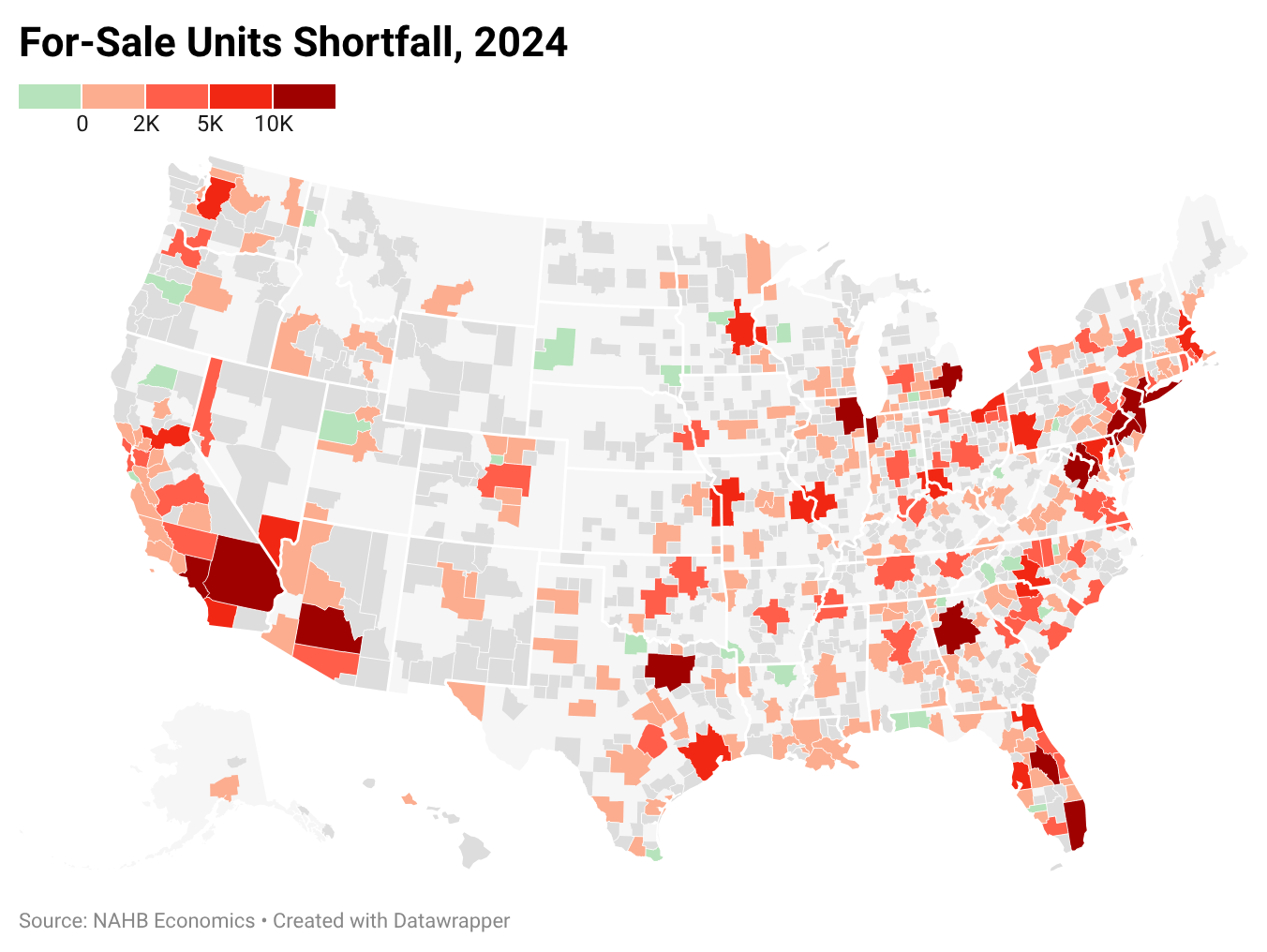
New data from Eye On Housing and the NAHB shows the U.S. remains short more than 1.2 million housing units, keeping pressure on both rents and home prices. Record‑low vacancy rates, slow single‑family construction, and restrictive zoning continue to fuel intense competition in 2024. Major metros like Chicago, New York, and Atlanta face some of the deepest deficits, and the true nationwide shortfall may be even higher when accounting for overcrowding and aging homes. For real estate professionals, the ongoing shortage means sustained demand, tighter inventory, and major opportunities for those who understand the evolving market.
Top real estate coach Jason Pantana says the divide between agents today isn’t about who has “tried” AI — it’s about who is immersed in it. In a new HousingWire interview, he explains why AI isn’t a gimmick but a full business system that amplifies output, improves authenticity, and reshapes how clients search for agents. From prompt mastery to AI‑driven visibility on Google, Pantana reveals how agents who commit even 15 minutes a day to learning AI are already outperforming those who hesitate.
Dallas–Fort Worth’s commercial real estate market closed 2025 with a split personality. Industrial dominated with massive new deliveries and soaring leasing demand, retail held steady with some of the market’s strongest fundamentals in years, and office continued to falter under remote‑work pressures. High vacancies, weak absorption, and rising demand for top‑tier space show the sector’s ongoing reset. Meanwhile, industrial and retail strength position the Metroplex for another powerhouse year heading into 2026.