Embracing Innovation to Thrive in a Shifting Mortgage Market
The mortgage market is shifting quickly, and lenders who embrace innovation now will be the ones positioned to win. Today’s most resilient lenders aren’t rewriting the rulebook—they’re leveraging proven technology, building smarter workflows and improving customer experiences without disrupting what already works.
Why Innovation Matters Right Now
In today’s market conditions, strategic innovation is the greatest competitive advantage a lender can cultivate. Historically successful lenders have prioritized customer experience, operational efficiency and the flexibility to pivot when markets move unexpectedly.
Innovation doesn’t always mean changing everything. Companies like Stripe and Square scaled by building on Visa and Mastercard’s existing infrastructure. Stripe’s simple payment API empowered online businesses, while Square’s mobile card reader transformed small merchant transactions.
This lesson applies directly to mortgage lending: you don’t need new infrastructure—you need to innovate on top of your solid foundation.
Start with a Stable Foundation
One standout example of resilience comes from Gilchrist, Texas, where a yellow house survived Hurricane Ike because it was rebuilt with reinforced concrete and deep pilings beyond code requirements. When the storm hit, everything around it washed away—except the home built on a stronger foundation.
For lenders, this foundation is technology. A reliable LOS that integrates the entire lending process into one seamless system provides stability when the market becomes turbulent. Strong platforms offer data flow, integrations and a broad network of partners without creating a fragile tech stack.
The alternative—using multiple disconnected systems—creates breakpoints, data issues and risky dependencies, especially when partnering with undercapitalized startups in a volatile market.
Drive Efficiency and Scale Through Automation
Mortgage origination costs are approaching $12,000 per loan, driven largely by manual labor. Automation isn’t optional anymore—it’s the path to staying competitive.
Amazon’s journey proves this. They evolved from manual fulfillment centers to robotics, AI-driven inventory systems and predictive logistics. The result? Faster delivery, lower costs and a scalable operation capable of handling surges effortlessly.
Mortgage lenders can replicate this transformation with intelligent automation tools that streamline verifications, data handling and document management. Faster decisions, lower costs and better customer interactions are all within reach.
“Encompass provides automated enhanced conditions and automated service ordering that’s helped us cut back on manual workload for employees, so they’re able to provide a hands-on customer experience.” — Meredith Williams, COO of GMFS Mortgage
Start Small, Iterate and Expand
Innovation doesn’t have to happen overnight. When Microsoft introduced Office 365, they allowed users to gradually adopt cloud features while still working in the familiar desktop environment. This approach made adoption simpler and less disruptive.
Similarly, ICE enables lenders to use Encompass innovations through desktop or web interfaces, allowing for gradual adoption without reworking existing configurations. This leads to faster value with far less stress on teams.
Transform with Confidence
Lenders who innovate now will be ready for whatever market conditions come next. A strong technology ecosystem gives lenders the tools to acquire customers, validate loan quality, reduce origination costs and stay resilient through market cycles.
With strategic, incremental innovation—and the right technology partner—mortgage lenders can modernize confidently without starting from scratch.
More Articles
Getting licensed or staying ahead in your career can be a journey—but it doesn’t have to be overwhelming. Grab your favorite coffee or tea, take a moment to relax, and browse through our articles. Whether you’re just starting out or renewing your expertise, we’ve got tips, insights, and advice to keep you moving forward. Here’s to your success—one sip and one step at a time!
In 2026, financial advisors are no longer just experimenting with AI — they’re relying on it. Once confined to back-office duties, AI now supports meeting prep, portfolio analysis, and even early-stage financial planning. Advisors say the tech is strengthening client relationships by freeing them from administrative overload, though entry-level roles like paraplanners may feel the squeeze as automation accelerates.
Cybercriminals are weaponizing AI to launch highly convincing email scams and system breaches across the mortgage industry, overwhelming lenders and servicers whose cybersecurity measures can’t keep up. With major companies already hit and regulation lagging behind, experts warn the sector—now considered critical infrastructure—must rapidly upgrade protections, collaborate on threat intelligence, and improve AI governance before the risks escalate further.
Escrow payments are quietly surging across the country as property taxes and insurance premiums spike—pushing many homeowners toward delinquencies and even foreclosure. New data from Cotality shows the sharpest increases hitting the South and Midwest, with Florida among the hardest‑hit states. Even with fixed mortgage rates, rising escrow requirements are driving monthly payments higher and threatening affordability heading into 2026.
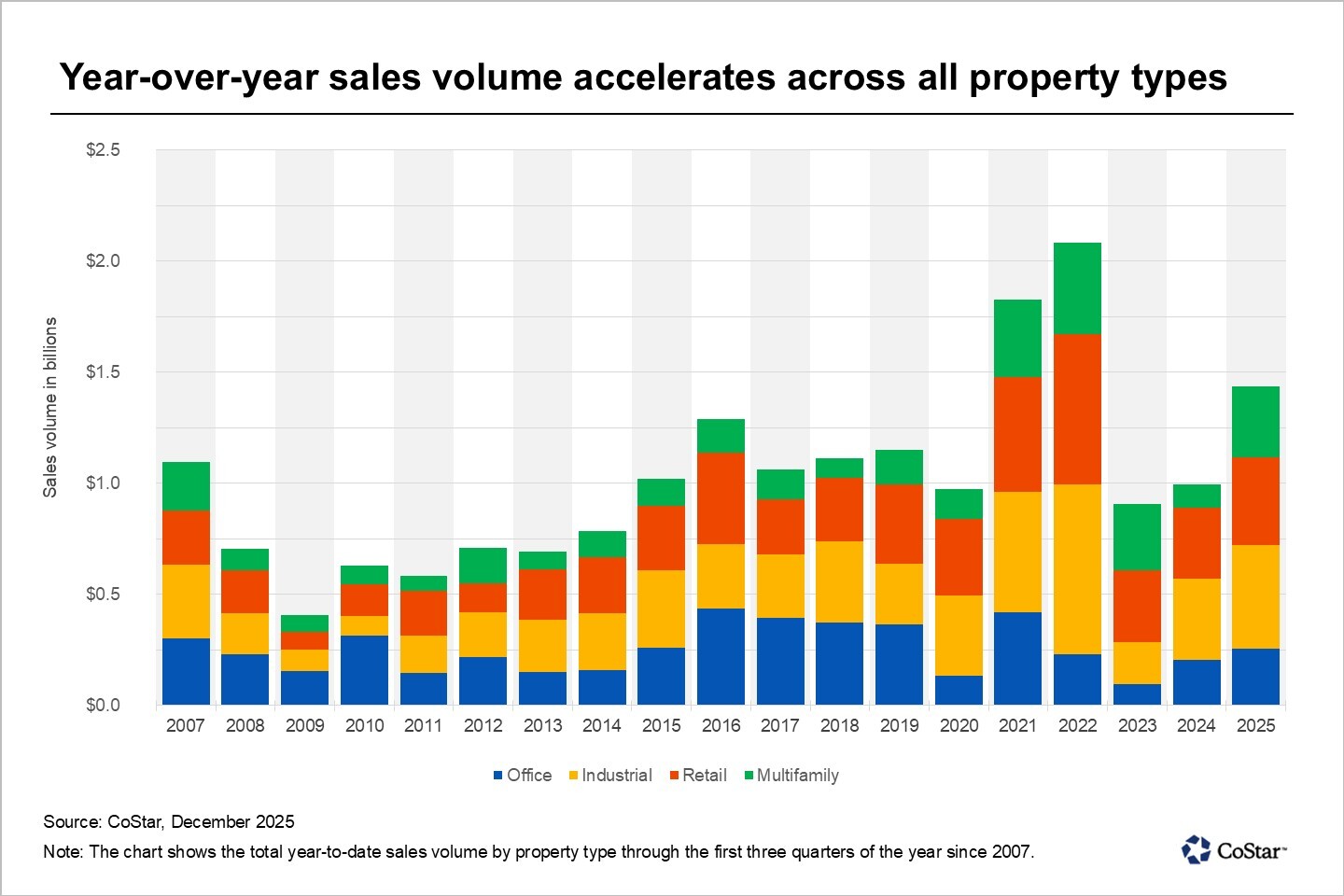
Milwaukee entered 2025 with renewed momentum, posting its strongest commercial real estate sales volume in three years. After a period of uncertainty and high capital costs, investors are returning with a sharper focus on quality assets, realistic pricing, and reliable cash flow. Activity is increasing across industrial, office, multifamily, and retail sectors, signaling a broad-based recovery fueled by stabilizing interest rates and improved market confidence.
As 2026 approaches, the title insurance industry is navigating a complex mix of market recovery, rising fraud threats, and sweeping regulatory changes. Industry leaders say the path forward centers on smarter technology, leaner operations, and stronger support for title agents. With AI-driven workflows, enhanced fraud prevention, and new compliance demands—including FinCEN’s expanded Geographic Targeting Orders—companies like Stewart and First American are reshaping how title work gets done. For real estate and mortgage professionals, the year ahead promises more automation, heightened standards, and major opportunities for those who stay ahead of the curve.
The real estate industry is undergoing a major transformation in 2025 as advancements in AI, proptech, blockchain, and data intelligence redefine how properties are marketed, valued, financed, and experienced. From instant digital valuations and immersive virtual tours to tokenized investments and predictive analytics, technology is reshaping every stage of the real estate lifecycle. Professionals who embrace these innovations—while maintaining the human expertise clients still rely on—will lead the next era of the industry.