Embracing Innovation to Thrive in a Shifting Mortgage Market
The mortgage market is shifting quickly, and lenders who embrace innovation now will be the ones positioned to win. Today’s most resilient lenders aren’t rewriting the rulebook—they’re leveraging proven technology, building smarter workflows and improving customer experiences without disrupting what already works.
Why Innovation Matters Right Now
In today’s market conditions, strategic innovation is the greatest competitive advantage a lender can cultivate. Historically successful lenders have prioritized customer experience, operational efficiency and the flexibility to pivot when markets move unexpectedly.
Innovation doesn’t always mean changing everything. Companies like Stripe and Square scaled by building on Visa and Mastercard’s existing infrastructure. Stripe’s simple payment API empowered online businesses, while Square’s mobile card reader transformed small merchant transactions.
This lesson applies directly to mortgage lending: you don’t need new infrastructure—you need to innovate on top of your solid foundation.
Start with a Stable Foundation
One standout example of resilience comes from Gilchrist, Texas, where a yellow house survived Hurricane Ike because it was rebuilt with reinforced concrete and deep pilings beyond code requirements. When the storm hit, everything around it washed away—except the home built on a stronger foundation.
For lenders, this foundation is technology. A reliable LOS that integrates the entire lending process into one seamless system provides stability when the market becomes turbulent. Strong platforms offer data flow, integrations and a broad network of partners without creating a fragile tech stack.
The alternative—using multiple disconnected systems—creates breakpoints, data issues and risky dependencies, especially when partnering with undercapitalized startups in a volatile market.
Drive Efficiency and Scale Through Automation
Mortgage origination costs are approaching $12,000 per loan, driven largely by manual labor. Automation isn’t optional anymore—it’s the path to staying competitive.
Amazon’s journey proves this. They evolved from manual fulfillment centers to robotics, AI-driven inventory systems and predictive logistics. The result? Faster delivery, lower costs and a scalable operation capable of handling surges effortlessly.
Mortgage lenders can replicate this transformation with intelligent automation tools that streamline verifications, data handling and document management. Faster decisions, lower costs and better customer interactions are all within reach.
“Encompass provides automated enhanced conditions and automated service ordering that’s helped us cut back on manual workload for employees, so they’re able to provide a hands-on customer experience.” — Meredith Williams, COO of GMFS Mortgage
Start Small, Iterate and Expand
Innovation doesn’t have to happen overnight. When Microsoft introduced Office 365, they allowed users to gradually adopt cloud features while still working in the familiar desktop environment. This approach made adoption simpler and less disruptive.
Similarly, ICE enables lenders to use Encompass innovations through desktop or web interfaces, allowing for gradual adoption without reworking existing configurations. This leads to faster value with far less stress on teams.
Transform with Confidence
Lenders who innovate now will be ready for whatever market conditions come next. A strong technology ecosystem gives lenders the tools to acquire customers, validate loan quality, reduce origination costs and stay resilient through market cycles.
With strategic, incremental innovation—and the right technology partner—mortgage lenders can modernize confidently without starting from scratch.
More Articles
Getting licensed or staying ahead in your career can be a journey—but it doesn’t have to be overwhelming. Grab your favorite coffee or tea, take a moment to relax, and browse through our articles. Whether you’re just starting out or renewing your expertise, we’ve got tips, insights, and advice to keep you moving forward. Here’s to your success—one sip and one step at a time!
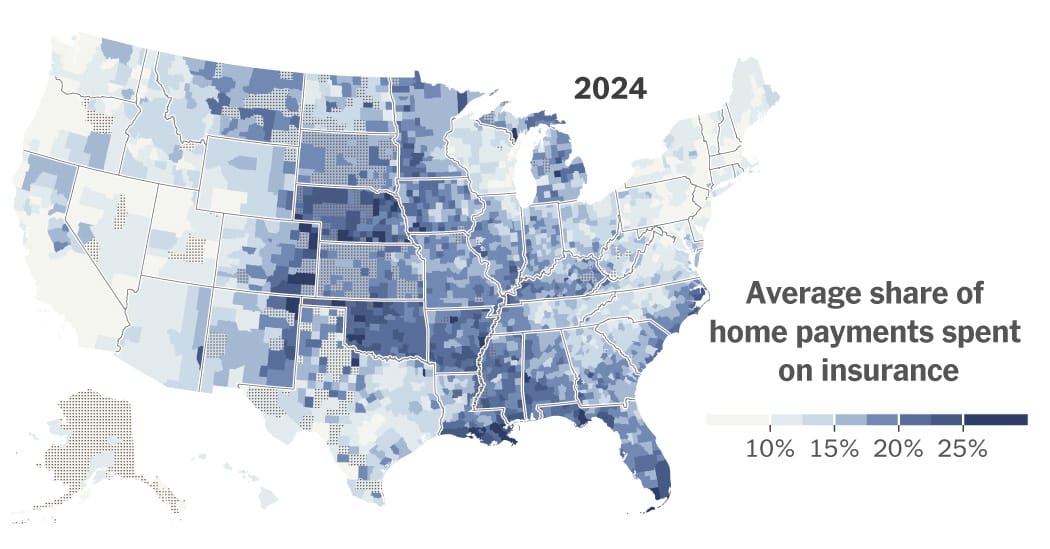
A surge in home insurance premiums is reshaping housing markets across the country, hitting disaster‑prone regions the hardest. From Louisiana to Colorado and California, deals are collapsing, buyers are backing out, and home values are dropping as insurance becomes a central affordability hurdle. New data shows climate‑driven risk repricing and soaring reinsurance costs are stripping tens of thousands of dollars from property values, forcing some homeowners to sell at a loss—or go uninsured altogether.
After years of sluggish activity, the National Association of REALTORS predicts 2026 could mark the long‑awaited rebound for the housing market. With a projected 14% jump in home sales, steadier rates near 6%, and rising buyer activity, NAR economists say momentum is already building. Early signs—like a 31% surge in mortgage applications, continued job growth, and stabilizing prices—suggest a stronger, more confident market ahead, creating fresh opportunities for both seasoned professionals and aspiring agents preparing to enter the field.
A surge of global capital is reshaping real estate heading into 2026, with investors shifting toward hands‑on strategies, cross‑border diversification, and high‑growth asset classes like data centers. Colliers’ 2026 Global Investor Outlook highlights rising confidence, improving liquidity, and a major pivot toward direct investing and value‑add opportunities. From office market rebounds to Asia Pacific’s rapid fundraising growth, the report outlines trends every real estate professional should understand as the industry enters a more dynamic, opportunity‑rich cycle.
Culver City just became the first place in California to legalize six‑story apartment buildings with only one staircase — a simple change that could reshape mid‑rise housing statewide. By freeing up as much as 7% more usable floor space, architects say single‑stair designs allow bigger units, more windows, and the kind of elegant layouts common in New York and Europe. If the city’s six‑year experiment succeeds, it may spark a broader rethinking of U.S. building codes and open the door to more flexible, affordable multifamily development across California.
Stratford homeowners are receiving their 2025 Notices of Assessment Change, marking the town’s first property revaluation since 2019. Officials emphasize that rising assessments do not equal higher tax bills, as a new mill rate won’t be set until spring 2026. Residents can challenge or review their updated valuations through informal hearings hosted by Vision Government Solutions, with appointments available for one week after receiving a notice.
New reporting reveals Florida homeowners now face an average insurance premium of $5,838 per year — nearly triple the national average. With skyrocketing rates, denied claims, and mounting non-renewals, residents are being pushed to tough financial decisions while lawmakers scramble to implement reforms. From retirees skipping coverage to families battling insurers for fair payouts, Florida’s insurance crisis is reshaping both the housing market and the daily lives of homeowners statewide.