Empowering the Gig Economy: AXA’s Tailored Protection
The gig economy, a burgeoning landscape of non-standard employment forms like gig work, flexi-work, and freelance work, is reshaping the labor market, particularly for Gen-Z. This generation, driven by a thirst for flexibility and autonomy, is at the forefront of this transformation. However, as the South China Morning Post highlights, this shift is not without its challenges.
In Hong Kong, a notable segment of the workforce identifies as self-employed, yet they often find themselves outside the protective embrace of traditional social safety nets. Government data reveals that out of a working population of 3.69 million, 0.29 million are self-employed, a figure that excludes unpaid family workers. This gap leaves many vulnerable to financial risks associated with illness, accidents, and retirement insecurity.
Angela Wong, Chief Marketing and Customer Officer at AXA Hong Kong & Macau, underscores the critical need for comprehensive insurance solutions for gig workers. “Being self-employed shouldn’t be a risk,” she asserts. The lack of health and accident insurance can lead to substantial medical bills, jeopardizing financial stability and forcing gig workers to continue working despite health challenges.
According to a World Bank report, individuals in non-standard employment often remain outside the scope of social insurance schemes. This underscores the importance of formulating policies that extend coverage to these vulnerable segments of the workforce. AXA is stepping up to fill this gap by offering tailored insurance solutions. By doing so, they aim to provide gig workers with the financial security and peace of mind they need to thrive in this new economy, ensuring that freedom of work comes with a safety net.
More Articles
Getting licensed or staying ahead in your career can be a journey—but it doesn’t have to be overwhelming. Grab your favorite coffee or tea, take a moment to relax, and browse through our articles. Whether you’re just starting out or renewing your expertise, we’ve got tips, insights, and advice to keep you moving forward. Here’s to your success—one sip and one step at a time!
Michigan hunters are set to experience significant changes in the upcoming deer hunting season as new regulations are announced by the Michigan Department of Natural Resources (DNR). These changes, effective August 1, are aimed at refining hunting practices and ensuring sustainable wildlife management.
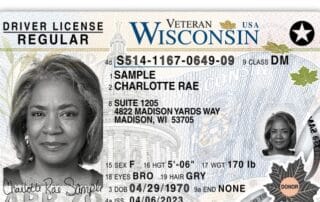
Beginning on May 7, 2025, anyone aged 18 and older will need a Real ID-compliant driver's license or another TSA-approved identification to board domestic flights or access certain federal facilities. The Real ID, identifiable by a star in the upper right corner of Wisconsin IDs, is a more secure version of a driver's license.
As the vibrant housing market in Washington, D.C. continues to flourish, aspiring real estate agents are eager to make their mark. But with a myriad of educational options, selecting the right real estate school can be daunting.
In today's complex financial landscape, the role of a Certified Financial Planner (CFP) has become increasingly crucial for individuals seeking sound financial advice.
In an era where the voices of the younger generation are more crucial than ever, The New York Times has unveiled its much-anticipated 2024-25 Student Contest Calendar.
In the rapidly evolving world of artificial intelligence, researchers are facing a new challenge: developing tests that A.I. systems cannot easily pass... This trend raises a chilling question: Are A.I. systems becoming too advanced for us to measure effectively?