Empowering the Gig Economy: AXA’s Tailored Protection
The gig economy, a burgeoning landscape of non-standard employment forms like gig work, flexi-work, and freelance work, is reshaping the labor market, particularly for Gen-Z. This generation, driven by a thirst for flexibility and autonomy, is at the forefront of this transformation. However, as the South China Morning Post highlights, this shift is not without its challenges.
In Hong Kong, a notable segment of the workforce identifies as self-employed, yet they often find themselves outside the protective embrace of traditional social safety nets. Government data reveals that out of a working population of 3.69 million, 0.29 million are self-employed, a figure that excludes unpaid family workers. This gap leaves many vulnerable to financial risks associated with illness, accidents, and retirement insecurity.
Angela Wong, Chief Marketing and Customer Officer at AXA Hong Kong & Macau, underscores the critical need for comprehensive insurance solutions for gig workers. “Being self-employed shouldn’t be a risk,” she asserts. The lack of health and accident insurance can lead to substantial medical bills, jeopardizing financial stability and forcing gig workers to continue working despite health challenges.
According to a World Bank report, individuals in non-standard employment often remain outside the scope of social insurance schemes. This underscores the importance of formulating policies that extend coverage to these vulnerable segments of the workforce. AXA is stepping up to fill this gap by offering tailored insurance solutions. By doing so, they aim to provide gig workers with the financial security and peace of mind they need to thrive in this new economy, ensuring that freedom of work comes with a safety net.
More Articles
Getting licensed or staying ahead in your career can be a journey—but it doesn’t have to be overwhelming. Grab your favorite coffee or tea, take a moment to relax, and browse through our articles. Whether you’re just starting out or renewing your expertise, we’ve got tips, insights, and advice to keep you moving forward. Here’s to your success—one sip and one step at a time!
The Association of American Medical Colleges (AAMC) reports that while breast cancer mortality has decreased, Black women still face a 40% higher death rate compared to their White counterparts. This inequity is partly due to the fact that Black women are less frequently offered genetic screenings that could potentially save their lives.
In the rapidly evolving landscape of healthcare, two fields stand at the forefront of innovation: MedTech and BioTech. While both are pivotal in enhancing patient care, they operate in distinct domains.
The nanomedicine market is set to experience a remarkable expansion, projected to surge from USD 223.6 billion in 2023 to a staggering USD 634.2 billion by 2032.
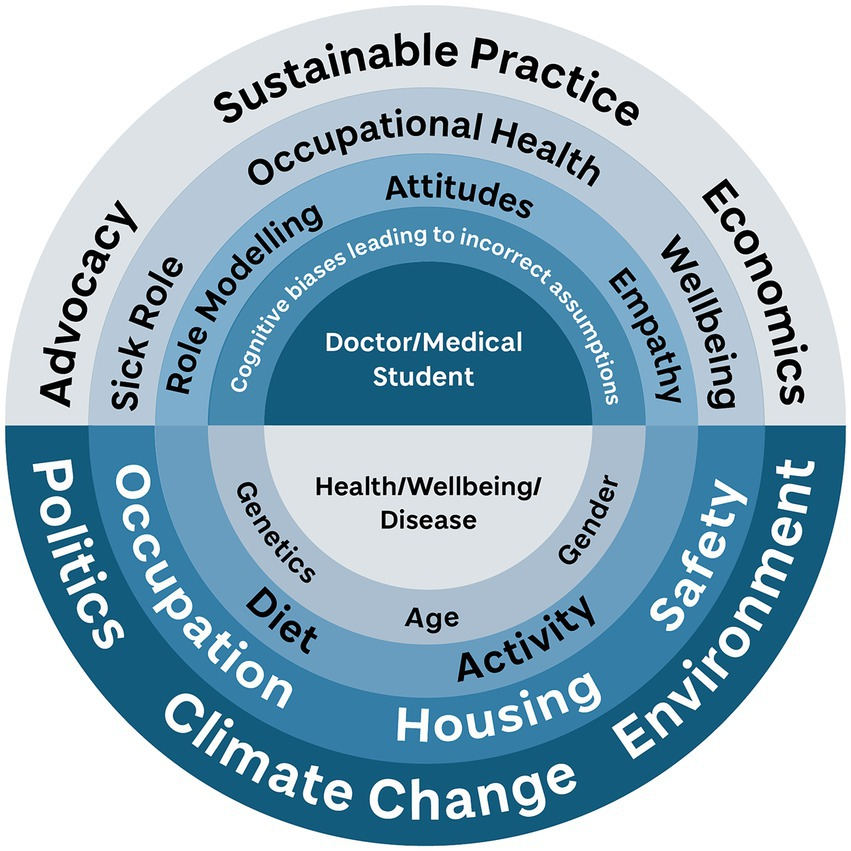
In a world where healthcare and its education are undergoing seismic shifts, the University of Dundee is pioneering a transformative approach. The institution is integrating public health into its medical curriculum, responding to the rapid technological, political, and social changes reshaping the medical landscape.