Entry-Level CRE Job Openings Drop, Setting Up Talent Squeeze
The commercial real estate (CRE) sector is facing a significant challenge as entry-level job openings continue to decline. Over the past two years, there has been a marked decrease in opportunities for young professionals seeking to enter the industry. This trend poses a substantial barrier for those aiming to gain the skills and experience necessary for advancement.
According to data from real estate job site SelectLeaders, listings for positions requiring zero to four years of experience have dropped by 26% year-over-year as of May. This follows a 35% decline between May 2022 and 2023. Such reductions are exacerbated by a weak commercial real estate market, where entry-level roles are often the first to be outsourced to artificial intelligence or overseas workers.
Andy Hunt, director of the real estate program at Marquette University, likens the situation to a “glass-half-empty version of the Goldilocks story,” where prolonged uncertainty stifles decision-making, impacting entry-level hiring more than other areas.
Many firms have been more conservative when hiring for CRE roles, due to an industry slowdown.
The impact of this decline is uneven across the industry. While some sectors and regions, such as asset management in Florida or Texas, continue to offer opportunities, others, particularly transaction or financing roles in the Midwest, are experiencing hiring freezes. BGO Chief Economist Ryan Severino notes that several large CRE organizations have halted hiring altogether.
Collete English Dixon, executive director of the Marshall Bennett Institute of Real Estate at Chicago’s Roosevelt University, emphasizes the importance of finding niches where students can excel, despite the broader hiring challenges.
Technology, especially AI, looms large over the hiring landscape. As AI’s capabilities expand, tasks traditionally handled by entry-level workers may increasingly fall to automation. English Dixon warns of the need to balance teaching fundamentals with preparing students for an AI-driven future.
Hiring trends have placed Gen Z applicants for CRE roles in a tough position.
The current hiring environment is particularly challenging for recent college graduates. At the University of Central Florida, only half of the 100 real estate graduates have secured positions through internships, while another 25 have job offers through other means. At Marquette University, about 60% of the recent class of 40 real estate students have jobs lined up, with many still searching.
RCLCO Management Consulting Practice Managing Director Ellen Klasson highlights the potential long-term impact of starting a career in a challenging environment, noting that the conditions at the beginning of one’s career can influence the entire trajectory.
For more insights on this topic, you can read the full article on Bisnow.
More Articles
Getting licensed or staying ahead in your career can be a journey—but it doesn’t have to be overwhelming. Grab your favorite coffee or tea, take a moment to relax, and browse through our articles. Whether you’re just starting out or renewing your expertise, we’ve got tips, insights, and advice to keep you moving forward. Here’s to your success—one sip and one step at a time!
Florida families are feeling the squeeze as everyday costs, insurance premiums, and homeownership barriers continue to climb. House District 102 candidate Jayden D’Onofrio is calling for a broader, more unified affordability strategy—one that tackles the state’s insurance crisis, supports first‑time homebuyers, and restores real competition in the market. His message centers on transparency, practical solutions, and keeping Florida livable for the professionals, workers, and families who power its economy.
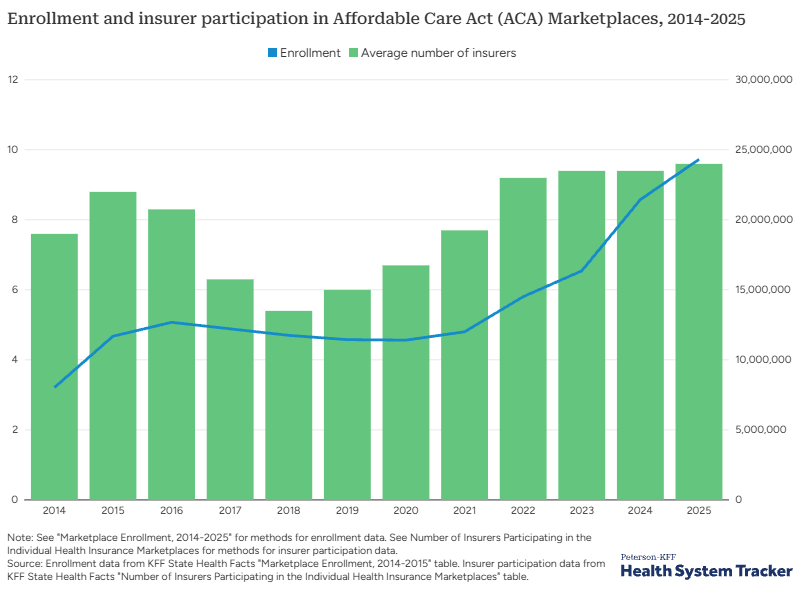
A decade of dramatic change is reshaping America’s health insurance markets. Employer group plans are becoming increasingly dominated by a few powerful insurers, while the ACA individual marketplace is experiencing record‑breaking competition and enrollment. Self‑funded plans are surging, small‑group premiums are driving employers to new coverage models, and major policy shifts in 2025 could redefine affordability for millions. This data‑driven Peterson‑KFF analysis breaks down the trends every insurance, finance, and business professional needs to understand as the industry enters a transformative new era.
Sarasota County is inching closer to approving Winchester Ranch, a massive 8,999‑home community planned for more than 3,100 acres in North Port. With a 7‑1 vote from the Planning Commission and a final decision expected in early 2026, the project could become one of Southwest Florida’s largest developments in decades—bringing new housing, commercial space, and industry while raising fresh questions about growth, the environment, and the region’s rapidly evolving real estate market.
Lument Finance Trust has closed a major $663.8 million commercial real estate CLO, marking one of the standout CRE finance deals of 2025. The transaction, LMNT 2025-FL3, features a strong reinvestment period, non‑recourse and non‑mark‑to‑market financing, and a diversified pool of 32 loans tied to 49 properties nationwide. With J.P. Morgan leading the structuring and more than $585 million placed in investment‑grade securities, the deal highlights renewed stability in transitional CRE debt—making it a development real estate and finance professionals will want to watch closely.
Walmart has partnered with Alquist 3D to roll out the nation’s first large‑scale wave of 3D‑printed commercial buildings, signaling a major shift in how future retail and industrial spaces will be constructed. After completing an 8,000‑square‑foot 3D‑printed expansion in Tennessee—the largest of its kind—the company is moving forward with over a dozen new projects nationwide, accelerating a tech‑driven transformation in commercial real estate.
Citizens Property Insurance Corp. is recommending statewide rate reductions for 2026—the first proposed decrease in more than a decade. Most Citizens policyholders could see an average 11.5% drop, reflecting recent insurance‑market reforms that have stabilized Florida’s turbulent property sector. With hundreds of thousands of policies moving back to private insurers and state‑backed Citizens shrinking to record‑low enrollment, real estate and insurance professionals should prepare for how lower premiums may influence affordability, buyer confidence, and market activity heading into 2026.