ETH Zurich’s Impact Printing: A Breakthrough in Sustainable Construction
The innovative team at ETH Zurich is making waves in the construction world with their new method, Impact Printing. This groundbreaking technique utilizes Earth-based materials, such as sand, silt, clay, and gravel, to construct environmentally friendly structures. As detailed in their publication in Springer Nature, Impact Printing promises to be a greener and more cost-effective alternative to traditional 3D printing methods.
ETH Zurich’s research team, guided by Lauren Vasey, a prominent SNSF Bridge Fellow, has developed a method to turn materials excavated from construction sites into usable building products. By avoiding cement and opting for locally-sourced materials, they achieve significantly lower carbon emissions. Impressively, the materials used in Impact Printing require minimal additives, cutting the need for cement and enhancing sustainability.
This process involves a robotic tool that, guided by a digital blueprint, applies Earth-based material layers at high speeds, creating robust structures without needing chemical stabilizers. Despite using a small percentage of mineral stabilizers, the ETH Zurich team aims to eliminate these for a fully recyclable construction method.
The research indicates that structures built using Impact Printing can support substantial weight from the start, offering advantages in structural integrity and environmental impact. Using this technology, the team has successfully erected walls up to 6.5 feet tall, showcasing the method’s practicality in real-world applications.
Beyond ETH Zurich, a global wave of research is similarly focused on sustainable construction practices. For example, the University of Virginia is developing a sustainable concrete alternative using graphene and limestone-calcined clay, showing significant environmental benefits. Meanwhile, Berlin’s TU and Brunel University are enhancing 3D printing concrete by incorporating recycled materials, revealing steps toward more sustainable construction.
The ultimate vision involves developing a prefabrication facility to bring Impact Printing technology to the market, bridging the gap between innovative research and practical construction solutions. If successful, it could significantly transform the industry, presenting a viable alternative to current 3D printing methods, reducing the environmental footprint and offering more sustainable urban development solutions.
More Articles
Getting licensed or staying ahead in your career can be a journey—but it doesn’t have to be overwhelming. Grab your favorite coffee or tea, take a moment to relax, and browse through our articles. Whether you’re just starting out or renewing your expertise, we’ve got tips, insights, and advice to keep you moving forward. Here’s to your success—one sip and one step at a time!
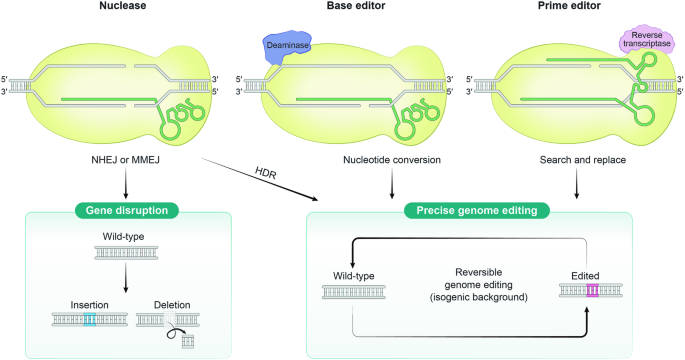
Gene editing technology is swiftly emerging as a transformative force in both healthcare and agriculture, particularly through tools like CRISPR-Cas9, which offer precise methods to modify genes and promise to revolutionize treatment for genetic disorders, cancer, and infectious diseases.
Angela Wong, Chief Marketing and Customer Officer at AXA Hong Kong & Macau, underscores the critical need for comprehensive insurance solutions for gig workers.
The AMA highlights that AI's integration must be guided by the fundamental principles of medical ethics: patient autonomy, beneficence, nonmaleficence, and justice.
AI, which simulates human intelligence, is reshaping various sectors, particularly healthcare. The ability to perform complex tasks, such as diagnostics and personalized healthcare, is no longer confined to human capabilities alone.
A recent study published in Nature on July 25, 2024, unveils a cutting-edge chatbot named Chat Ella, designed to assist in the diagnosis of chronic diseases.