
As we venture further into 2025, the landscape of shopping continues to evolve with a fascinating dynamic between online and in-store experiences. According to a recent article from Business.com, the retail sector is witnessing a significant shift in consumer preferences, with approximately 59% of consumers favoring online shopping while 41% still prefer traditional in-store purchases.


The Rise of E-Commerce

Online shopping has become a cornerstone of modern consumer behavior, driven by convenience and variety. Shoppers can browse and purchase items from anywhere at any time, a trend that has only accelerated in recent years. E-commerce platforms offer a vast selection of products, often at competitive prices, thanks to the absence of physical showroom constraints.


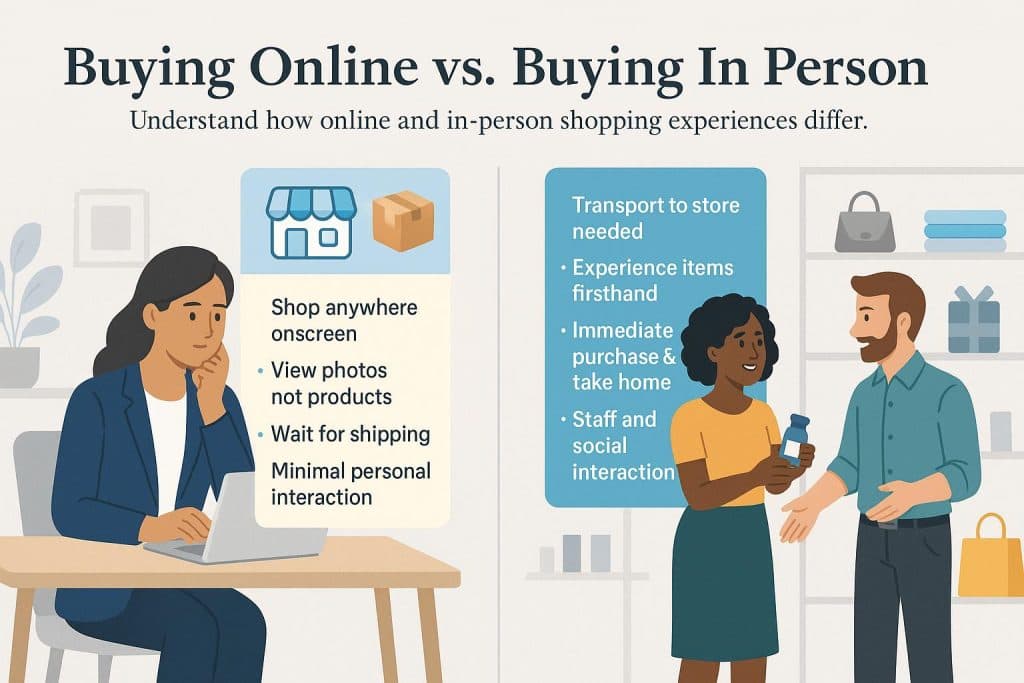
Buying online vs. In person graphic

Key Benefits of Online Shopping

  • 24/7 Access: Consumers can shop at their convenience without being restricted by store hours.
  • Personalization: AI-driven features offer tailored recommendations, enhancing the shopping experience.

The Enduring Appeal of Brick-and-Mortar Stores

Despite the rise of online shopping, physical stores remain crucial for many consumers. These locations offer a tactile experience that online platforms cannot replicate. Shoppers can see, touch, and try products before purchasing, which is particularly important for unfamiliar or high-value items.


Advantages of In-Store Shopping

  • Instant Gratification: Immediate product acquisition without waiting for shipping.
  • Customer Service: In-store staff provide personalized assistance, fostering trust and loyalty.

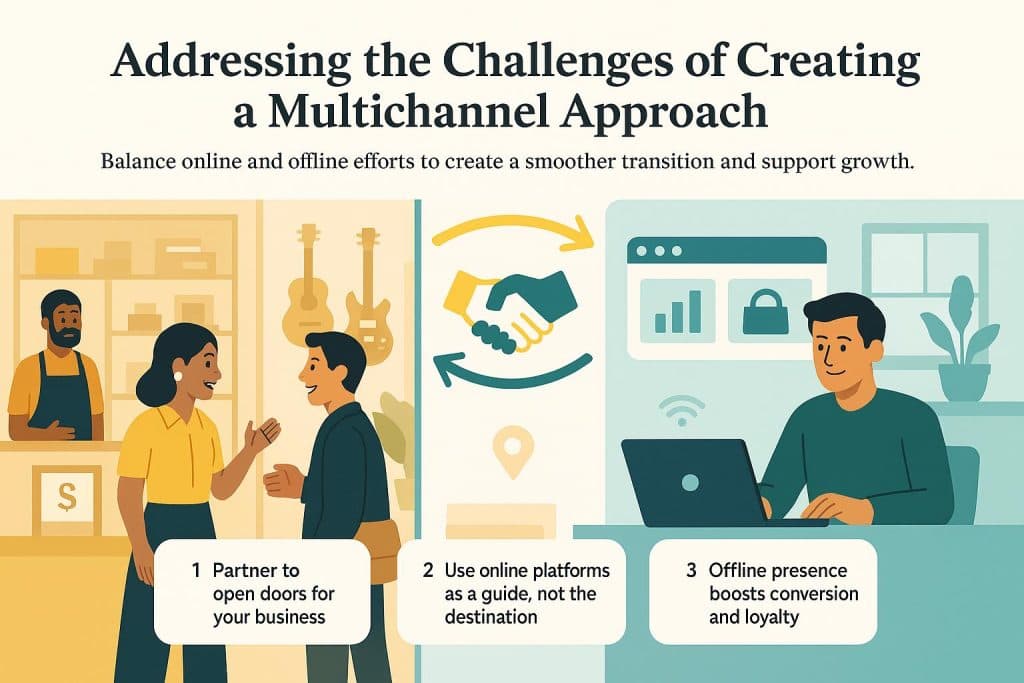
Challenges of multichannel approach

Bridging the Gap: Omnichannel Retail Strategies

Retailers are increasingly adopting omnichannel strategies to blend the best of both worlds. This approach involves integrating online and offline experiences to meet evolving consumer expectations. For instance, Research Online, Purchase Offline (ROPO) behavior is common, where customers research products online but complete purchases in-store for assurance and immediacy.


Tips for Retailers

  • Implement seamless inventory management across channels.
  • Offer hybrid fulfillment options like buy online, pick up in-store.

For more insights on adapting to these changes, you can explore the original Business.com article, which delves deeper into the evolving retail landscape and provides valuable strategies for businesses navigating this new era of shopping.

More Articles

Getting licensed or staying ahead in your career can be a journey—but it doesn’t have to be overwhelming. Grab your favorite coffee or tea, take a moment to relax, and browse through our articles. Whether you’re just starting out or renewing your expertise, we’ve got tips, insights, and advice to keep you moving forward. Here’s to your success—one sip and one step at a time!

Beyond the Vocabulary Drill: Jonathan Goforth’s Real Estate Prep

Let’s face it—studying for the real estate exam feels like being force-fed a dictionary while simultaneously dissecting a Sudoku puzzle.

By |January 22, 2025|Categories: Article, Education, Real Estate|Tags: , |0 Comments

Mainstreaming Blockchain: A New Era of Finance

In a world where traditional finance is not just adopting crypto but being fundamentally rebuilt around it, Forbes reports on the seismic shifts reshaping the financial landscape.

By |January 22, 2025|Categories: Article, Finance, Technology|Tags: , |0 Comments

AI in Radiology: Balancing Innovation with Concerns

A recent analysis has shed light on the public's perception of artificial intelligence (AI) in radiology. While the majority of patients are supportive of AI's integration into this field, concerns about data privacy and job displacement remain prevalent.

By |January 21, 2025|Categories: Article, Healthcare, Technology|Tags: , |0 Comments

Predictive Analytics Tools Reshaping Business Landscape by 2025

Predictive analytics tools are not only becoming more sophisticated but also increasingly accessible to both IT professionals and business users alike.

Artificial Intelligence Revolutionizing Healthcare: A New Era of Efficiency and Patient Care

The global healthcare industry is on the brink of a transformative shift, as artificial intelligence (AI) technologies are poised to revolutionize patient care and operational efficiency.