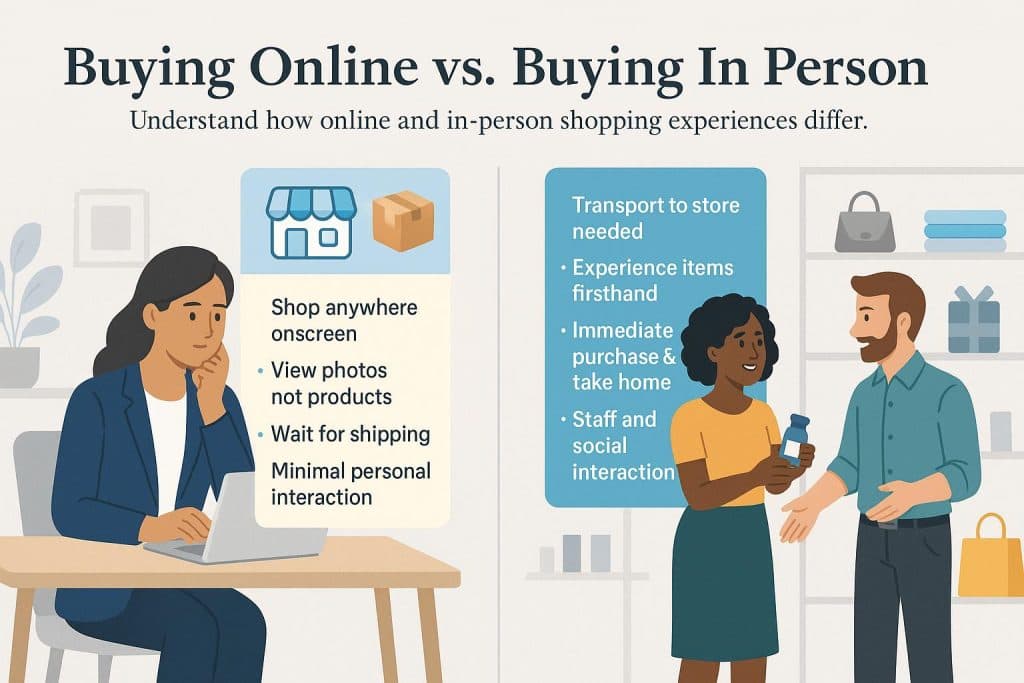
As we venture further into 2025, the landscape of shopping continues to evolve with a fascinating dynamic between online and in-store experiences. According to a recent article from Business.com, the retail sector is witnessing a significant shift in consumer preferences, with approximately 59% of consumers favoring online shopping while 41% still prefer traditional in-store purchases.
The Rise of E-Commerce
Online shopping has become a cornerstone of modern consumer behavior, driven by convenience and variety. Shoppers can browse and purchase items from anywhere at any time, a trend that has only accelerated in recent years. E-commerce platforms offer a vast selection of products, often at competitive prices, thanks to the absence of physical showroom constraints.
Key Benefits of Online Shopping
24/7 Access: Consumers can shop at their convenience without being restricted by store hours.
Personalization: AI-driven features offer tailored recommendations, enhancing the shopping experience.
The Enduring Appeal of Brick-and-Mortar Stores
Despite the rise of online shopping, physical stores remain crucial for many consumers. These locations offer a tactile experience that online platforms cannot replicate. Shoppers can see, touch, and try products before purchasing, which is particularly important for unfamiliar or high-value items.
Advantages of In-Store Shopping
Instant Gratification: Immediate product acquisition without waiting for shipping.
Customer Service: In-store staff provide personalized assistance, fostering trust and loyalty.
Bridging the Gap: Omnichannel Retail Strategies
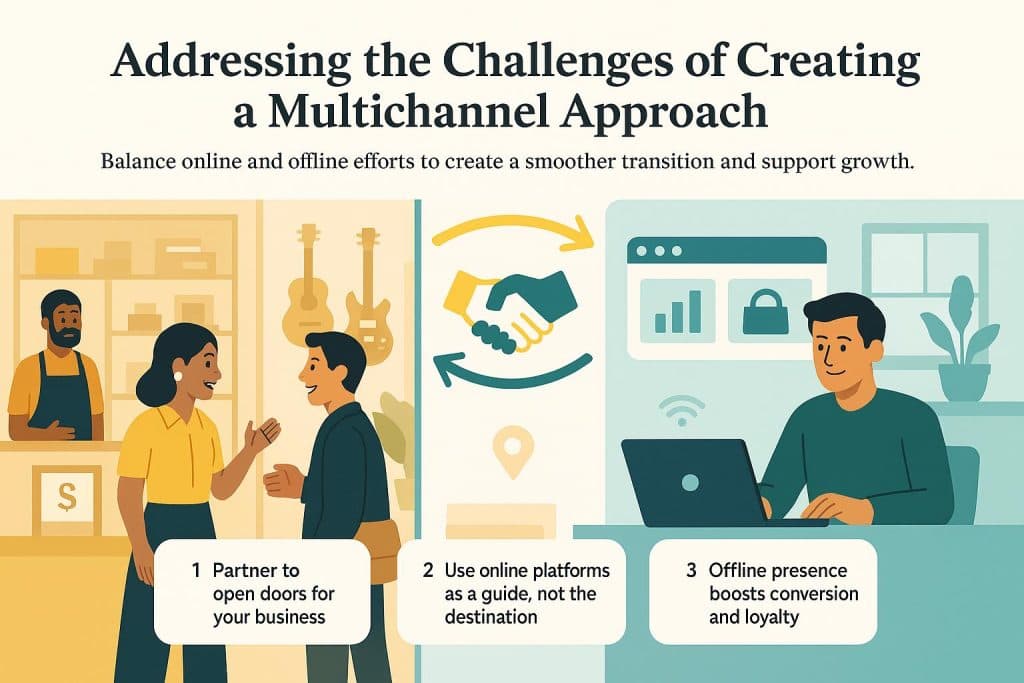
Retailers are increasingly adopting omnichannel strategies to blend the best of both worlds. This approach involves integrating online and offline experiences to meet evolving consumer expectations. For instance, Research Online, Purchase Offline (ROPO) behavior is common, where customers research products online but complete purchases in-store for assurance and immediacy.
Tips for Retailers
Implement seamless inventory management across channels.
Offer hybrid fulfillment options like buy online, pick up in-store.
For more insights on adapting to these changes, you can explore the original Business.com article, which delves deeper into the evolving retail landscape and provides valuable strategies for businesses navigating this new era of shopping.
More Articles
Getting licensed or staying ahead in your career can be a journey—but it doesn’t have to be overwhelming. Grab your favorite coffee or tea, take a moment to relax, and browse through our articles. Whether you’re just starting out or renewing your expertise, we’ve got tips, insights, and advice to keep you moving forward. Here’s to your success—one sip and one step at a time!
Lofty has launched the industry’s first Agentic AI Operating System, a breakthrough platform that doesn’t just follow commands—it plans, executes, evaluates, and adapts entire workflows on its own. Designed specifically for real estate professionals, the system acts like an AI “orchestra,” coordinating specialized agents for lead qualification, marketing, SEO, transaction management, website creation, and more. With leaders calling this a major leap beyond traditional tools, Lofty AOS signals a new era where agents can focus on relationships and closings while AI handles the heavy lifting.
Florida’s insurance landscape is finally showing signs of stability as private insurers return and Citizens Property Insurance drops below 400,000 policies. Insurance Commissioner Michael Yaworsky says reforms are working, but homeowners may not feel relief yet as inflation and rebuilding costs keep premiums high. With transparency improvements, mitigation credits, and new AI regulations on the horizon, Florida aims to avoid another insurance crisis while keeping the market competitive and consumer‑friendly.
Mortgage rates just hit their lowest point since 2022, closing January at 6.18% and giving buyers and industry professionals a rare moment of relief. But while the Federal Reserve continues to pause rate hikes, economists warn that significant declines are unlikely. Most forecasts show rates hovering near 6% through 2026, with political uncertainty and inflation keeping markets volatile. For now, stability may be the best we get — and even that could be temporary.
Propy, a fast-growing real estate tech firm blending AI automation with blockchain-backed transaction systems, has secured a major $100 million credit facility to accelerate nationwide title company consolidation. The funding aims to modernize the traditionally slow, paper-heavy closing process, offering real estate professionals a faster, more secure, and more transparent experience. As automation reshapes the industry, staying educated on emerging technology will be essential for agents, brokers, mortgage professionals, and investors looking to stay competitive.
Escrow payments in Florida have jumped an astonishing 70% since 2019, far outpacing the national average and now consuming nearly 38% of a typical monthly mortgage payment. Surging insurance premiums and rising property taxes are driving the increase, reshaping affordability for homeowners and pricing out many would‑be buyers.
After losing their Altadena home in the LA wildfires, Jessica and Matt Conkle expected State Farm to help them rebuild. Instead, they faced months of delays, low valuations, and stalled claims — a struggle shared by nearly 80 percent of wildfire survivors. As insurers pull out of high‑risk areas and premiums soar, the crisis is reshaping homeownership, tightening mortgage approvals, and straining government safety nets. What’s happening in California is rapidly becoming a national issue, with real estate, mortgage, and insurance professionals on the front lines of a system under unprecedented pressure.