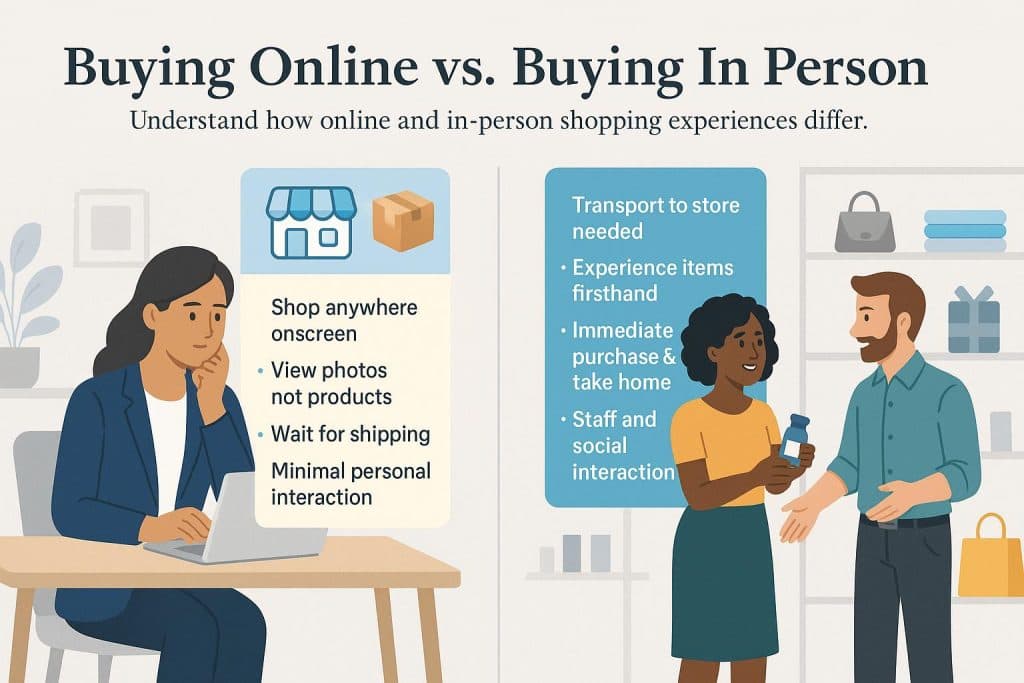
As we venture further into 2025, the landscape of shopping continues to evolve with a fascinating dynamic between online and in-store experiences. According to a recent article from Business.com, the retail sector is witnessing a significant shift in consumer preferences, with approximately 59% of consumers favoring online shopping while 41% still prefer traditional in-store purchases.
The Rise of E-Commerce
Online shopping has become a cornerstone of modern consumer behavior, driven by convenience and variety. Shoppers can browse and purchase items from anywhere at any time, a trend that has only accelerated in recent years. E-commerce platforms offer a vast selection of products, often at competitive prices, thanks to the absence of physical showroom constraints.
Key Benefits of Online Shopping
24/7 Access: Consumers can shop at their convenience without being restricted by store hours.
Personalization: AI-driven features offer tailored recommendations, enhancing the shopping experience.
The Enduring Appeal of Brick-and-Mortar Stores
Despite the rise of online shopping, physical stores remain crucial for many consumers. These locations offer a tactile experience that online platforms cannot replicate. Shoppers can see, touch, and try products before purchasing, which is particularly important for unfamiliar or high-value items.
Advantages of In-Store Shopping
Instant Gratification: Immediate product acquisition without waiting for shipping.
Customer Service: In-store staff provide personalized assistance, fostering trust and loyalty.
Bridging the Gap: Omnichannel Retail Strategies
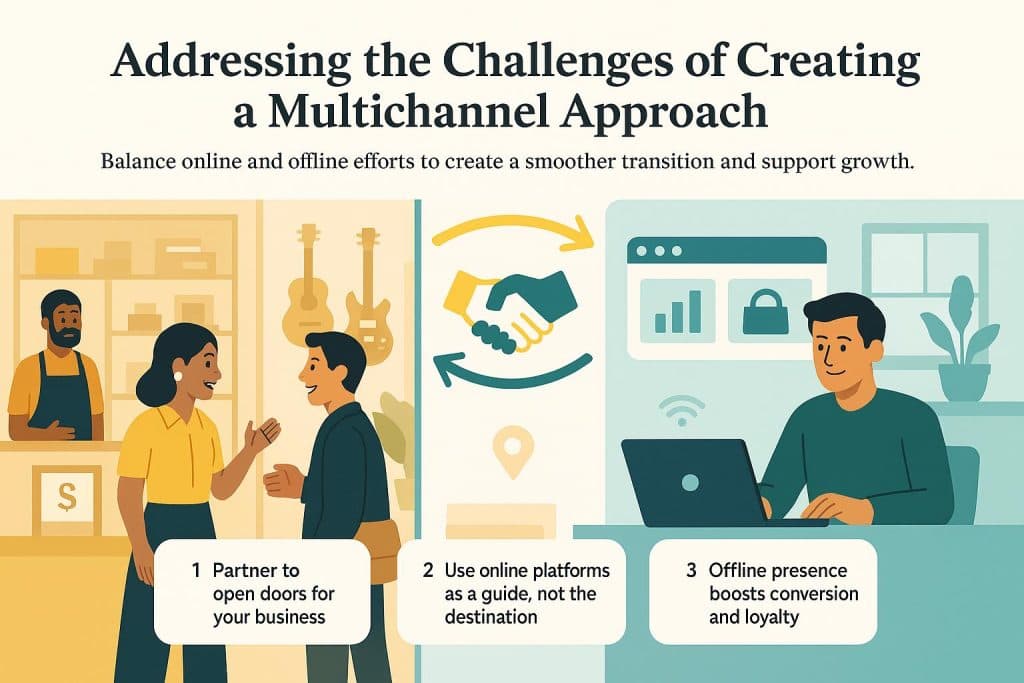
Retailers are increasingly adopting omnichannel strategies to blend the best of both worlds. This approach involves integrating online and offline experiences to meet evolving consumer expectations. For instance, Research Online, Purchase Offline (ROPO) behavior is common, where customers research products online but complete purchases in-store for assurance and immediacy.
Tips for Retailers
Implement seamless inventory management across channels.
Offer hybrid fulfillment options like buy online, pick up in-store.
For more insights on adapting to these changes, you can explore the original Business.com article, which delves deeper into the evolving retail landscape and provides valuable strategies for businesses navigating this new era of shopping.
More Articles
Getting licensed or staying ahead in your career can be a journey—but it doesn’t have to be overwhelming. Grab your favorite coffee or tea, take a moment to relax, and browse through our articles. Whether you’re just starting out or renewing your expertise, we’ve got tips, insights, and advice to keep you moving forward. Here’s to your success—one sip and one step at a time!
A Leon County judge has ordered Florida’s administrative courts to restart arbitration on more than 400 stalled Citizens Insurance cases, reigniting a legal showdown over whether the state’s insurer of last resort can force policyholders out of traditional courtrooms. The ruling directly conflicts with a separate Hillsborough County injunction that called Citizens’ arbitration system “likely unconstitutional,” setting up a rare judicial clash that could reshape how Floridians fight denied or underpaid property claims.
Inhabit has launched a powerful new suite of AI‑driven tools designed to modernize leasing, strengthen fraud prevention, and simplify compliance for property managers nationwide. From advanced leasing assistants and NYC‑specific regulatory AI to instant income verification and upcoming identity‑screening tech, these innovations aim to solve some of the industry’s toughest challenges. Real estate professionals—especially in multifamily—can expect faster operations, stronger safeguards, and a more efficient workflow as these technologies roll out.
A growing body of demographic research suggests that today’s housing shortage may give way to a future surplus as millions of Baby Boomer–owned homes return to the market over the next two decades. With affordability at historic lows and inventory still tight, this long‑term shift could eventually cool prices and transform the landscape for real estate professionals. The analysis draws parallels to aging populations abroad and highlights why understanding demographic cycles is becoming essential knowledge for agents, brokers, and mortgage professionals preparing for the next era of the housing market.
Griffin Funding has appointed John Jones as Senior Vice President of Growth and EOS Integrator, a move aimed at accelerating the lender’s push toward $3 billion in annual non‑QM loan volume by 2030. Jones, previously the company’s fractional integrator and COO, will lead expansion strategies, operational optimization, and leadership development as the lender strengthens its position in the increasingly competitive non‑QM market.
A new report shows Tampa outperforming the national real estate slowdown with a 6.5 percent annualized multifamily return, nearly 20 percent higher than the U.S. average. While many metros face oversupply or regulatory drag, Tampa’s balanced development pipeline, strong population growth, and investor confidence continue to fuel resilient performance heading into 2026.
A new Colliers outlook reveals that global capital is picking up momentum again, with investors shifting toward more active, hands‑on strategies. Data centers are surging, offices are rebounding, and value‑add plays like adaptive reuse are defining the next wave of opportunity. Regional markets—from the U.S. to APAC—are seeing renewed demand as fundraising spreads across continents and investors seek speed, control, and scale. This snapshot helps today’s real estate and finance professionals stay aligned with where global money is moving next.