The Federal Reserve’s recent decision to lower the federal funds rate by a total of 0.75 percentage points over its last two meetings has sparked discussions on its impact on the commercial real estate market in Northwest Arkansas. A potential additional cut of 0.25 percentage points by the end of the year has been signaled, promising further implications for the region’s economic landscape.
Paul Esterer, a seasoned expert in commercial real estate and managing director of Moses Tucker Partners, offers a nuanced perspective on these developments. According to Esterer, the drop in short-term rates does not correlate with the 10-year Treasury yield, which is a critical indicator for commercial rates used by banks and investors nationwide. While short-term rates have decreased, long-term rates have risen, presenting both opportunities and risks in repricing assets tied to short-term construction and variable rates.
The inversion of the yield curve, where the two-year Treasury yield hovers close to the 10-year yield, is typically seen as a harbinger of economic slowdown. As of mid-November, the 10-year Treasury note was at 4.28%, while the two-year note was at 4.26%, a situation that has real estate investors concerned about the potential for a shift in the yield curve.
Bank Liquidity and Investor Capital
Esterer remains optimistic about Northwest Arkansas’s future, citing the strong liquidity position of community banks. The lower interest rates have facilitated short-term lending, benefiting smaller projects, refinancing efforts, consumer loans, and small business activities. “Banks are lending again, repricing necessary assets, which is a positive sign,” Esterer noted.
Northwest Arkansas stands out among U.S. metro areas due to its rapid population growth, driving the need for extensive residential and commercial construction, as well as infrastructure projects like sewer, water, and energy improvements. Esterer highlighted the region’s attractiveness to a broad base of investors and developers, viewing it as a primary growth market in the U.S.
Skyline Report Insights
The Arvest Bank Skyline Report, now in its 20th year, underscores the health of the real estate market in Northwest Arkansas. The report noted an 8.5% increase in home sales in the first half of 2024 compared to the same period last year, with 1,896 new constructions among the 4,799 homes sold. Multifamily vacancy rates rose slightly but remained healthy, while commercial vacancy rates stayed flat, reflecting a robust market.
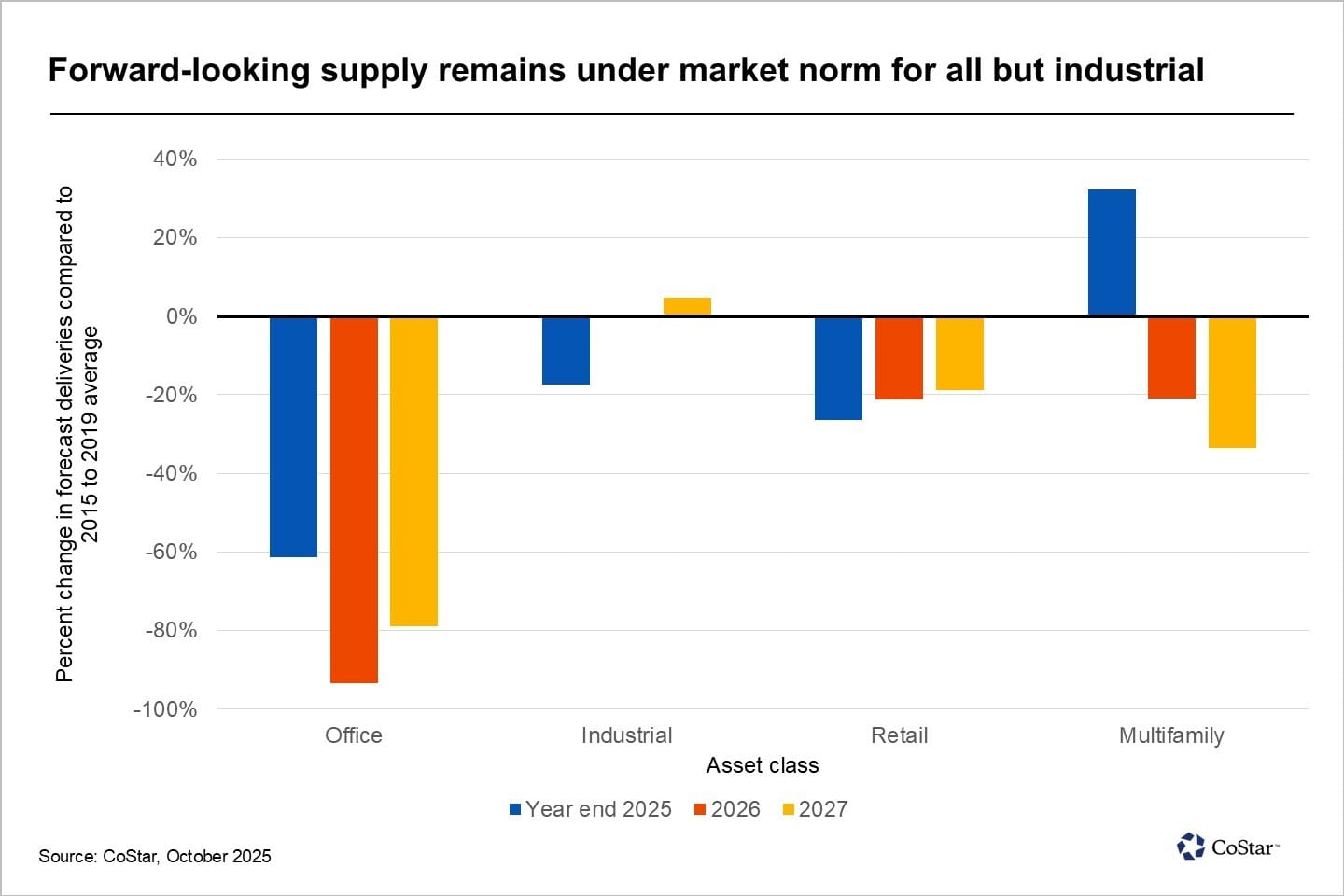
Despite national trends, the office market vacancy rate in Northwest Arkansas dropped from 8.8% to 7.4% in the first half of 2024, with strong leasing activity in the class A submarket. Retail vacancy rates also declined, driven by vibrant leasing in the class B retail submarket. However, the warehouse submarket saw a rise in vacancy rates due to new space entering the market and existing spaces becoming available, although demand for additional warehouse space remains strong.
Potential Warning Signs
Esterer cautioned that policy changes under the Trump administration could lead to significant economic shifts. Developers are in a holding pattern, assessing the potential impacts of tariffs, labor force changes, and shifts in stimulus funding for infrastructure projects.
Mortgage rates are slower to decline, a crucial factor for a region grappling with housing affordability for its growing labor force. Esterer emphasized the importance of infrastructure investment and affordable construction to sustain growth, noting, “The biggest challenge for commercial real estate is ensuring the capital needed for infrastructure, such as water, sewer, and electricity, is available to support growth.”
Mervin Jebaraj from the University of Arkansas highlighted the mixed impact of interest rate cuts, noting that while they haven’t significantly affected new projects due to persistent lot and construction costs, the region’s growth necessitates continued infrastructure development and affordability measures.
For a detailed look at these developments, visit the original article on Talk Business & Politics.