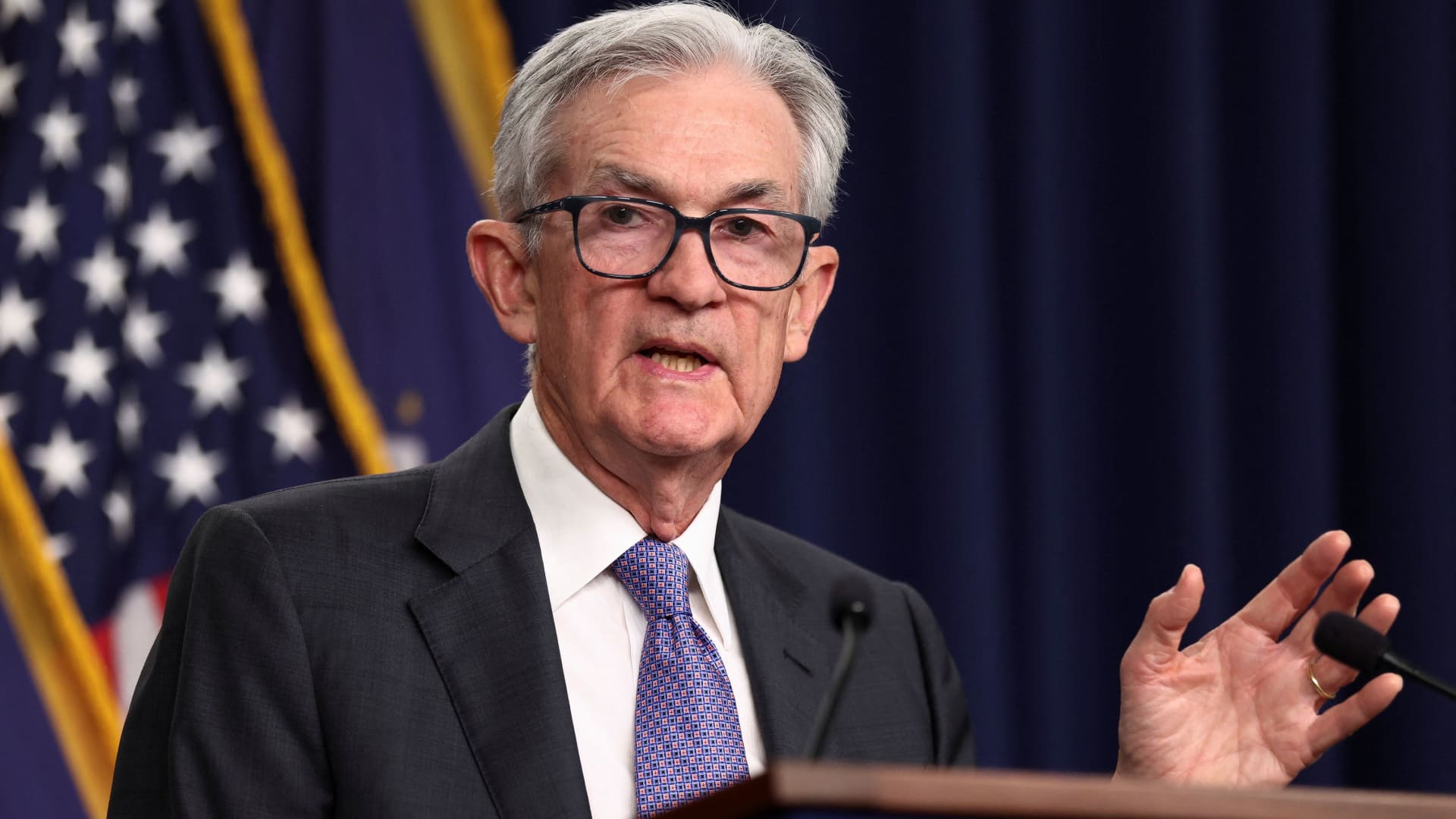
Fed Survey Signals Only Two More Rate Cuts Ahead — Even Under Trump’s Next Fed Chair
In a financial climate full of uncertainty and political change, a new CNBC Fed Survey delivers a remarkably steady prediction: only two more interest rate cuts are expected this year — with none forecasted for 2027.
This outlook stays consistent regardless of who President Donald Trump selects as the next Federal Reserve chair. Even if he chooses someone aligned with his push for extremely low rates, economists overwhelmingly believe the Fed won’t pursue cuts down to the president’s desired 1% range — which would effectively mean negative real rates.
Source spotlight: Insight provided by CNBC’s Fed Survey, one of the most trusted and influential economic surveys in the U.S.
Why Markets Expect Rates to Stay Higher
Economic growth remains too strong for aggressive cuts. Forecasts put GDP at 2.4% this year and 2.2% next year — solidly above the Fed’s typical expectations. Unemployment is projected to hover around 4.5%.
Inflation looks steady as well. CPI is expected to end 2026 at 2.7%, easing slightly to 2.5% the following year — aligning closely with the Fed’s preferred zone.
Meanwhile, recession fears have cooled significantly. Last year, recession odds sat at 53%. Now they’re down to just 23%, thanks to a strong labor market and resilient corporate earnings.
Tariffs: Mostly Behind Us… but Still Dragging
Although Trump’s tariffs continue to spark debate, 58% of surveyed experts believe the worst of the economic hit is already behind us. Still, tariffs are expected to keep inflation about 0.3% higher and pressure profit margins in sectors like retail.
But there’s optimism: AI-driven investment and new tax incentives could give businesses the boost they need. More than two-thirds of respondents expect stronger business investment in 2026 than in 2025.
The Productivity Boom Changing Everything
Economist Allen Sinai describes the current productivity trend as “a 1990s‑like picture,” driven by early-stage AI adoption. Higher productivity is supporting stronger earnings, stable inflation, and a durable labor market.
Expert insight: “A sustained and sustainable productivity boom is driving a surprisingly strong and solid expansion,” says Sinai of Decision Economics.
Risks Still Linger — Especially Political Ones
Survey respondents cite political uncertainty surrounding Trump administration policies as the top risk. Other concerns include:
Potential AI-driven market bubbles
Threats to Federal Reserve independence
High inflation flare-ups
Renewed tariff waves
Geopolitical instability
As Diane Swonk of KPMG warns, “Policy uncertainty acts as a tax on the economy. It causes paralysis.”
Who Will Be the Next Fed Chair?
Markets currently favor Rick Rieder, but 50% of survey respondents expect Trump to choose former Fed Governor Kevin Warsh instead. Warsh is considered somewhat more dovish than Jerome Powell, yet still likely committed to maintaining Fed independence.
Many economists also believe the Federal Open Market Committee will resist extreme policy pushes from any incoming chair — reinforcing confidence in future stability.
What This Means for Real Estate, Mortgage, and Finance Professionals
A rate environment settling near 3% through 2027 could create a stable foundation for homebuyers, investors, and business owners — particularly in booming states like Florida.
For anyone planning to enter or advance in real estate, mortgage, insurance, or other professional licensed industries, staying educated is critical. Cameron Academy continues to be a trusted leader in Florida and beyond, helping new and seasoned professionals stay licensed, competitive, and informed.
As the economy evolves, your knowledge becomes your greatest advantage.
More Articles
Getting licensed or staying ahead in your career can be a journey—but it doesn’t have to be overwhelming. Grab your favorite coffee or tea, take a moment to relax, and browse through our articles. Whether you’re just starting out or renewing your expertise, we’ve got tips, insights, and advice to keep you moving forward. Here’s to your success—one sip and one step at a time!
Financial analysis remains one of the strongest career paths for professionals seeking high earnings, steady growth, and long-term stability. With median salaries above $100K, expanding demand across industries, and clear promotion tracks leading to senior leadership roles, the field offers both opportunity and resilience—even as AI reshapes the workplace. This article breaks down what analysts do, salary expectations, job outlook, industry demand, and whether this career is the right fit for you.
After losing their home in the Los Angeles wildfires, Jessica and Matt Conkle expected their insurance policy to help them rebuild. Instead, they found themselves trapped in delays, lowball offers, and endless adjuster changes — a struggle now shared by thousands across California. Their experience highlights a nationwide problem: insurers pulling back from climate‑risk areas, soaring premiums, shrinking coverage, and regulators under fire. For professionals in real estate, mortgage, and insurance, this growing instability is reshaping transactions, lending, risk assessment, and the future of homeownership in America.
Kansas City’s housing market is finally gaining momentum heading into 2026 as falling interest rates, new construction, and a renewed focus on affordable homes open the door for first‑time buyers. Economists say improved supply and softer mortgage rates could shift the market after a challenging 2025, giving real estate professionals and buyers a promising window of opportunity.
Nevada has become the first state to allow insurers to sell homeowners policies without wildfire protection—a move aimed at lowering premiums but raising concerns about consumer risk and mortgage barriers. The law introduces new wildfire‑only policies and a regulatory sandbox for insurance innovation, potentially setting a precedent for other Western states.
Investment groups across the U.S. are rapidly expanding into tax‑deferred real estate programs as demand for Delaware Statutory Trusts (DSTs) accelerates. Major players like Blackstone, Brookfield, Denholtz, and PREP are launching new offerings fueled by stronger market certainty, a historic generational wealth transfer, and renewed confidence in 1031 exchange benefits. As DSTs move into the mainstream, real estate professionals are finding new opportunities to guide clients through advanced tax‑advantaged investment strategies.
Canada’s proptech sector is evolving fast as AI adoption accelerates and investor caution forces startups to mature. Funding has tightened, growth rounds have slowed, and companies are shifting from rapid expansion to profitability and real product‑market fit. AI‑driven platforms like Mave are gaining traction, consolidation is rising, and government housing initiatives may boost construction‑focused tech. For real estate professionals, these trends signal a new industry standard where AI tools and ongoing education are essential to staying competitive.