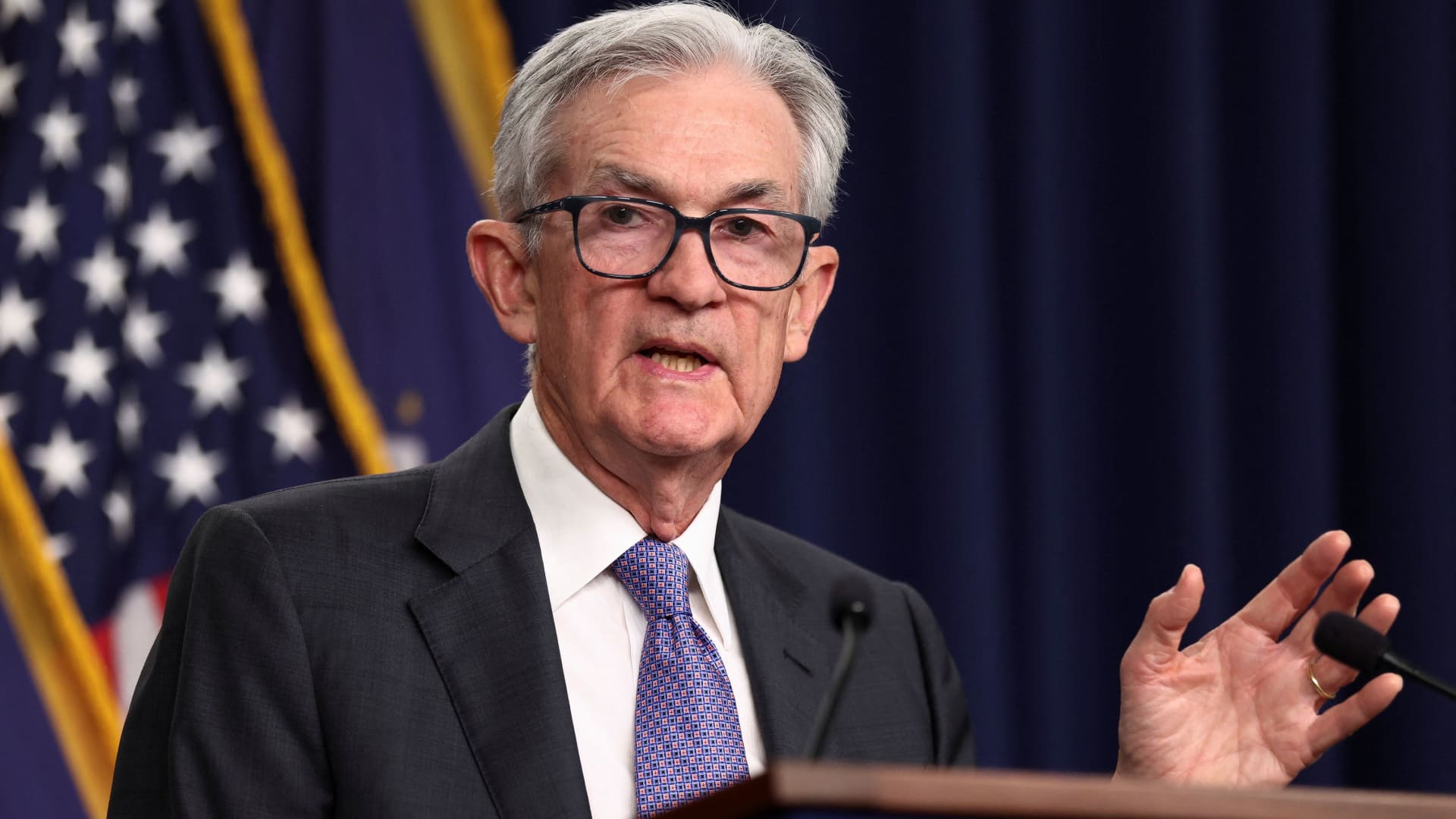
Fed Survey Signals Only Two More Rate Cuts Ahead — Even Under Trump’s Next Fed Chair
In a financial climate full of uncertainty and political change, a new CNBC Fed Survey delivers a remarkably steady prediction: only two more interest rate cuts are expected this year — with none forecasted for 2027.
This outlook stays consistent regardless of who President Donald Trump selects as the next Federal Reserve chair. Even if he chooses someone aligned with his push for extremely low rates, economists overwhelmingly believe the Fed won’t pursue cuts down to the president’s desired 1% range — which would effectively mean negative real rates.
Source spotlight: Insight provided by CNBC’s Fed Survey, one of the most trusted and influential economic surveys in the U.S.
Why Markets Expect Rates to Stay Higher
Economic growth remains too strong for aggressive cuts. Forecasts put GDP at 2.4% this year and 2.2% next year — solidly above the Fed’s typical expectations. Unemployment is projected to hover around 4.5%.
Inflation looks steady as well. CPI is expected to end 2026 at 2.7%, easing slightly to 2.5% the following year — aligning closely with the Fed’s preferred zone.
Meanwhile, recession fears have cooled significantly. Last year, recession odds sat at 53%. Now they’re down to just 23%, thanks to a strong labor market and resilient corporate earnings.
Tariffs: Mostly Behind Us… but Still Dragging
Although Trump’s tariffs continue to spark debate, 58% of surveyed experts believe the worst of the economic hit is already behind us. Still, tariffs are expected to keep inflation about 0.3% higher and pressure profit margins in sectors like retail.
But there’s optimism: AI-driven investment and new tax incentives could give businesses the boost they need. More than two-thirds of respondents expect stronger business investment in 2026 than in 2025.
The Productivity Boom Changing Everything
Economist Allen Sinai describes the current productivity trend as “a 1990s‑like picture,” driven by early-stage AI adoption. Higher productivity is supporting stronger earnings, stable inflation, and a durable labor market.
Expert insight: “A sustained and sustainable productivity boom is driving a surprisingly strong and solid expansion,” says Sinai of Decision Economics.
Risks Still Linger — Especially Political Ones
Survey respondents cite political uncertainty surrounding Trump administration policies as the top risk. Other concerns include:
Potential AI-driven market bubbles
Threats to Federal Reserve independence
High inflation flare-ups
Renewed tariff waves
Geopolitical instability
As Diane Swonk of KPMG warns, “Policy uncertainty acts as a tax on the economy. It causes paralysis.”
Who Will Be the Next Fed Chair?
Markets currently favor Rick Rieder, but 50% of survey respondents expect Trump to choose former Fed Governor Kevin Warsh instead. Warsh is considered somewhat more dovish than Jerome Powell, yet still likely committed to maintaining Fed independence.
Many economists also believe the Federal Open Market Committee will resist extreme policy pushes from any incoming chair — reinforcing confidence in future stability.
What This Means for Real Estate, Mortgage, and Finance Professionals
A rate environment settling near 3% through 2027 could create a stable foundation for homebuyers, investors, and business owners — particularly in booming states like Florida.
For anyone planning to enter or advance in real estate, mortgage, insurance, or other professional licensed industries, staying educated is critical. Cameron Academy continues to be a trusted leader in Florida and beyond, helping new and seasoned professionals stay licensed, competitive, and informed.
As the economy evolves, your knowledge becomes your greatest advantage.
More Articles
Getting licensed or staying ahead in your career can be a journey—but it doesn’t have to be overwhelming. Grab your favorite coffee or tea, take a moment to relax, and browse through our articles. Whether you’re just starting out or renewing your expertise, we’ve got tips, insights, and advice to keep you moving forward. Here’s to your success—one sip and one step at a time!
New data from the U.S. Bureau of Labor Statistics reveals major pay gaps across industries as we head into 2025. While top roles in finance, tech, and healthcare exceed $130,000 to $160,000 a year, other professions lag far behind—even when education levels are similar. Job titles, location, experience, and specialized skills are now some of the biggest factors shaping how much you earn. If you’ve been wondering whether your paycheck is keeping up with the market, this breakdown shows exactly where you stand and what it takes to boost your earning power.
A cooling housing market is giving buyers something they haven’t had in years: room to breathe. With slower sales, more inventory, and less pressure to make snap decisions, homebuyer regret has noticeably declined in 2025. Buyers are feeling more confident thanks to fewer bidding wars, reduced overpaying, and stronger financial preparation—though maintenance surprises still pose challenges. This shift toward a true buyer’s market offers real estate professionals a prime opportunity to guide clients with clarity and confidence.
This week’s commercial real estate roundup unpacks the lingering economic fallout from the 43‑day federal shutdown, new pressures on major office markets, and the rise of STEM‑driven cities reshaping demand nationwide. With fresh Q3 data from Altus showing stronger‑than‑expected transaction momentum, plus updates on Chicago’s valuation slide and national mortgage policy debates, this edition delivers the essential trends CRE, mortgage, finance, and appraisal professionals need to stay ahead.
ATTOM has been named Inman’s 2025 Best of Proptech winner, earning top recognition for its leadership in data and intelligence platforms. With advancements like Snowflake integration, ATTOM Nexus, and enhanced parcel‑centric analytics, the company is shaping the future of AI‑driven real estate decision‑making. This win highlights ATTOM’s growing role as a trusted data backbone for real estate, mortgage, insurance, and investment professionals nationwide.
A new report reveals that Florida’s property insurance market is far from recovering. Despite political claims of stabilization, homeowners are seeing premiums up 54% since 2019, widespread insurer instability, and some companies re‑entering the market under rebranded identities. With high rates of unpaid claims, delayed payouts, and policy non‑renewals, lawmakers are now pushing for transparency and oversight. For homeowners and industry professionals alike, understanding these risks is critical as Florida’s insurance challenges continue to deepen.
Despite new insurers entering the state and lawmakers touting market improvements, a new report reveals Florida’s property insurance system is still plagued by high premiums, weak oversight, and companies with troubled histories. Rates have climbed 54% since 2019, nearly one‑fifth of homeowners are now uninsured, and Florida leads the nation in unpaid and delayed claims. Critics warn that the state’s strategy of shifting risk to undercapitalized private companies may set the stage for another crisis — leaving homeowners, buyers, and real estate professionals navigating a market that’s far from stable.