In a significant legal development, the U.S. Court of Appeals for the Fifth Circuit has dismissed the appeal by the Consumer Financial Protection Bureau (CFPB) regarding the vacated amendments to its Unfair, Deceptive, or Abusive Acts and Practices (UDAAP) Examination Manual. This decision, made on May 1, aligns with the CFPB’s newly outlined supervision and enforcement priorities for 2025, marking a pivotal shift in the Bureau’s regulatory approach.


The CFPB had previously sought to expand its anti-discrimination enforcement beyond the traditional limits of the Equal Credit Opportunity Act (ECOA), a move that was met with legal challenges from the U.S. Chamber of Commerce and several banking trade associations. These groups argued that the Bureau exceeded its statutory authority by bringing discrimination claims under the “unfair” prong of UDAAP against financial institutions for noncredit products. The district court, citing constitutional concerns over the CFPB’s funding and overreach, vacated the amendments.


In a strategic pivot, the CFPB has decided to withdraw its appeal, aligning with a recent memo from Chief Legal Officer Mark Paoletta. This memo, discussed in more detail here, outlines the Bureau’s shift towards focusing on areas clearly within its statutory authority. The CFPB plans to concentrate its efforts on depository institutions, restoring its focus to the levels seen in 2012, and will prioritize enforcement actions involving proven intentional discrimination rather than relying solely on statistical evidence.


This development underscores a broader trend within the CFPB to recalibrate its regulatory strategies, stepping back from novel legal theories and refocusing on core enforcement areas. The decision to dismiss the appeal reflects a pragmatic approach by the Bureau, aiming to streamline its regulatory efforts and ensure compliance within well-defined legal boundaries.


For more detailed insights on this development, you can refer to the original article on the Consumer Financial Services Law Monitor.

More Articles

Getting licensed or staying ahead in your career can be a journey—but it doesn’t have to be overwhelming. Grab your favorite coffee or tea, take a moment to relax, and browse through our articles. Whether you’re just starting out or renewing your expertise, we’ve got tips, insights, and advice to keep you moving forward. Here’s to your success—one sip and one step at a time!

Artificial Intelligence in Diagnostics: A Revolution in Healthcare

The global market for artificial intelligence in diagnostics is poised for remarkable growth, with projections estimating it to reach USD 7.3 billion by 2032.

By |December 10, 2024|Categories: Article, Artificial Intelligence, Healthcare|Tags: , |0 Comments

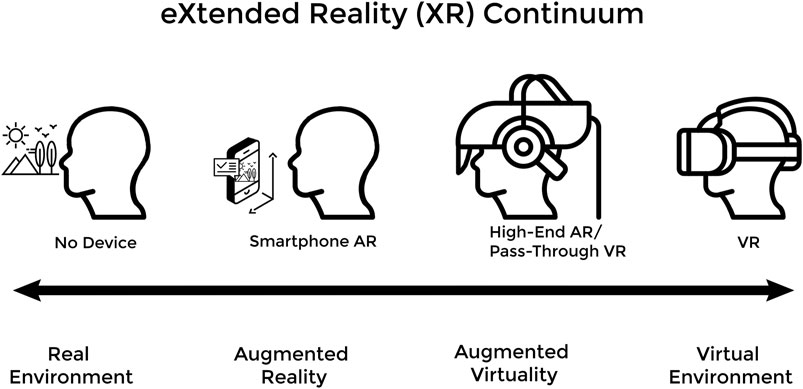
Revolutionizing Medical Education with Extended Reality

In the ever-evolving landscape of medical education, a new player has emerged, promising to revolutionize the way future doctors are trained. The integration of eXtended Reality (XR) technologies is reshaping the educational landscape by addressing the limitations of traditional methods.

Genetic Testing: A New Dawn in Healthcare

Genetic testing represents more than just a scientific advancement; it signifies a fundamental shift in how we approach health and wellness.

Sustainable Architecture: Blending Innovation with Ecological Responsibility

The journey toward sustainable architecture is ongoing, with each project serving as a beacon of what's achievable when creativity meets ecological awareness.

By |December 9, 2024|Categories: Architecture, Article, Sustainability|Tags: |0 Comments

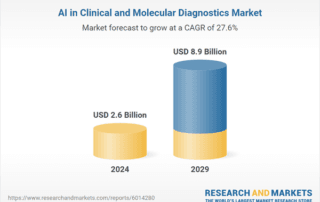
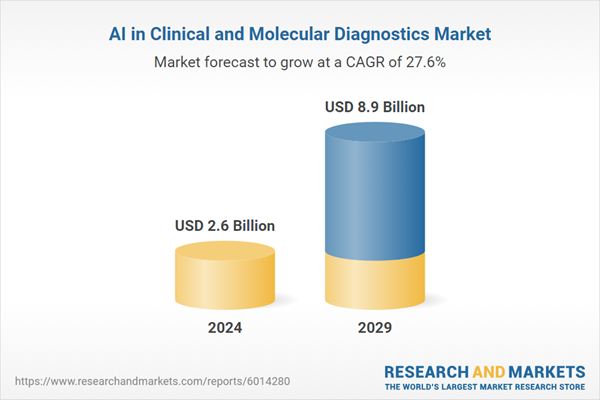
AI in Clinical and Molecular Diagnostics: A Market on the Rise

AI in Clinical and Molecular Diagnostics Market is set to experience remarkable growth, projected to surge from USD 2.6 billion in 2024 to USD 8.9 billion by 2029. This growth is driven by the integration of advanced AI technologies such as machine learning and deep learning into traditional diagnostic methodologies like imaging, genomics, and laboratory testing.

AI: A Revolution in Healthcare’s Future

AI is not a distant dream but a present reality, already integrated into everyday life through virtual assistants like Alexa and Siri. AI shows promise in enhancing medical accuracy, such as in predicting mesothelioma survival and improving colonoscopy accuracy, it is not intended to replace healthcare professionals.