FinCEN, Title Compliance, and the 2025 Regulatory Shake‑Up: What Professionals Need to Know
The title insurance industry entered 2025 expecting turbulence — but few anticipated just how rapidly the compliance landscape would evolve. Between new federal anti‑money‑laundering mandates, state‑driven rate changes, and increased scrutiny of attorney opinion letters, compliance teams across the country have spent the year bracing for sweeping operational changes.
HousingWire’s recent interview with Don O’Neill, Deputy General Counsel and Chief Compliance Officer at
WFG National Title, provides rare clarity on what the industry is facing — and what professionals should prepare for in 2026.
FinCEN’s Geographic Targeting Orders once applied only to a handful of high‑dollar, all‑cash transactions in select counties. But in 2025, the scope widened dramatically — and now the new Anti‑Money Laundering rule extends nationwide.
Under the updated rule:
Reporting applies to all 50 states and the District of Columbia
Roughly 3,600 recording jurisdictions fall under the requirement
The reporting threshold drops from $300,000 to $0 — the “first‑dollar rule”
Settlement agents are responsible for filing reports
Many professionals in previously unaffected states are only now learning what FinCEN reporting truly requires — and time is running out.
Effective Now, Enforceable Later
A major point of confusion: the rule became effective December 1, 2025, yet reporting won’t be required until March 1, 2026. Many assume the entire rule was delayed, but the truth is clear: it is already active.
A recent court decision further reinforced this. In a case brought by Fidelity National Financial, a magistrate judge affirmed FinCEN’s authority under the Bank Secrecy Act and AMLA, rejecting First and Fourth Amendment challenges.
Why This Matters for Your Workflow
Firms must invest in software updates, staff training, and procedural redesign now.
The rule is active — and scrambling in 2026 will be costly.
Operational Headache: Entity Buyers and Disclosure
One of the toughest challenges? Cash transactions involving corporate, trust, or LLC buyers. These buyers must now disclose ownership stakes of 25% or more — information they often resist sharing.
Settlement agents must verify accuracy before filing. As O’Neill puts it: “It’s federal law — FinCEN.”
State-Level Shifts: Rates and Regulatory Pressure
While federal rules dominate headlines, state regulators have accelerated their scrutiny:
Texas: Title premium reduction — initially 10%, later revised to 6.2%, effective March 2026.
California: Stricter justification requirements for rate filings and broader-spectrum reviews.
Title carriers and agents must now defend their pricing models more thoroughly than ever.
Attorney Opinion Letters: The Quiet Fault Line
Attorney opinion letters (AOLs) are under increasing regulatory attention. Tennessee and Virginia have issued bulletins clarifying what AOL providers can — and cannot — claim in advertising.
If an AOL is marketed as an “alternative to title insurance,” or suggests coverage gaps are filled, regulators may classify it as title insurance, triggering new compliance requirements.
What This Means for Professionals
Whether you’re in title, real estate, mortgage, finance, or law, 2025 marks a new era of transparency and reporting expectations. With 2026 deadlines on the horizon, professionals must stay educated, compliant, and proactive.
Staying compliant starts with staying informed — and staying licensed.
For those entering or advancing in real estate and title, compliance literacy is no longer optional.
Cameron Academy proudly supports professionals nationwide with licensing education, exam prep, and continuing education designed for today’s fast-changing regulatory world.
If you’re ready to strengthen your knowledge or elevate your team’s compliance skills, Cameron Academy is here to keep you ahead of the curve.
More Articles
Getting licensed or staying ahead in your career can be a journey—but it doesn’t have to be overwhelming. Grab your favorite coffee or tea, take a moment to relax, and browse through our articles. Whether you’re just starting out or renewing your expertise, we’ve got tips, insights, and advice to keep you moving forward. Here’s to your success—one sip and one step at a time!
A growing share of American homeowners now carry mortgage rates above 5%—a dramatic shift that’s reshaping refinancing, inventory, and buyer behavior nationwide. With more than 30% of borrowers locked into rates over 5% and 20% above 6%, the market is split between owners holding on to low pandemic‑era loans and new buyers taking on higher‑rate mortgages. Federal efforts to push rates down could unlock millions of refinancing opportunities, while buyers see only modest monthly savings. For real estate professionals, understanding these rate dynamics is crucial as they increasingly drive inventory levels, affordability, and market activity.
New Moody’s data shows commercial real estate deal volume slipped 20% in December, marking a second monthly decline. Yet the full year tells a different story: 2025 ended with a 17% gain, signaling a quiet but resilient recovery. The biggest surprise came from the office sector, which posted a 21% jump in activity as return‑to‑office trends and AI‑driven job growth boosted demand. Multifamily, retail, and alternative assets like data centers also saw strong momentum, giving real estate professionals a market full of fresh opportunities heading into 2026.
Florida drivers and industry professionals are heading into 2026 with good news: auto insurance rates are dropping across the state as the market shows strong signs of stabilization. USAA leads the latest wave with a 7% average rate decrease expected in May 2026, saving members more than $125 million annually. They join several major insurers — including State Farm, Progressive, AAA, Allstate, and Florida Farm Bureau — all approving significant reductions. Officials credit recent legislative reforms, especially tort reform, for the improved loss ratios and renewed insurer confidence. With both auto and home insurance markets strengthening, Florida’s real estate, mortgage, and insurance professionals can expect more consumer confidence, smoother transactions, and expanding career opportunities.
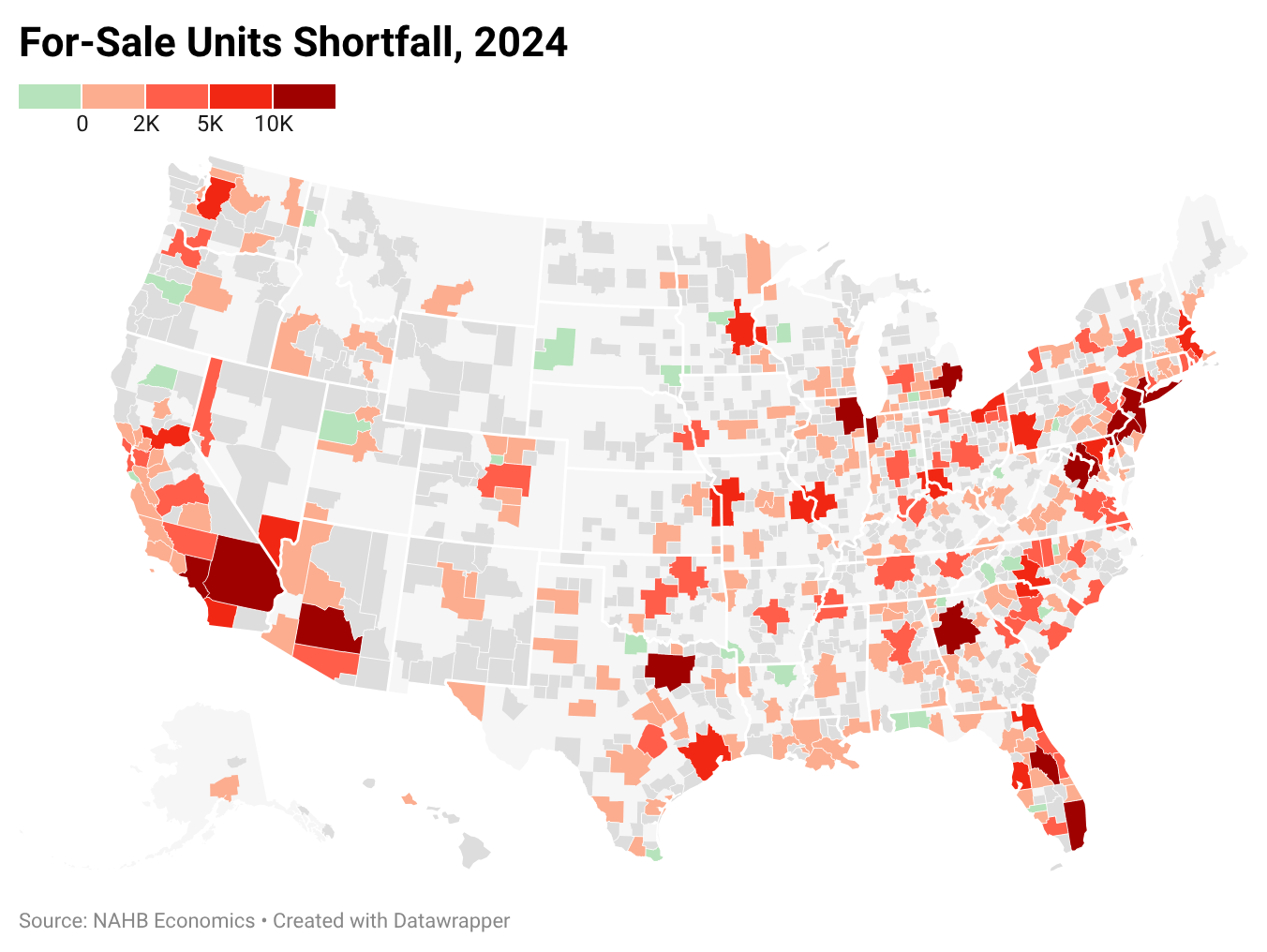
New data from Eye On Housing and the NAHB shows the U.S. remains short more than 1.2 million housing units, keeping pressure on both rents and home prices. Record‑low vacancy rates, slow single‑family construction, and restrictive zoning continue to fuel intense competition in 2024. Major metros like Chicago, New York, and Atlanta face some of the deepest deficits, and the true nationwide shortfall may be even higher when accounting for overcrowding and aging homes. For real estate professionals, the ongoing shortage means sustained demand, tighter inventory, and major opportunities for those who understand the evolving market.
Top real estate coach Jason Pantana says the divide between agents today isn’t about who has “tried” AI — it’s about who is immersed in it. In a new HousingWire interview, he explains why AI isn’t a gimmick but a full business system that amplifies output, improves authenticity, and reshapes how clients search for agents. From prompt mastery to AI‑driven visibility on Google, Pantana reveals how agents who commit even 15 minutes a day to learning AI are already outperforming those who hesitate.
Dallas–Fort Worth’s commercial real estate market closed 2025 with a split personality. Industrial dominated with massive new deliveries and soaring leasing demand, retail held steady with some of the market’s strongest fundamentals in years, and office continued to falter under remote‑work pressures. High vacancies, weak absorption, and rising demand for top‑tier space show the sector’s ongoing reset. Meanwhile, industrial and retail strength position the Metroplex for another powerhouse year heading into 2026.