Florida Homeowners Are Facing the Nation’s Highest Insurance Burdens — And Many Say They’re Near a Breaking Point

New findings about Florida’s homeowners insurance market confirm what many residents have been feeling for years: costs have escalated to crisis levels. A recent report from Bankrate reveals that the average Florida homeowner now pays $5,838 per year—roughly $3,000 more than the national average—firmly placing Florida in the top tier of the most expensive states for home insurance.

This isn’t just another statistic. For families, retirees, and first-time buyers, the rising cost of keeping a home insured affects budgets, relocation decisions, and even homeownership itself.

“Everything’s Tripled” — Homeowners Tell Their Stories

West Palm Beach homeowner Jeff Heun shared that his insurance premiums jumped from $3,400 to nearly triple that amount. At one point, he considered filing a claim—until he discovered that doing so would double his premiums overnight.

Source Spotlight: WPTV’s investigative coverage of Jeff Heun and other Palm Beach County residents showcases how widespread—and deeply personal—Florida’s insurance challenges have become. Their full report is available through WPTV News Channel 5.

Another resident expressed frustration after learning that his required wind coverage, tied directly to his mortgage, is consuming a growing share of his income. Instead of investing in protective upgrades like impact-resistant windows and doors, he feels trapped paying premiums that offer diminishing value.

Some Floridians Are Opting Out Entirely

One woman interviewed by WPTV said she hasn’t carried homeowners insurance in 25 years. She prefers to set aside the money herself and pay out-of-pocket if disaster strikes. While risky, increasing numbers of Floridians are quietly adopting similar strategies.

Denied Claims and Delayed Help — A Growing Pattern

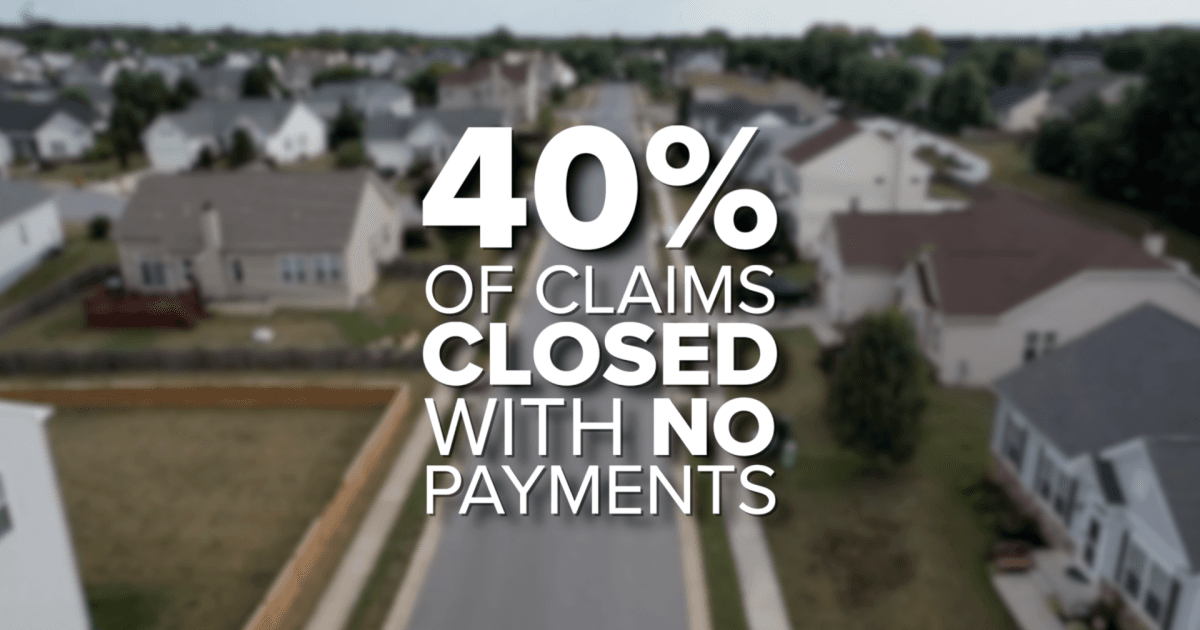
New data underscores a troubling trend. Florida ranks among the worst states for denied claims, with just over 40% of claims closing with no payment at all.

Claims closed with no payment chart

Residents Bob and Pam Fix of Loxahatchee know this firsthand. When a tornado caused more than $40,000 in damage to their home, their insurer initially offered a mere $4,500. Only after WPTV began investigating did the Fix family receive their full $41,000 approval. Without that intervention, their outcome might have been drastically different.

Read the full WPTV investigation that helped unlock the Fix family’s insurance payout →

The Reform Battle Heating Up in Tallahassee

With premiums rising and claim denials escalating, the pressure on state lawmakers continues to mount. Dr. Martin Weiss of Weiss Ratings warns the situation is nearing a breaking point: “Unless this is reversed in Florida and beyond, I see a bigger problem ahead.”

Weiss is collaborating with the Insurance Fairness Project and Senator Carlos Guillermo Smith, who advocates for increased transparency into insurance company financial practices—including often-overlooked affiliated managing general agents who may be inflating consumer costs.

But the path forward isn’t simple. Legislative reform efforts are clashing with Florida’s Republican supermajority. Senator Smith and his allies are pushing proposals such as capping rate increases and temporarily removing taxes on impact-resistant home upgrades like windows, doors, and garage doors.

Supporters argue these improvements could reduce storm-related losses and eventually lower premiums—but whether lawmakers will act remains uncertain.

What This Means for Real Estate & Licensed Professionals

This crisis isn’t just hitting homeowners. Real estate agents, mortgage brokers, appraisers, and insurance professionals are feeling the ripple effects across the entire industry. Premium increases are now a significant factor in whether deals close—or collapse.

For those entering or expanding careers in these fields, expertise is becoming a powerful advantage. Understanding insurance structures, mitigation credits, and Florida-specific risk factors can set professionals apart and better equip them to guide clients through complex decisions.

That’s where schools like Cameron Academy make a difference. Offering licensing and continuing education across real estate, mortgage, insurance, finance, and more, Cameron Academy helps students stay ahead of rapidly evolving industry trends—especially during times of uncertainty like this.

The Road Ahead

Florida homeowners are facing unprecedented challenges: the nation’s highest premiums, high claim denial rates, and legislative uncertainty. Yet with intense media coverage from organizations like WPTV and growing political attention, momentum for reform is building.

Whether the state can bring meaningful relief remains to be seen—but for now, Floridians continue watching, waiting, and hoping change arrives sooner rather than later.

More Articles

Getting licensed or staying ahead in your career can be a journey—but it doesn’t have to be overwhelming. Grab your favorite coffee or tea, take a moment to relax, and browse through our articles. Whether you’re just starting out or renewing your expertise, we’ve got tips, insights, and advice to keep you moving forward. Here’s to your success—one sip and one step at a time!

Escalating Risk of Fraud in the Title Industry

The title industry is facing a growing threat of fraud, driven by the decrease in transactions. With fewer transactions taking place, the percentage of potential fraud per file has significantly increased. It is crucial for industry professionals and consumers to be aware of the risks and take necessary precautions to safeguard their interests. In this article, we explore the two primary types of fraud that are becoming more prevalent in the title industry: escrow account manipulation and seller impersonation fraud. We also discuss the strategies being implemented to combat fraud and the importance of collaboration among industry stakeholders. By understanding the evolving landscape of fraud in the title industry and staying informed about the latest prevention measures, individuals can protect themselves and ensure the integrity of real estate transactions.

By |October 30, 2023|Categories: Title Industry Fraud Prevention|Tags: |0 Comments

Interest Rate Hikes: Philadelphia Federal Reserve President Advocates for a Pause

Philadelphia Federal Reserve President Patrick Harker is advocating for a pause in the ongoing cycle of interest rate hikes. He believes the central bank should assess the impact of previous increases on the economy before proceeding further. His stance reflects concerns about potential harm to economic growth. The Federal Reserve is under pressure to continue raising interest rates to prevent the economy from overheating and to keep inflation in check. However, Harker believes the current pace of rate hikes may be too aggressive. This article delves deeper into Harker's stance and the ongoing debate within the Federal Reserve.

By |October 29, 2023|Categories: Monetary Policy|Tags: |0 Comments

Value Takes Center Stage for Real Estate Brokers Amid Commission Lawsuit Uncertainty

The real estate industry is currently facing a class-action commission lawsuit, prompting major companies to reevaluate their strategies. Regardless of the lawsuit's outcome, real estate brokers are focusing on the value they bring to clients and preparing for potential changes in the industry. Brokers are prioritizing transparency and educating clients about the importance of real estate agents. They are implementing various strategies to adapt to potential industry changes and ensure they continue to provide exceptional service. Real estate brokers are proactively addressing the uncertainty brought about by the commission lawsuit. They are prioritizing transparency, education, and diversification to ensure they continue to deliver exceptional service and remain valuable partners to their clients. By adapting to potential industry changes, brokers are embracing the evolving landscape of the real estate industry and positioning themselves for continued success.

Blend IMB Essentials: A Cost-Effective Solution for Retail Independent Mortgage Banks

Blend, a prominent player in the digital lending technology space, has recently introduced Blend IMB Essentials, a lower-cost version of its mortgage suite specifically designed for retail independent mortgage banks (IMBs). This new offering aims to provide a more affordable solution for smaller lenders while still incorporating many of the features found in Blend's standard offering. One of the key features of Blend IMB Essentials is its ability to streamline the mortgage application process for retail IMBs. By pulling soft credits instead of tri-merge credits during the initial phase of the application, Blend IMB Essentials reduces costs and saves time for both lenders and borrowers. This innovative approach enhances operational efficiency and allows lenders to focus on providing a seamless experience for their clients.

By |October 28, 2023|Categories: Digital Lending Technology|Tags: |0 Comments

Insights into New Mortgage Servicing Regulations, Basel III, and CFPB Funding

The forthcoming changes in mortgage servicing regulations, proposed updates to Basel III, and discussions surrounding the funding structure of the Consumer Financial Protection Bureau (CFPB) have been making waves in the financial industry. In this article, we delve into the key points raised by CFPB Director Rohit Chopra and explore the potential implications of these developments on the mortgage industry. As the COVID-19 pandemic continues to impact borrowers, enhancing consumer protections and ensuring that mortgage servicers provide clearer and more timely information has become crucial. The proposed amendments to the mortgage servicing rules aim to address these concerns and establish better communication channels regarding loss mitigation options and foreclosure prevention measures.

Implications of the 8% Mortgage for Homebuyers and the Housing Market

The mortgage rates for 30-year fixed-rate loans have surged to 8%, a level not seen since 2007. This sudden increase has far-reaching implications for homebuyers, homebuilders, and the overall housing market. The rise in mortgage rates means a higher cost of borrowing, making homeownership more expensive for potential buyers. Homebuilders are also likely to face challenges due to these higher mortgage rates. As the cost of borrowing increases, the demand for new homes may decline, leading to a slowdown in new home construction. Cameron Academy provides comprehensive insights into these market changes, helping both homebuyers and homebuilders navigate these challenging times.

By |October 27, 2023|Categories: Real Estate Industry|Tags: |0 Comments