Florida Homeowners Face Record-Breaking Insurance Costs — And A Growing Push for Change

Florida homeowners are waking up to a reality that feels less like “Sunshine State living” and more like a financial storm cloud. New findings from a Bankrate.com study reveal that Floridians now pay an average of $5,838 per year for homeowner’s insurance — nearly $3,000 more than the national average. This places Florida firmly among the most expensive states in America.

This isn’t just a statistic — it’s a financial shockwave. For thousands, it’s reshaping budgets, delaying retirement, and prompting some to reconsider whether staying in Florida is still feasible. WPTV News Channel 5 has been gathering homeowner experiences, professional insights, and legislative reactions — and the resulting picture is complex, urgent, and deeply human.

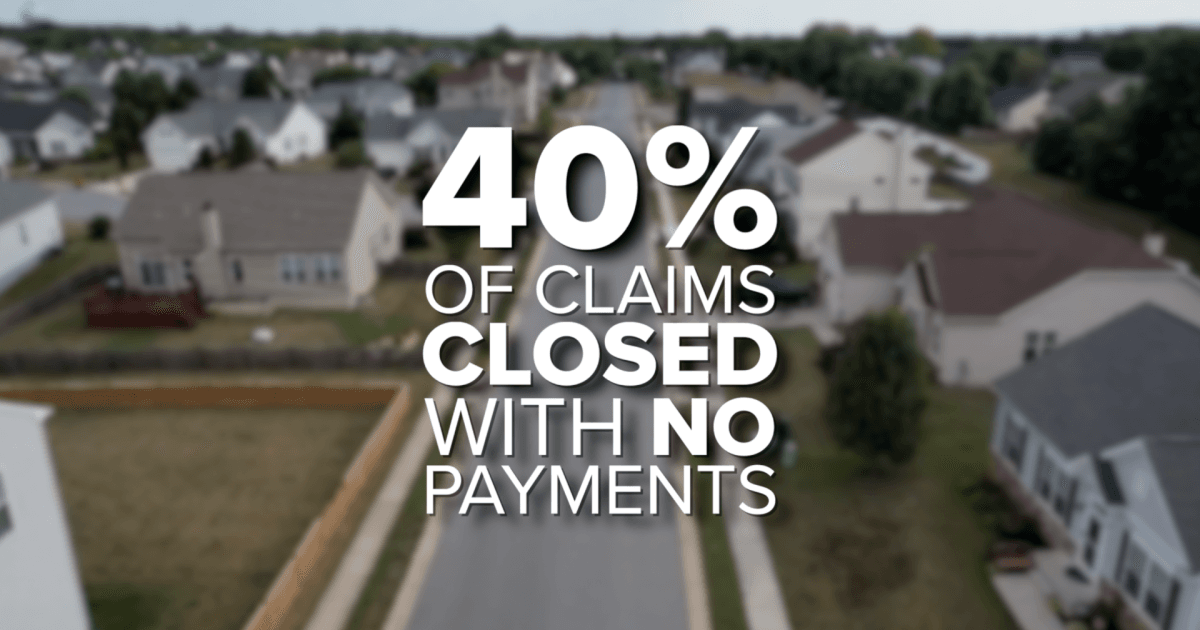
Florida insurance claim statistics graphic

“Everything’s Tripled” — Homeowners Speak Out

West Palm Beach resident Jeff Heun shared with WPTV how dramatically his insurance premiums have risen. When asked if the increases were gradual, he didn’t hesitate: “Oh yeah, everything’s tripled.”

Heun admitted he considered filing a claim once, but feared his premiums would double afterward. Despite paying year after year, he has never once used his insurance.

His message to state leaders? A simple but powerful plea: “Do something.”

Another Palm Beach County homeowner said the rising cost of living, mandatory wind coverage, and mortgage requirements are siphoning money he’d rather invest in upgrades like stormproof windows and doors.

Some Homeowners Are Dropping Insurance Altogether

One woman interviewed hasn’t carried homeowner’s insurance in 25 years. Instead, she banks the money she would’ve spent on premiums and uses it for repairs when emergencies arise. A bold move — though not without serious risks in a state routinely hit by hurricanes and severe storms.

When Disaster Strikes, Not Everyone Gets Help

After a tornado caused more than $40,000 in damage to their Loxahatchee home, residents Bob and Pam Fix turned to their insurer for help. The initial offer: $4,500. After pushback, it was raised to $7,000 — still nowhere near the actual cost to repair.

WPTV’s investigative team stepped in. After reviewing the case, the Fixes were ultimately approved for the full $41,000 they needed. Sadly, their story is far from rare — many Floridians face delayed, minimized, or outright denied payouts.

The Numbers Behind the Crisis

Florida now leads the nation in:

Claim denials — over 40% closed with no payment
Dropped policy renewals — highest in the nation at 3.3%

Dr. Martin Weiss of Weiss Ratings, part of the Insurance Fairness Project, told WPTV: “Unless this is reversed in Florida and beyond, I see a bigger problem ahead.”

Lawmakers Push Back — But Political Obstacles Remain

Florida Senator Carlos Guillermo Smith is pushing for more transparency between insurers and their managing general agents — calling out inflated fees and opaque practices that contribute to skyrocketing premiums.

But Florida’s legislative supermajority makes systemic reform difficult. Smith described their strategy as a “throw everything at the wall” approach — pushing as many proposals as possible to force conversation.

Reform measures under consideration include:

• Capping annual rate increases at 10–15%
• Eliminating taxes on impact-resistant windows, doors, and garage doors

Supporters say these changes could empower homeowners to stormproof their properties — potentially lowering premiums over time.

What This Means for Real Estate, Mortgage, and Insurance Professionals

These insurance trends have direct implications for real estate agents, brokers, mortgage loan officers, insurance agents, and property managers. Rising premiums cut into buying power, delay closings, and create new complexities in client consultations.

Understanding Florida’s insurance landscape is no longer optional — it’s essential.

Working toward a real estate, insurance, or mortgage license? Cameron Academy delivers flexible, modern online education designed for today’s fast-changing market. Stay informed. Stay competitive. Stay ahead.

Looking Ahead

As new legislative sessions unfold, Florida’s property insurance future hangs in the balance. Whether reforms bring stability — or whether homeowners continue shouldering growing financial strain — remains to be seen.

For now, Floridians continue navigating tough choices, hoping meaningful relief is on the horizon.

Source: WPTV News Channel 5 West Palm
Original report: View on WPTV

More Articles

Getting licensed or staying ahead in your career can be a journey—but it doesn’t have to be overwhelming. Grab your favorite coffee or tea, take a moment to relax, and browse through our articles. Whether you’re just starting out or renewing your expertise, we’ve got tips, insights, and advice to keep you moving forward. Here’s to your success—one sip and one step at a time!

AI: A Revolutionary Force in Property Valuation

The advent of Artificial Intelligence (AI) has ushered in a new era in the realm of property valuation and appraisal. AI, a formidable tool capable of swiftly analyzing vast amounts of data, provides real-time insights into property values. However, the importance of human expertise in interpreting data and making informed judgments cannot be undermined. A blend of AI and human judgment ensures accurate and reliable property valuations. AI has also made significant strides in the development of valuation products for Home Equity Lines of Credit (HELOCs) and second-lien mortgages. These products leverage AI technology to assess risk more effectively, providing lenders with a comprehensive understanding of the property's value. As AI continues to evolve, we can expect further advancements in the property valuation and appraisal process. The future of property valuations lies in the synergy between AI and human expertise, ensuring accurate, reliable, and contextually informed property valuations.

Fluctuating Real Estate Market: An Insight

The U.S. housing market has experienced a significant surge in home prices, marking the largest annual increase since February 2023. In August alone, home prices recorded a remarkable 3.7% gain. While this upward trend has been observed across the country, there are specific housing markets where prices are projected to decline. In this article, we explore the factors driving the rise in home prices and delve into the markets that are likely to experience price drops. Join us as we navigate through the intricacies of the housing market, uncovering the driving forces behind the price increase and shedding light on the markets where caution may be warranted.

By |October 10, 2023|Categories: Real Estate Market Trends|Tags: |0 Comments

Real Estate Revolution: RE/MAX’s Proposed Agreement Ushers in New Era

The real estate industry is abuzz with the news of RE/MAX's proposed agreement that effectively ends the National Association of Realtors (NAR) membership requirement and commission rule. This groundbreaking settlement has far-reaching implications for RE/MAX agents and franchisees, as well as the broader real estate industry. The proposed settlement by RE/MAX marks a significant departure from the status quo. By eliminating the NAR membership requirement and commission rule, RE/MAX is paving the way for a more open and competitive real estate market. This move has the potential to disrupt long-standing practices and reshape the industry as we know it.

Cryptocurrencies: Chase Bank’s New Era for Mortgage Payments

Chase Bank has made a groundbreaking decision to accept cryptocurrencies, including SHIB and XRP, as a form of payment for mortgage loans. This move marks a significant milestone in the mainstream adoption of digital currencies. It offers numerous benefits for both customers and Chase Bank, providing a convenient and efficient way to make mortgage payments and attracting tech-savvy customers. However, it also comes with risks due to the volatility of digital currencies. This development has the potential to reshape the financial industry and the way we think about mortgage payments. Explore more about finance and technology with Cameron Academy's online career education courses.

5% Down Payment Option for Multifamily Properties: A New Initiative by Fannie Mae

Fannie Mae, a government-sponsored enterprise, has launched a new initiative to expand homeownership opportunities. This initiative introduces a 5% down payment option, revolutionizing the traditional requirements for purchasing multifamily homes. The program offers aspiring homeowners and investors the chance to secure a multifamily property with just a 5% down payment. This reduced requirement breaks down the barriers that have hindered many individuals from entering the multifamily housing market. The program is available for both owner-occupied and non-owner-occupied multifamily properties, offering flexibility for investors and homeowners alike. Discover how Fannie Mae's 5% down payment option can help you achieve your dream of owning a multifamily property. Contact our team today to learn more about Fannie Mae's 5% down payment option and find the perfect multifamily property for your needs.

Industry’s Response to Redfin-NAR Split: A Significant Development

In a surprising turn of events, Redfin, a prominent real estate brokerage, has made the decision to sever ties with the National Association of Realtors (NAR). This move has sparked a wave of reactions within the industry, with experts weighing in on the potential implications for the real estate market. Redfin's criticism of NAR's rules and regulations stems from their belief in the need for innovation and competition in the real estate market. The industry's response to the Redfin-NAR split has been mixed. Some industry experts view this split as a positive development that will foster healthy competition and drive innovation in the real estate market. However, not everyone shares this optimistic outlook. Critics argue that the split could potentially undermine the stability and unity of the real estate market. The Redfin-NAR split has far-reaching implications for the future of the real estate industry. It highlights the ongoing tensions and debates surrounding the role of traditional brokerages versus emerging online platforms. The split also raises important questions about industry regulations and the balance between competition and cooperation.

By |October 7, 2023|Categories: Real Estate Industry|Tags: |0 Comments