Florida House Approves Major Property Insurance Transparency Bill: What Homeowners and Professionals Need to Know
Florida’s property insurance landscape is shifting once again, but this time lawmakers are turning their focus toward empowering homeowners with transparency and clarity. The Florida House has officially passed HB 767, introduced by Naples Republican Rep. Yvette Benarroch—a bill designed to make property insurance pricing and coverage details easier for consumers to access and understand.
As Florida continues navigating a turbulent insurance market—marked by rising premiums, insurer withdrawals, and intense natural‑disaster exposure—this proposal promises a breath of fresh air for both homeowners and the professionals who support them. Real estate agents, insurance producers, mortgage officers, and appraisers will all benefit from clearer, more consistent access to insurance data.
A New Public Insurance Database for All Floridians
One of the bill’s most transformative features is the creation of a statewide, consumer‑friendly online rate database. The
Office of Insurance Regulation (OIR) will be required to publish detailed insurance rate filings, market trend reports, policy explanations, and tools to help consumers identify potential insurers.
This new digital resource center will also include step‑by‑step claim‑navigation guides, plain‑language coverage explanations, and clear definitions for common insurance terms. Insurers will be required to notify policyholders about this online tool for every new policy, renewal, or major policy update.
Protecting Homeowners Against Inflated Premiums
Another notable provision prevents insurers from including land value when calculating coverage amounts or adjusting claims. Since land cannot be damaged by hurricanes or other natural perils, this safeguard ensures homeowners never pay inflated premiums for coverage they do not need.
The legislation also expands disclosure requirements surrounding hurricane‑mitigation discounts. Even more importantly, statewide average rate changes can no longer be claimed as “trade secrets”—a move that sharply boosts public accountability.
The Senate Companion and What Comes Next
A companion bill, SB 832, filed by Sen. Bryan Avila, is progressing through the Florida Senate after clearing its first committee. If both chambers approve the aligned versions and the Governor signs them, the new law would take effect on July 1.
Why This Matters for Real Estate, Insurance, and Mortgage Professionals
Accurate insurance information is directly tied to home affordability, closing timelines, underwriting, appraisal outcomes, and long‑term ownership stability.
A transparent insurance market strengthens every profession connected to property ownership.
Professionals who understand emerging regulatory shifts gain a clear competitive edge—empowering them to guide clients with more confidence, accuracy, and authority.
At Cameron Academy, we help professionals stay ahead of fast‑moving regulatory changes with modern licensing and continuing‑education programs in real estate, insurance, mortgage, and more.
When the laws change, your knowledge—and your clients—should never fall behind.
Getting licensed or staying ahead in your career can be a journey—but it doesn’t have to be overwhelming. Grab your favorite coffee or tea, take a moment to relax, and browse through our articles. Whether you’re just starting out or renewing your expertise, we’ve got tips, insights, and advice to keep you moving forward. Here’s to your success—one sip and one step at a time!
In 2026, financial advisors are no longer just experimenting with AI — they’re relying on it. Once confined to back-office duties, AI now supports meeting prep, portfolio analysis, and even early-stage financial planning. Advisors say the tech is strengthening client relationships by freeing them from administrative overload, though entry-level roles like paraplanners may feel the squeeze as automation accelerates.
Cybercriminals are weaponizing AI to launch highly convincing email scams and system breaches across the mortgage industry, overwhelming lenders and servicers whose cybersecurity measures can’t keep up. With major companies already hit and regulation lagging behind, experts warn the sector—now considered critical infrastructure—must rapidly upgrade protections, collaborate on threat intelligence, and improve AI governance before the risks escalate further.
Escrow payments are quietly surging across the country as property taxes and insurance premiums spike—pushing many homeowners toward delinquencies and even foreclosure. New data from Cotality shows the sharpest increases hitting the South and Midwest, with Florida among the hardest‑hit states. Even with fixed mortgage rates, rising escrow requirements are driving monthly payments higher and threatening affordability heading into 2026.
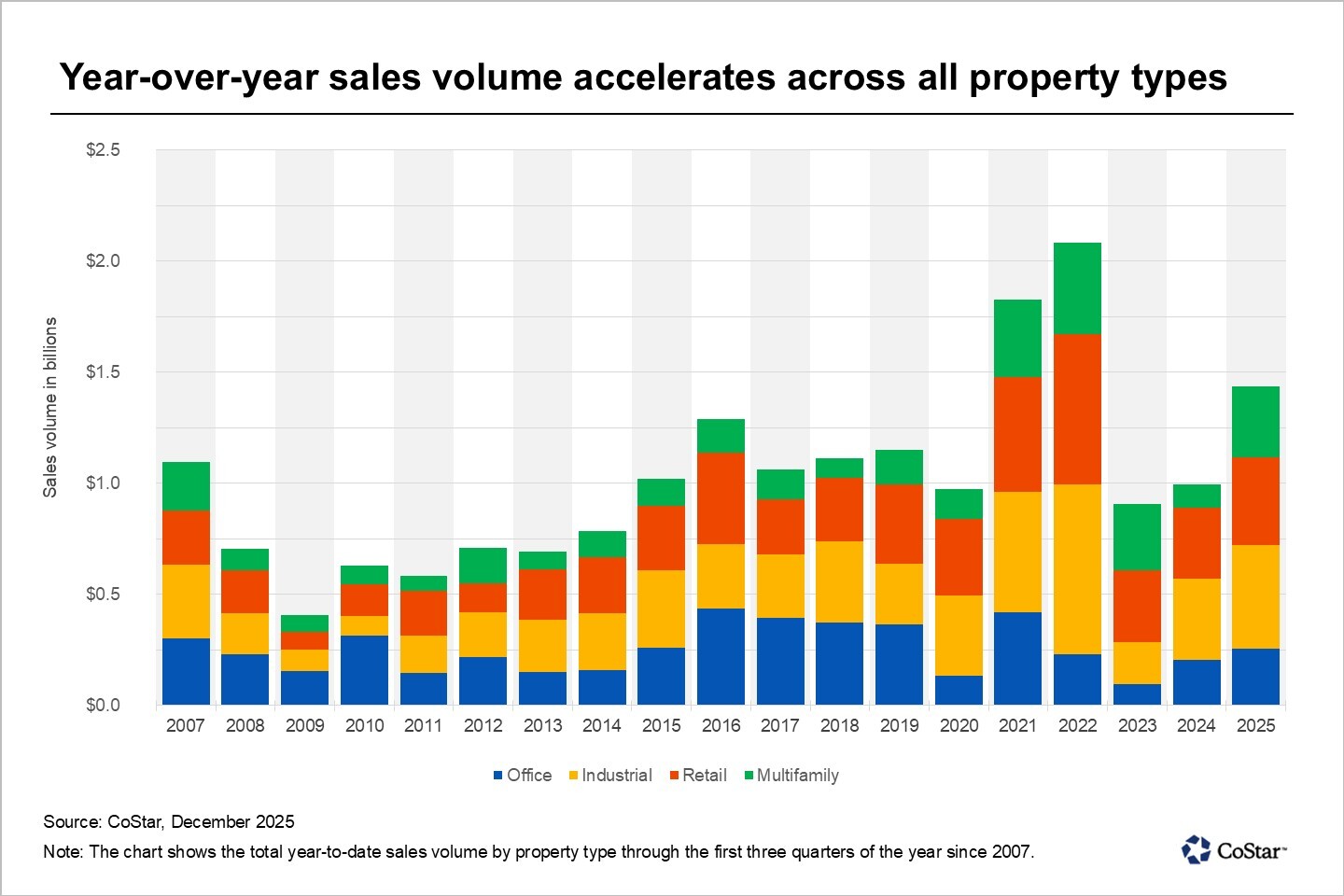
Milwaukee entered 2025 with renewed momentum, posting its strongest commercial real estate sales volume in three years. After a period of uncertainty and high capital costs, investors are returning with a sharper focus on quality assets, realistic pricing, and reliable cash flow. Activity is increasing across industrial, office, multifamily, and retail sectors, signaling a broad-based recovery fueled by stabilizing interest rates and improved market confidence.
As 2026 approaches, the title insurance industry is navigating a complex mix of market recovery, rising fraud threats, and sweeping regulatory changes. Industry leaders say the path forward centers on smarter technology, leaner operations, and stronger support for title agents. With AI-driven workflows, enhanced fraud prevention, and new compliance demands—including FinCEN’s expanded Geographic Targeting Orders—companies like Stewart and First American are reshaping how title work gets done. For real estate and mortgage professionals, the year ahead promises more automation, heightened standards, and major opportunities for those who stay ahead of the curve.
The real estate industry is undergoing a major transformation in 2025 as advancements in AI, proptech, blockchain, and data intelligence redefine how properties are marketed, valued, financed, and experienced. From instant digital valuations and immersive virtual tours to tokenized investments and predictive analytics, technology is reshaping every stage of the real estate lifecycle. Professionals who embrace these innovations—while maintaining the human expertise clients still rely on—will lead the next era of the industry.