Florida Lawmakers Move to Strip Local Governments of Power Over Housing Compatibility Rules
A New Power Shift Could Transform Florida’s Housing Landscape
A sweeping piece of legislation now advancing in the Florida Senate could dramatically reshape how new homes and communities are approved across the state. Lawmakers are pushing a bill that would prevent cities and counties from stopping residential development simply because it may be “incompatible” with surrounding neighborhoods — a term critics argue is far too vague to regulate effectively.
Supporters believe the proposed law is a crucial tool to accelerate homebuilding and address Florida’s ongoing housing affordability crisis. Opponents warn it could muzzle local voices, limit community oversight, and fast‑track developments residents never had a fair chance to weigh in on.
What the Bill Would Do
Under the legislation — Senate Bill 208 — a city or county could not deny a residential development strictly because it did not fit the “character” or “compatibility” of an adjacent neighborhood. This means if a developer proposes homes next to existing homes, local governments may be obligated to approve it, regardless of density or design concerns.
Sen. Stan McClain, the bill’s sponsor and a building contractor, argues the measure would eliminate obstacles that slow down homebuilding — and ultimately keep prices high. He says the goal is to strike back against unreasonable resistance from local boards that can derail projects even when surrounded by similar development.
Supporters Say It Will Speed Up Housing Approvals
Prominent pro‑business groups — including the Florida Chamber of Commerce, AARP, and Associated Industries of Florida — have supported the legislation. Developers say the measure could reduce delays, fees, and legal battles tied to compatibility disputes.
Edward Briggs of Highland Homes, a Central Florida builder, told lawmakers the bill is a step toward increasing attainable housing for Florida families, especially in infill areas already supported by existing infrastructure.
Opponents Warn of Power Loss and Community Impact
Local leaders, environmental advocates, and planning organizations strongly oppose the bill. Groups like the Florida League of Cities and 1,000 Friends of Florida argue that compatibility decisions are essential tools for managing growth responsibly.
Rebecca O’Hara of the League of Cities notes that while “compatibility” can be subjective, that subjectivity is precisely why local governments rely on public hearings, evidence, and planning reviews. The bill, she warns, would sideline these processes and force near-automatic approvals.
Bigger Questions Loom: Growth, Greenspace, and Florida’s Future
While the bill passed its first Senate committee unanimously, even supporters expressed caution. Sen. Kathleen Passidomo questioned whether Florida is prepared for the long‑term consequences of rapid, unchecked development — including the loss of greenspace and potentially uninterrupted corridors of construction across the state.
Sen. Jason Pizzo added that many local officials publicly support affordable housing but often reject developments that could actually supply it. He argues that state intervention may be necessary to break through political barriers that keep inventory low.
Why This Matters for Real Estate Professionals
If passed, this legislation could reshape approval timelines, land‑use patterns, and investment strategies across Florida. Real estate agents, brokers, developers, and property managers may experience faster development cycles and increased inventory — though with heightened community‑level debates over land use.
For professionals aiming to stay ahead of regulatory changes, ongoing education is essential. Institutions like Cameron Academy support Florida licensees by helping them stay compliant, informed, and prepared for shifts that directly affect the state’s real estate landscape.
Source and Further Reading
This article is based on reporting from the Florida Capital Bureau. You can read the full original story at the Tallahassee Democrat for additional context and updates.
More Articles
Getting licensed or staying ahead in your career can be a journey—but it doesn’t have to be overwhelming. Grab your favorite coffee or tea, take a moment to relax, and browse through our articles. Whether you’re just starting out or renewing your expertise, we’ve got tips, insights, and advice to keep you moving forward. Here’s to your success—one sip and one step at a time!
Despite billions poured into proptech and a decade of flashy digital upgrades, the real estate experience remains largely unchanged. Apps made processes smoother, but not more transparent — because the industry’s core structures, data control and power dynamics stayed the same. True disruption will come from platforms that shift information and control to consumers, not just digitize outdated systems.
Early 2026 is delivering a clear message: commercial real estate is entering a recalibration phase. Construction is softening, pending home sales just saw a sharp drop, consumer sentiment is inching upward but remains fragile, and capital markets are tightening as major CRE sectors face rising distress. From data centers powering ahead to CMBS foreclosures climbing and office-to-residential conversions gaining momentum, professionals across real estate, mortgage, insurance, and finance need to stay sharp as the industry shifts.
Discover the real estate roles earning the biggest paychecks in 2026. From investment consultants to commercial leasing managers, this breakdown highlights the salaries, responsibilities, and career paths offering the strongest financial potential in today’s evolving market—perfect for newcomers and seasoned professionals mapping their next big move.
Montana is taking major steps to remove outdated licensing barriers and strengthen its workforce. Governor Greg Gianforte has created a new Licensing Reform Task Force aimed at modernizing regulations, speeding up approvals, and helping more professionals enter high‑demand fields like construction and healthcare. With licensing numbers doubling over the past decade and rural communities facing critical shortages, the state is pushing for faster, more efficient pathways to work. The task force begins meeting in February and will deliver its full reform report by September 2026 — a move that could influence licensing modernization efforts nationwide.
Artificial intelligence has officially moved from novelty to necessity in the real estate world. According to new industry data, 97% of brokerage leaders say their agents now rely on AI tools for everything from listing descriptions to full-scale marketing campaigns. As adoption skyrockets, so do concerns over training, accuracy, and compliance — especially among smaller firms. The message is clear: for today’s real estate professionals, AI literacy isn’t optional anymore.
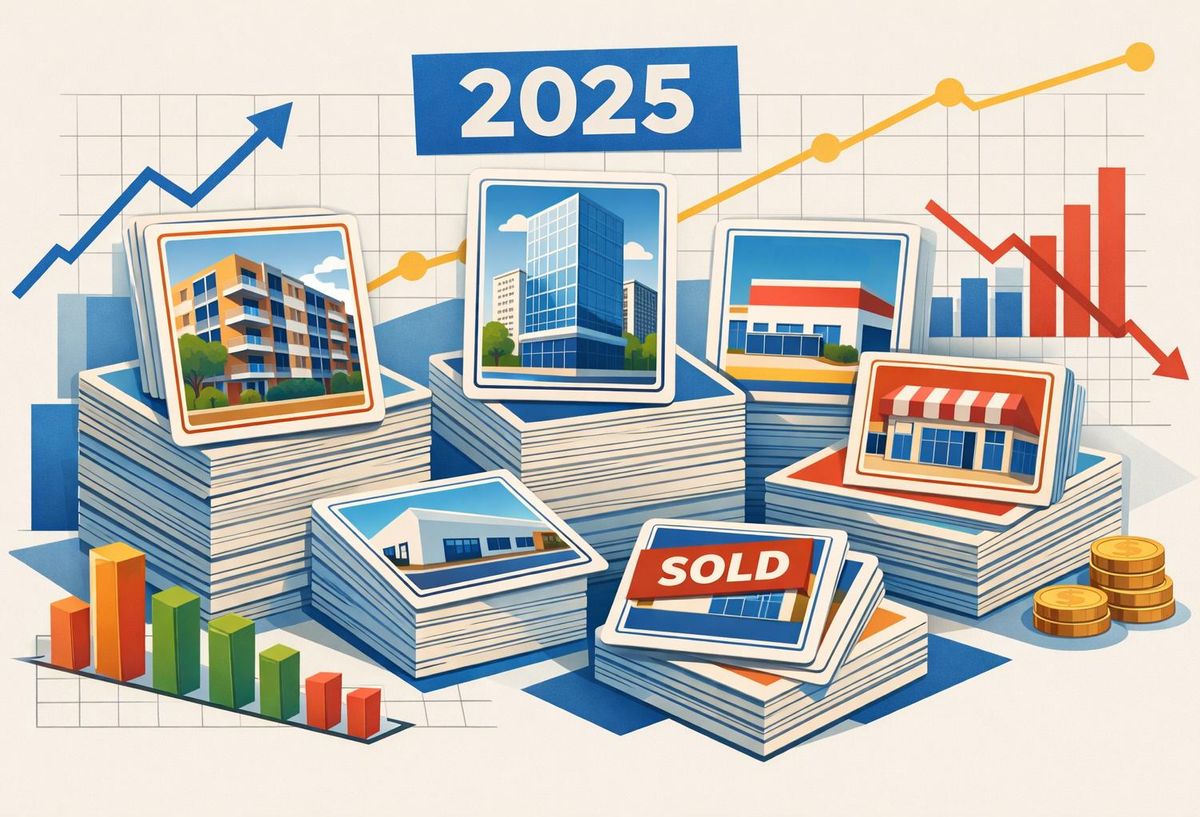
Commercial real estate roared back to life in 2025, with more than $255B pouring into multifamily, industrial, office and retail assets. Major investors moved fast on falling interest rates, improving bond yields and rising confidence across sectors. Multifamily dominated with over $115B in deals, industrial surged under private equity leadership, office saw renewed activity from owner-users and retail proved surprisingly resilient. For today’s real estate and finance professionals, the message is clear: opportunity favors those who stay informed and ready to act.