Florida’s Barrier Islands: Paradise, Peril, and the Cost of Building on Sand
Florida’s barrier islands look like the kind of place postcards dream of — ribbons of sand lined with turquoise water, winding palms, and skyline views that lure millions of visitors and hundreds of thousands of residents. From Miami Beach to Marco Island, these slivers of paradise offer beauty, lifestyle, and undeniable real estate appeal.
But beneath that beauty lies an unavoidable truth: barrier islands were never meant to be permanent. They shift, reshape, and migrate — and they take everything built on them along for the ride.
According to a comprehensive Miami Herald and Sun Sentinel analysis, Florida now has nearly 765,000 people living on barrier islands, more than any state in the nation. And between 2010 and 2023, populations on these islands grew another 6%, despite worsening climate risks.
The Allure That Won’t Quit
Cross any causeway from the mainland and the atmosphere changes instantly. The breeze cools. The mood lifts. The waves set a slower pace. Sea turtles nest under open skies. It feels like paradise — until storm season arrives.
These islands are nature’s shock absorbers, taking the full force of storm surge and hurricane winds. Historically, native peoples treated them as temporary outposts. Developers, however, saw opportunity. And over the last 150 years, Florida transformed its barrier islands into booming real estate hubs filled with high-rises, hotels, condos, and coastal escapes.
When Buildings Meet Moving Sand
A surprising consequence of this development boom: some high-rise buildings on barrier islands are sinking faster than expected. A University of Miami-led study referenced in the Herald’s coverage identified settlement concerns in several massive coastal towers.
Experts aren’t sounding alarms about immediate structural danger — but long-term maintenance, insurance, and financial impacts could become significant, especially in markets driven by sky-high real estate values.
The Hurricane Trap
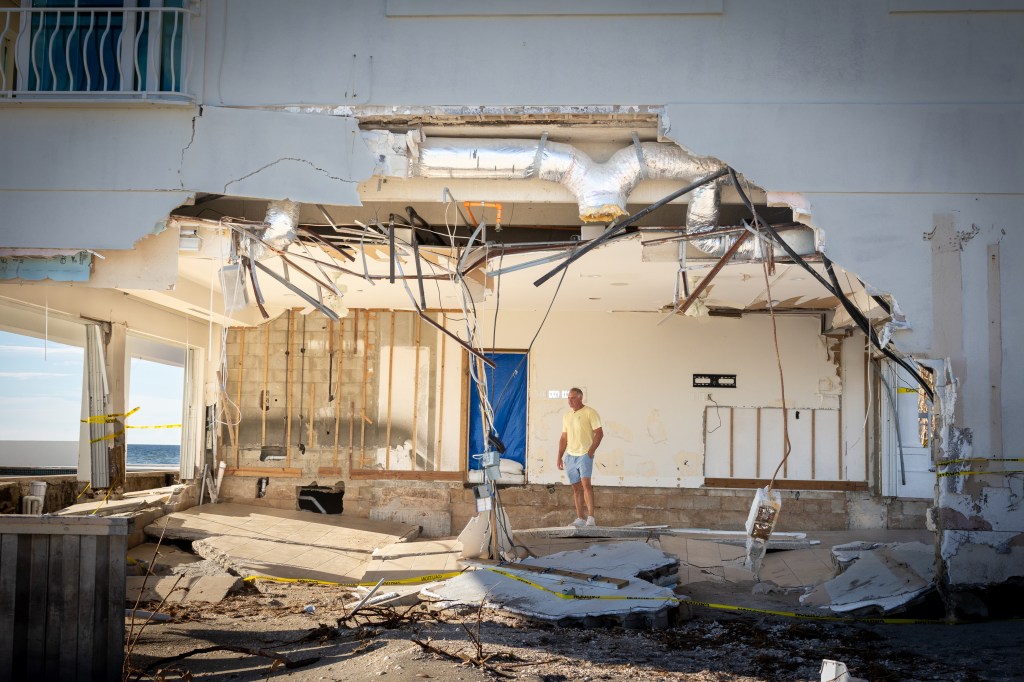
Storms reshape barrier islands with astonishing force. Hurricane Ian shifted entire buildings, swallowed roads, and filled homes with sand. Hurricane Helene even carved a new 130-foot inlet into Siesta Key.
When major storms hit, evacuation routes funnel into limited causeways. Some residents stay behind — a fatal decision for more than 100 Floridians during the 2022 hurricane season.
And the cost? Every eroded beach, lost dune, washed-out bridge, and damaged condo adds to Florida’s already soaring property insurance crisis.
The Billion-Dollar Sand Cycle
You might think beaches are natural. In Florida, most aren’t anymore.
Nearly every grain of sand on Florida’s barrier islands has been placed there — and replaced — through expensive, repeated restoration projects. Miami Beach alone has required frequent replenishment since 1979, costing taxpayers over $130 million across 49 projects. Statewide, more than $2.3 billion has been spent rebuilding beaches that nature continues to reclaim.
The challenge now? High-quality sand is running out, and what remains is costly: $30 to $50 per cubic yard. So Florida’s most iconic beaches must be trucked in from inland mines.
Insurance: Florida’s Breaking Point
The most dramatic consequence of coastal development is playing out statewide through insurance rates. National companies have backed out of Florida almost entirely, leaving small firms and the state-run Citizens Insurance carrying the weight.
Experts warn that a major storm hitting Miami-Dade’s barrier islands could cause insured losses exceeding $200 billion — making it the costliest hurricane in U.S. history. Up to thirty local insurance companies could collapse under the strain, triggering mortgage defaults and reverberations that could hit Wall Street.
This isn’t just a coastal problem; it affects every Florida homeowner.
Adapting, Learning, and Preparing for Tomorrow
City officials, including Miami Beach’s chief resilience officer, emphasize adaptation over retreat. Elevated roads, robust dunes, storm-resistant parks, and stricter building codes aim to protect communities — even if nature’s long-term plan for barrier islands remains unchanged.
For real estate professionals, understanding the complexities of barrier island development isn’t optional anymore — it’s essential. If you’re pursuing or maintaining your Florida real estate license, this topic increasingly appears in continuing education, climate-risk modules, and discussions about ethics, disclosure, and property advisement.
At Cameron Academy, we help new and seasoned professionals stay informed about the evolving risks, responsibilities, and regulations tied to Florida’s most fragile land. Knowledge is one of the strongest tools agents can offer their clients in a market shaped by shifting sands, rising seas, and soaring insurance concerns.
Getting licensed or staying ahead in your career can be a journey—but it doesn’t have to be overwhelming. Grab your favorite coffee or tea, take a moment to relax, and browse through our articles. Whether you’re just starting out or renewing your expertise, we’ve got tips, insights, and advice to keep you moving forward. Here’s to your success—one sip and one step at a time!
The title industry is facing a growing threat of fraud, driven by the decrease in transactions. With fewer transactions taking place, the percentage of potential fraud per file has significantly increased. It is crucial for industry professionals and consumers to be aware of the risks and take necessary precautions to safeguard their interests. In this article, we explore the two primary types of fraud that are becoming more prevalent in the title industry: escrow account manipulation and seller impersonation fraud. We also discuss the strategies being implemented to combat fraud and the importance of collaboration among industry stakeholders. By understanding the evolving landscape of fraud in the title industry and staying informed about the latest prevention measures, individuals can protect themselves and ensure the integrity of real estate transactions.
Philadelphia Federal Reserve President Patrick Harker is advocating for a pause in the ongoing cycle of interest rate hikes. He believes the central bank should assess the impact of previous increases on the economy before proceeding further. His stance reflects concerns about potential harm to economic growth. The Federal Reserve is under pressure to continue raising interest rates to prevent the economy from overheating and to keep inflation in check. However, Harker believes the current pace of rate hikes may be too aggressive. This article delves deeper into Harker's stance and the ongoing debate within the Federal Reserve.
The real estate industry is currently facing a class-action commission lawsuit, prompting major companies to reevaluate their strategies. Regardless of the lawsuit's outcome, real estate brokers are focusing on the value they bring to clients and preparing for potential changes in the industry. Brokers are prioritizing transparency and educating clients about the importance of real estate agents. They are implementing various strategies to adapt to potential industry changes and ensure they continue to provide exceptional service. Real estate brokers are proactively addressing the uncertainty brought about by the commission lawsuit. They are prioritizing transparency, education, and diversification to ensure they continue to deliver exceptional service and remain valuable partners to their clients. By adapting to potential industry changes, brokers are embracing the evolving landscape of the real estate industry and positioning themselves for continued success.
Blend, a prominent player in the digital lending technology space, has recently introduced Blend IMB Essentials, a lower-cost version of its mortgage suite specifically designed for retail independent mortgage banks (IMBs). This new offering aims to provide a more affordable solution for smaller lenders while still incorporating many of the features found in Blend's standard offering. One of the key features of Blend IMB Essentials is its ability to streamline the mortgage application process for retail IMBs. By pulling soft credits instead of tri-merge credits during the initial phase of the application, Blend IMB Essentials reduces costs and saves time for both lenders and borrowers. This innovative approach enhances operational efficiency and allows lenders to focus on providing a seamless experience for their clients.
The forthcoming changes in mortgage servicing regulations, proposed updates to Basel III, and discussions surrounding the funding structure of the Consumer Financial Protection Bureau (CFPB) have been making waves in the financial industry. In this article, we delve into the key points raised by CFPB Director Rohit Chopra and explore the potential implications of these developments on the mortgage industry. As the COVID-19 pandemic continues to impact borrowers, enhancing consumer protections and ensuring that mortgage servicers provide clearer and more timely information has become crucial. The proposed amendments to the mortgage servicing rules aim to address these concerns and establish better communication channels regarding loss mitigation options and foreclosure prevention measures.
The mortgage rates for 30-year fixed-rate loans have surged to 8%, a level not seen since 2007. This sudden increase has far-reaching implications for homebuyers, homebuilders, and the overall housing market. The rise in mortgage rates means a higher cost of borrowing, making homeownership more expensive for potential buyers. Homebuilders are also likely to face challenges due to these higher mortgage rates. As the cost of borrowing increases, the demand for new homes may decline, leading to a slowdown in new home construction. Cameron Academy provides comprehensive insights into these market changes, helping both homebuyers and homebuilders navigate these challenging times.