
Florida’s Home Insurance Crisis Reaches a Breaking Point

Florida homeowners are facing some of the highest insurance premiums in the nation, and fresh data is painting an even clearer picture of how sharply the landscape has shifted. According to a new Bankrate.com report, the average homeowner in the state now pays $5,838 per year—nearly $3,000 more than the typical American household.

For many Floridians, these numbers are more than statistics. They represent a growing financial burden affecting families, retirees, investors, and everyday homeowners who are being forced into tough financial choices.

Interactive: Explore the Original WPTV Report

Tap to dive deeper into WPTV’s full investigation on Florida’s rising insurance premiums.

“Everything’s Tripled”: Homeowners Speak Out

West Palm Beach resident Jeff Heun saw his homeowner’s insurance steadily increase from about $3,400 a year to nearly three times that amount—despite never filing a claim.

“Oh yeah, everything’s tripled,” Heun told WPTV. He even avoided using his insurance altogether out of fear that a single claim would cause his premiums to skyrocket.

Other residents describe a similar squeeze: mandatory windstorm coverage, rising deductibles, and limited insurer options have narrowed the choices available to Florida families.

When Claims Fall Short

For some Floridians, the pain doesn’t stop at high premiums—it extends to the claims process itself. In Loxahatchee, Bob and Pam Fix suffered more than $40,000 in tornado damage. Their insurer initially offered a mere $4,500, later raising it to $7,000.

After WPTV investigative reporter Kate Hussey stepped in, the Fix family finally received their full approved amount of $41,000.

See How WPTV Helped a Family Get Justice

View the full investigative breakdown here.

Florida insurance claim statistics

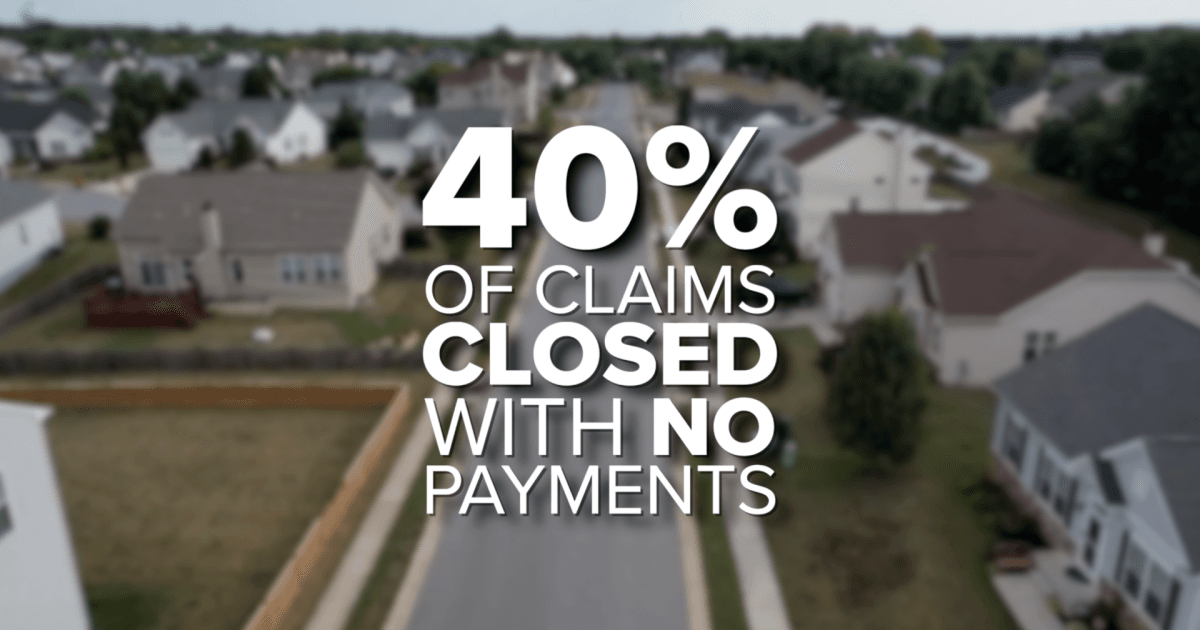
Recent data shows Florida has one of the highest rates of denied homeowner claims—over 40% are closed with no payout. The state also leads the nation in policy nonrenewals, with insurers dropping 3.3% of homeowners.

Calls for Reform Grow Louder

Dr. Martin Weiss of Weiss Ratings warns the situation will continue to deteriorate without meaningful reform. Weiss, alongside State Senator Carlos Guillermo Smith, is pushing for stricter oversight between insurers and managing general agents.

Smith argues that inflated fees are “padding pockets” while placing crushing burdens on Floridians paying the country’s highest insurance costs.

Proposed reforms include:

  • Capping yearly premium increases between 10–15%
  • Removing taxes on impact-resistant home upgrades
  • Increasing accountability and transparency for insurance carriers

With Florida’s political climate and Republican supermajority, the legislative battle ahead is expected to be intense—but the pressure to act has never been greater.

The Bigger Picture for Real Estate Professionals

This insurance instability affects far more than homeowners. Real estate agents, mortgage lenders, insurance professionals, and property managers must constantly adapt as premiums influence affordability, market competitiveness, and long-term value.

For professionals advancing in these fields, staying informed is essential. Institutions like Cameron Academy equip current and aspiring industry experts with the knowledge they need to navigate changing markets, evolving regulations, and the financial realities facing today’s consumers.

As lawmakers debate solutions in Tallahassee, one truth stands strong: the future of Florida’s housing market—and the careers built around it—depends on the reforms that come next.

More Articles

Getting licensed or staying ahead in your career can be a journey—but it doesn’t have to be overwhelming. Grab your favorite coffee or tea, take a moment to relax, and browse through our articles. Whether you’re just starting out or renewing your expertise, we’ve got tips, insights, and advice to keep you moving forward. Here’s to your success—one sip and one step at a time!

Free Money in 2026? The Truth About the DOGE Dividend Stimulus Check

The DOGE Dividend: What You Need to Know About the Proposed 2026 Stimulus Check Hey there! If you’ve been wondering #ReadMore

Navigating Seller’s Market: Twin Cities Housing Trends and Predictions for 2024

The Minneapolis housing market is currently navigating a complex terrain, marked by a curious blend of optimism and caution. In 2024, home sales in the Twin Cities area experienced a modest uptick of 1.8%.

Future Homes: Sustainability and Smart Technology Shaping Real Estate

In the ever-evolving landscape of real estate, two groundbreaking trends are shaping the homes of tomorrow: sustainability and smart home technology. As consumers become increasingly aware of their environmental impact and as technology continues to advance at lightning speed, these trends are significantly influencing buying decisions in the residential real estate market.

By |February 25, 2025|Categories: Article, Real Estate, Technology|Tags: , |0 Comments

Harvard Study Projects Dramatic Slowdown in U.S. Household Growth

In a comprehensive analysis by Harvard's Joint Center for Housing Studies, there is a projected increase of 8.6 million households in the United States from 2025 to 2035. This equates to approximately 860,000 new households per year, marking a significant deceleration compared to the post-Great Recession era, which saw a sluggish yet larger gain of 10.1 million households.

By |February 24, 2025|Categories: Article, Demographics, Housing|Tags: , |0 Comments

AI Revolutionizing Real Estate: Predicting Trends and Values

The real estate industry, often seen as conservative, is gradually embracing technological advancements with AI leading the charge. Generative AI is already revolutionizing real estate marketing by enhancing customer experiences and optimizing content creation.

By |February 24, 2025|Categories: Article, Real Estate, Technology/AI|Tags: , |0 Comments

In-Person Work Policies: A Beacon of Hope for Commercial Real Estate

With office occupancy plummeting by 90% from February to March 2020, the impact of remote work was palpable. However, the researchers found that hybrid mandates and adding more in-office days could mitigate some of these challenges.