Florida’s Insurance Crisis Deepens: New Findings Reveal Soaring Premiums, Denied Claims, and a Push for Reform

Florida homeowners are facing one of the most expensive—and increasingly unsustainable—insurance markets in the nation, according to new reporting from WPTV News Channel 5. A recent study by Bankrate.com places Florida’s average annual homeowners insurance premium at an astonishing $5,838—roughly $3,000 above the national average.

For many Floridians, these numbers aren’t just statistics—they’re life-changing financial burdens that are reshaping budgets, lifestyles, and even migration decisions. Retirees on fixed incomes, families still recovering from storms, and homeowners required to carry wind coverage are all feeling the squeeze.

“Everything’s Tripled”: Homeowners Speak Out

West Palm Beach homeowner Jeff Heun shared with WPTV’s Joel Lopez that his premiums once sat around $3,400 before ballooning dramatically: “Everything’s tripled.” He noted that filing a claim could have caused his premiums to double yet again. Despite years of paying for coverage, he has never once used it—an experience far too common in Florida’s turbulent insurance landscape.

Others interviewed described choosing between mandatory wind coverage and essential home upgrades—while some have opted out entirely. One woman told WPTV she hasn’t carried homeowners insurance in 25 years, choosing instead to self‑fund potential repairs.

When Claims Are Needed, Many Still Struggle

In Loxahatchee, Bob and Pam Fix suffered more than $40,000 in tornado damage—yet their insurer initially offered just $4,500. After WPTV Investigates reporter Kate Hussey intervened, the offer was corrected to $41,000, finally giving them the resources needed to begin repairs.

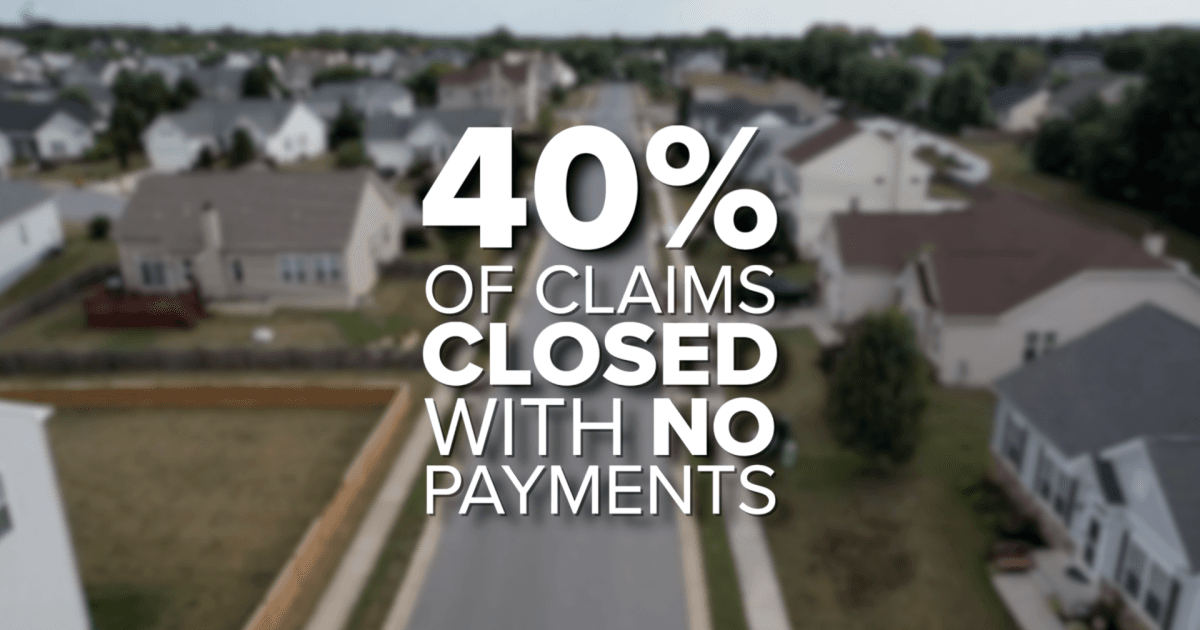
40 percent of claims closed with no payments chart

Recent statewide findings highlight just how widespread these issues are: more than 40% of Florida insurance claims are closed with no payment—one of the highest rates in the country. Florida also leads in dropped renewals, with insurers non‑renewing policies at 3.3%.

Lawmakers Push Back: Calls for Transparency and Consumer Protection

Dr. Martin Weiss of Weiss Ratings issued a stark warning that the crisis is nearing a breaking point. Alongside Florida State Senator Carlos Guillermo Smith, Weiss is pushing initiatives through the Insurance Fairness Project and Unlocking America’s Future to increase accountability—especially regarding profits tied to affiliated managing general agents.

Proposed reforms include capping rate increases at 10–15% and removing taxes on impact‑resistant home products such as doors, windows, and garage doors. These measures could help residents fortify their homes while potentially lowering premiums over time.

What This Means for Florida’s Real Estate and Insurance Industries

The ripple effects extend far beyond homeowners. Real estate professionals, mortgage lenders, and insurance agents are watching closely as premiums increasingly determine whether buyers qualify—or whether overstressed sellers can afford to stay in their homes.

For students and professionals pursuing Florida real estate, mortgage, or insurance licenses through institutions like Cameron Academy, this evolving landscape provides essential real‑world insight. Understanding Florida’s insurance pressures is now just as critical as mastering contracts, valuations, or underwriting fundamentals.

A State at a Crossroads

With Florida’s supermajority political climate, passing reform remains an uphill battle—but lawmakers are adopting a “throw everything at the wall” strategy to spark action. Whether Tallahassee ultimately responds may determine if costs stabilize—or if the crisis escalates for millions.

As investigations continue and lawmakers debate the next step, one thing is certain: Florida homeowners can’t wait much longer for relief.

For full coverage, updates, and deeper context, visit the original investigation from WPTV News Channel 5 West Palm.

More Articles

Getting licensed or staying ahead in your career can be a journey—but it doesn’t have to be overwhelming. Grab your favorite coffee or tea, take a moment to relax, and browse through our articles. Whether you’re just starting out or renewing your expertise, we’ve got tips, insights, and advice to keep you moving forward. Here’s to your success—one sip and one step at a time!

FinCEN’s Nationwide AML Rule Reshapes Title and Real Estate Compliance for 2025–2026

The title and real estate industries are entering their most dramatic compliance overhaul in decades. FinCEN’s new anti‑money‑laundering rule now applies to every state, enforces a first‑dollar reporting requirement, and places full responsibility on settlement agents. With the rule already in effect and mandatory reporting beginning March 1, 2026, professionals face urgent operational changes involving software, training, and entity‑buyer disclosures. Combined with state‑level rate shifts and heightened scrutiny of attorney opinion letters, 2025 marks a turning point that demands stronger compliance literacy across the entire real estate and finance ecosystem.

7 Retirement Trends Shaping 2026: What Professionals Should Know

Retirement planning went through major changes in 2025, from new SECURE Act updates to shifting investment behaviors. As we move into 2026, seven key trends are reshaping how Americans save and build long‑term wealth. These shifts matter not only for everyday investors but also for professionals across real estate, finance, mortgage, insurance, and other licensed fields. Understanding these developments can help you strengthen your own financial strategy while staying competitive in your career.

Florida’s Real Estate Cooldown: Insurance Costs Are Now the Biggest Dealbreaker

Florida’s housing market is cooling faster than any other state, and soaring insurance premiums are the primary force driving buyers away. With cancellation rates in major metros topping 20%, steep price drops across Southwest Florida, rising HOA and condo fees, and thousands of homes added to new flood zones, many buyers are discovering that insurance—not the mortgage—is what kills the deal. As Citizens shrinks and new legislation raises coverage requirements, professionals in real estate, mortgage, and insurance must adapt quickly to a market where affordability hinges on risk, regulation, and rising premiums.

Commercial Real Estate in 2026 Shows Signs of Stabilization and Strategic Growth

Commercial real estate is entering 2026 with renewed optimism as pricing floors, revitalized capital markets, and improved market visibility signal a shift away from the volatility of 2025. Analysts from Deloitte, Colliers, Cushman & Wakefield, and CoStar highlight firmer fundamentals, rising deal flow, and increased lender participation. Key sectors such as office, industrial, retail, multifamily, and data centers are showing distinct recovery patterns, positioning industry professionals and students for new opportunities in the year ahead.

Why Florida Insurance Rates Are Falling but Premiums Keep Climbing

Florida’s property insurance market is finally stabilizing after years of storms, lawsuits, and rising rates — yet many homeowners are still seeing higher bills. The reason isn’t the rates themselves but soaring replacement values driven by inflation in labor and building materials. Even as insurers lower rates, the cost to rebuild a home continues to rise, making up roughly 75% of recent premium increases. With new insurers entering the market and reforms taking effect, homeowners now have more options to shop, recalculate coverage, and control their costs.

Why Microcredentials Will Dominate 2026 Hiring — And How Professionals Can Stay Ahead

The 2026 job market is shifting fast, and the biggest winners will be professionals who can prove they’re continuously learning. With more than 90% of employers now preferring candidates with microcredentials, short targeted certificates are becoming the new career currency. From AI and data skills to modern communication and adaptability, microcredentials are helping workers stand out in a competitive landscape — especially as industries like real estate, mortgage, insurance, and finance demand ongoing upskilling.