
Florida’s Insurance Market Finds Its Footing as Reforms Take Hold

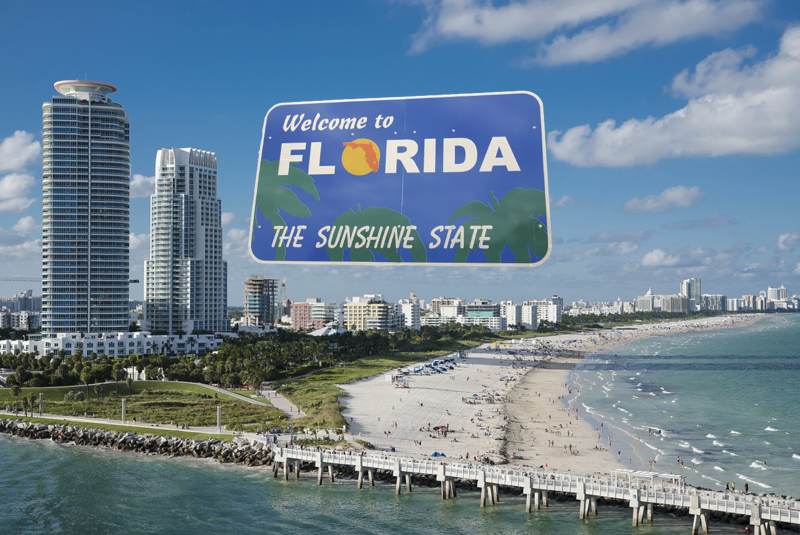
Florida beachfront

At the 2025 Florida Chamber Insurance Summit, Insurance Commissioner Mike Yaworsky delivered a message many Florida homeowners and professionals have been waiting years to hear: the state’s insurance market has finally stabilized.

Speaking before industry leaders, legislators, and risk experts, Yaworsky emphasized the impact of sweeping tort and insurance reforms enacted in 2022 and 2023. These reforms, aimed at curbing excessive litigation and attracting new private carriers, appear to have successfully reversed the market’s downward spiral.

A Decade of Challenges, Turning Points, and Course Corrections

Yaworsky walked the audience through a sobering timeline. Reports from 2016 onward signaled deep structural issues in Florida’s insurance environment—abuse of assignment-of-benefits agreements, inflated claims, and unchecked litigation patterns. By 2021, the market was described as “on the brink of collapse,” with insurers fleeing and reinsurers unwilling to write new business.

But as Yaworsky reminded the crowd, the Legislature’s actions in 2022 and 2023 changed the trajectory. Florida targeted one-way attorney fees, claim inflation tactics, and other long-standing pain points, effectively stopping the bleeding. Since then, new P&C carriers and reinsurers have entered the market, and property claim litigation has dropped back to pre‑2019 levels.

“We Can Show Unequivocally That This Marketplace Has Stabilized”

By the end of 2025, the results are evident. Yaworsky celebrated the progress, noting that consumers now have more options than they’ve seen in decades, and carriers are better capitalized and better positioned for Florida’s uniquely high‑risk environment.

He warned, however, against undoing the reforms: “Any turn back on the reforms would be the equivalent of adding a multi‑billion‑dollar tax on the back of Floridians.”

What This Means for Florida’s Insurance and Real Estate Professionals

For professionals in insurance, real estate, and financial services, a stable insurance market translates into greater consumer confidence, more housing mobility, and a stronger foundation for long‑term economic growth. As the state prepares for future storm seasons and continued population expansion, an educated and adaptable workforce is more important than ever.

Schools like Cameron Academy continue to support both new and seasoned professionals across Florida and the nation, offering licensing and continuing education that keeps the industry prepared for regulatory and market shifts like the ones highlighted at the Summit.

Source

Original reporting from Reinsurance News: Read the full article

Tap here to explore insurance licensing courses and career‑advancing programs at Cameron Academy.

More Articles

Getting licensed or staying ahead in your career can be a journey—but it doesn’t have to be overwhelming. Grab your favorite coffee or tea, take a moment to relax, and browse through our articles. Whether you’re just starting out or renewing your expertise, we’ve got tips, insights, and advice to keep you moving forward. Here’s to your success—one sip and one step at a time!

Free Money in 2026? The Truth About the DOGE Dividend Stimulus Check

The DOGE Dividend: What You Need to Know About the Proposed 2026 Stimulus Check Hey there! If you’ve been wondering #ReadMore

Navigating Seller’s Market: Twin Cities Housing Trends and Predictions for 2024

The Minneapolis housing market is currently navigating a complex terrain, marked by a curious blend of optimism and caution. In 2024, home sales in the Twin Cities area experienced a modest uptick of 1.8%.

Future Homes: Sustainability and Smart Technology Shaping Real Estate

In the ever-evolving landscape of real estate, two groundbreaking trends are shaping the homes of tomorrow: sustainability and smart home technology. As consumers become increasingly aware of their environmental impact and as technology continues to advance at lightning speed, these trends are significantly influencing buying decisions in the residential real estate market.

By |February 25, 2025|Categories: Article, Real Estate, Technology|Tags: , |0 Comments

Harvard Study Projects Dramatic Slowdown in U.S. Household Growth

In a comprehensive analysis by Harvard's Joint Center for Housing Studies, there is a projected increase of 8.6 million households in the United States from 2025 to 2035. This equates to approximately 860,000 new households per year, marking a significant deceleration compared to the post-Great Recession era, which saw a sluggish yet larger gain of 10.1 million households.

By |February 24, 2025|Categories: Article, Demographics, Housing|Tags: , |0 Comments

AI Revolutionizing Real Estate: Predicting Trends and Values

The real estate industry, often seen as conservative, is gradually embracing technological advancements with AI leading the charge. Generative AI is already revolutionizing real estate marketing by enhancing customer experiences and optimizing content creation.

By |February 24, 2025|Categories: Article, Real Estate, Technology/AI|Tags: , |0 Comments

In-Person Work Policies: A Beacon of Hope for Commercial Real Estate

With office occupancy plummeting by 90% from February to March 2020, the impact of remote work was palpable. However, the researchers found that hybrid mandates and adding more in-office days could mitigate some of these challenges.