Florida’s Insurance Market Finds Its Footing as Reforms Take Hold
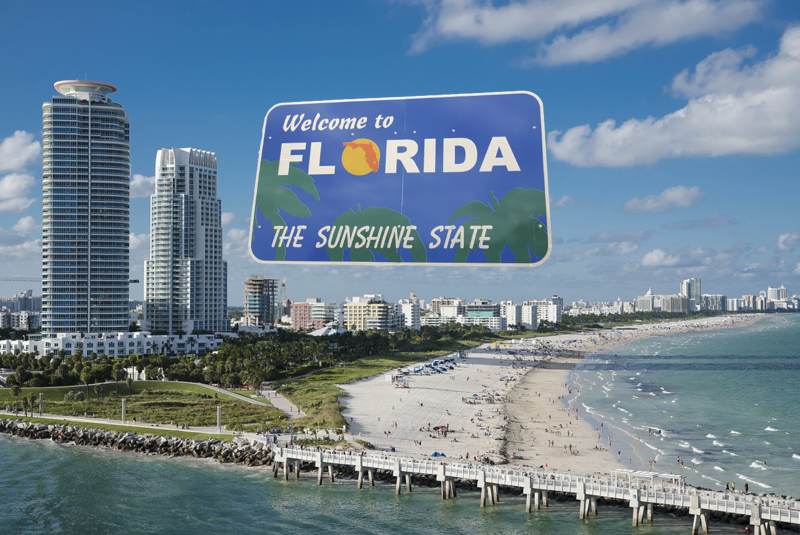
At the 2025 Florida Chamber Insurance Summit, Insurance Commissioner Mike Yaworsky delivered a message many Florida homeowners and professionals have been waiting years to hear: the state’s insurance market has finally stabilized.
Speaking before industry leaders, legislators, and risk experts, Yaworsky emphasized the impact of sweeping tort and insurance reforms enacted in 2022 and 2023. These reforms, aimed at curbing excessive litigation and attracting new private carriers, appear to have successfully reversed the market’s downward spiral.
A Decade of Challenges, Turning Points, and Course Corrections
Yaworsky walked the audience through a sobering timeline. Reports from 2016 onward signaled deep structural issues in Florida’s insurance environment—abuse of assignment-of-benefits agreements, inflated claims, and unchecked litigation patterns. By 2021, the market was described as “on the brink of collapse,” with insurers fleeing and reinsurers unwilling to write new business.
But as Yaworsky reminded the crowd, the Legislature’s actions in 2022 and 2023 changed the trajectory. Florida targeted one-way attorney fees, claim inflation tactics, and other long-standing pain points, effectively stopping the bleeding. Since then, new P&C carriers and reinsurers have entered the market, and property claim litigation has dropped back to pre‑2019 levels.
“We Can Show Unequivocally That This Marketplace Has Stabilized”
By the end of 2025, the results are evident. Yaworsky celebrated the progress, noting that consumers now have more options than they’ve seen in decades, and carriers are better capitalized and better positioned for Florida’s uniquely high‑risk environment.
He warned, however, against undoing the reforms: “Any turn back on the reforms would be the equivalent of adding a multi‑billion‑dollar tax on the back of Floridians.”
What This Means for Florida’s Insurance and Real Estate Professionals
For professionals in insurance, real estate, and financial services, a stable insurance market translates into greater consumer confidence, more housing mobility, and a stronger foundation for long‑term economic growth. As the state prepares for future storm seasons and continued population expansion, an educated and adaptable workforce is more important than ever.
Schools like Cameron Academy continue to support both new and seasoned professionals across Florida and the nation, offering licensing and continuing education that keeps the industry prepared for regulatory and market shifts like the ones highlighted at the Summit.
Tap here to explore insurance licensing courses and career‑advancing programs at Cameron Academy.
More Articles
Getting licensed or staying ahead in your career can be a journey—but it doesn’t have to be overwhelming. Grab your favorite coffee or tea, take a moment to relax, and browse through our articles. Whether you’re just starting out or renewing your expertise, we’ve got tips, insights, and advice to keep you moving forward. Here’s to your success—one sip and one step at a time!
For commercial real estate leaders, the insights from Deloitte's report are invaluable for strategic planning. By understanding the economic conditions and emerging trends, organizations can better position themselves to capitalize on opportunities and mitigate risks in this evolving landscape.
In a year marked by significant geopolitical tensions and a post-pandemic recovery, the aerospace and defense industry is gearing up for a transformative 2025.
Following the Supreme Court's June 2023 decision to overturn the initial student debt cancellation plan, President Joe Biden swiftly introduced a comprehensive "plan B." This new approach seeks to establish clear guidelines on eligibility and debt cancellation limits, potentially impacting around 27.6 million borrowers.
The average down payment fell to 14.5% in Q3 2024 from the historical peak of 14.9% in Q2, representing a modest decrease but still ranking as the third-highest percentage in recent history.
In a transformative era for U.S. cities, federal infrastructure funding opportunities, anchored by the Bipartisan Infrastructure Law (BIL) and the Inflation Reduction Act (IRA), promise to reshape urban landscapes for resilience, sustainability, and equity.
In a state where the cost of living continues to skyrocket, Californians are once again faced with crucial decisions on housing policies. This November, voters will find two propositions on the ballot that address rent control, each with its own distinct approach and implications.