Florida’s Insurance Market Finds Its Footing as Reforms Take Hold
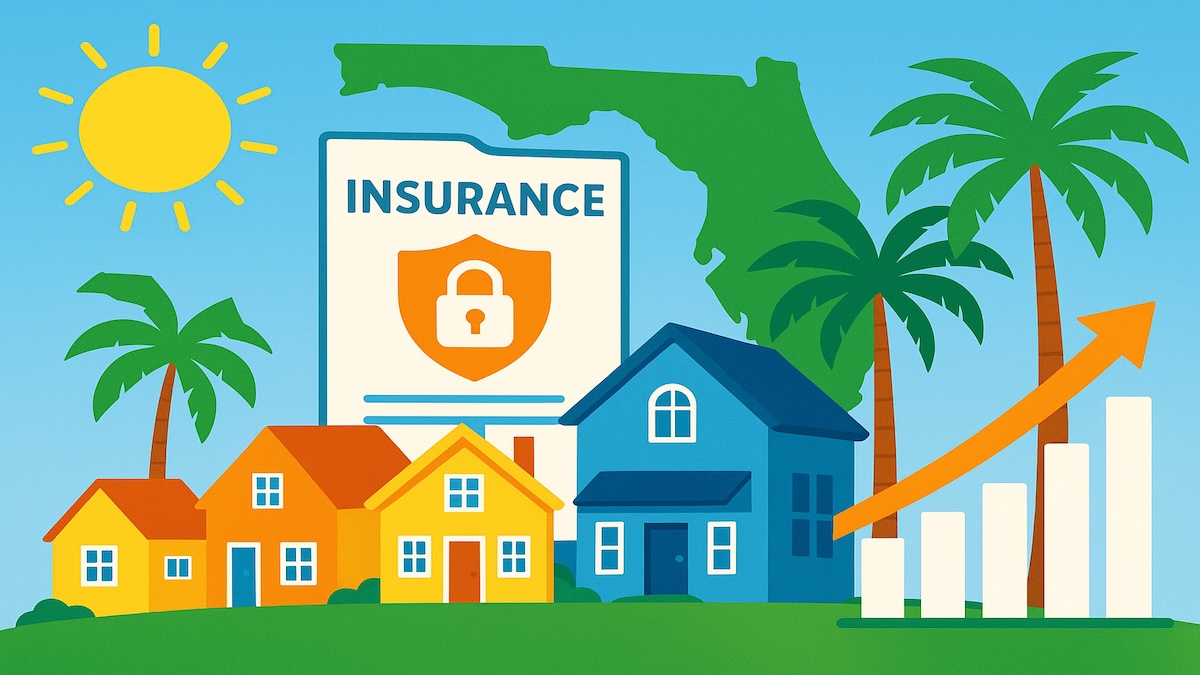
At the 2025 Florida Chamber Insurance Summit, Insurance Commissioner Mike Yaworsky delivered a message many Florida homeowners and professionals have been waiting years to hear: the state’s insurance market has finally stabilized.
Speaking before industry leaders, legislators, and risk experts, Yaworsky emphasized the impact of sweeping tort and insurance reforms enacted in 2022 and 2023. These reforms, aimed at curbing excessive litigation and attracting new private carriers, appear to have successfully reversed the market’s downward spiral.
A Decade of Challenges, Turning Points, and Course Corrections
Yaworsky walked the audience through a sobering timeline. Reports from 2016 onward signaled deep structural issues in Florida’s insurance environment—abuse of assignment-of-benefits agreements, inflated claims, and unchecked litigation patterns. By 2021, the market was described as “on the brink of collapse,” with insurers fleeing and reinsurers unwilling to write new business.
But as Yaworsky reminded the crowd, the Legislature’s actions in 2022 and 2023 changed the trajectory. Florida targeted one-way attorney fees, claim inflation tactics, and other long-standing pain points, effectively stopping the bleeding. Since then, new P&C carriers and reinsurers have entered the market, and property claim litigation has dropped back to pre‑2019 levels.
“We Can Show Unequivocally That This Marketplace Has Stabilized”
By the end of 2025, the results are evident. Yaworsky celebrated the progress, noting that consumers now have more options than they’ve seen in decades, and carriers are better capitalized and better positioned for Florida’s uniquely high‑risk environment.
He warned, however, against undoing the reforms: “Any turn back on the reforms would be the equivalent of adding a multi‑billion‑dollar tax on the back of Floridians.”
What This Means for Florida’s Insurance and Real Estate Professionals
For professionals in insurance, real estate, and financial services, a stable insurance market translates into greater consumer confidence, more housing mobility, and a stronger foundation for long‑term economic growth. As the state prepares for future storm seasons and continued population expansion, an educated and adaptable workforce is more important than ever.
Schools like Cameron Academy continue to support both new and seasoned professionals across Florida and the nation, offering licensing and continuing education that keeps the industry prepared for regulatory and market shifts like the ones highlighted at the Summit.
Tap here to explore insurance licensing courses and career‑advancing programs at Cameron Academy.
More Articles
Getting licensed or staying ahead in your career can be a journey—but it doesn’t have to be overwhelming. Grab your favorite coffee or tea, take a moment to relax, and browse through our articles. Whether you’re just starting out or renewing your expertise, we’ve got tips, insights, and advice to keep you moving forward. Here’s to your success—one sip and one step at a time!
President Trump recently suggested mortgage rates will drop “a lot lower” by early 2026, sparking industry-wide curiosity — but current economic data tells a more measured story. With today’s 30‑year fixed hovering near 6.25%, experts say meaningful declines remain possible, though not guaranteed, and would depend on softer inflation, weaker economic signals, or a shift in bond market behavior. While political comments created headlines, analysts emphasize that only market conditions — not rhetoric — can drive rates down. Independent forecasts already point toward mid‑5% rates by 2026, offering a potentially healthier landscape for buyers, agents, and mortgage professionals preparing for the next cycle.
Artificial intelligence has moved from a futuristic concept to a central force driving today’s mortgage industry. From smarter underwriting to enhanced borrower experiences and tighter compliance, AI is transforming every corner of mortgage lending. As expectations rise and competition accelerates, AI literacy is no longer optional — it’s a core skill every mortgage, real estate and finance professional must master to stay relevant and lead confidently.
Global commercial real estate is shifting away from short-term recovery cycles and entering a long-term transformation driven by technology, sustainability, demographic change, and evolving work‑life patterns. Capital is becoming more selective, favoring resilient assets and alternative lenders, while high‑demand sectors such as industrial, logistics, data infrastructure, and specialized residential continue to outperform. Geography, sustainability standards, and flexibility are emerging as defining forces for the next cycle, signaling major opportunities—and challenges—for real estate professionals preparing for the future.
Artificial intelligence has moved from hype to essential infrastructure in the real estate world. From smarter valuations and predictive analytics to automated lead generation and personalized property-matching tools, AI is transforming how agents, brokers, lenders, and managers operate. As top platforms like Zillow, Redfin, Opendoor, and dozens more integrate deep‑learning technology, professionals across real estate, mortgage, insurance, and finance are being pushed to adapt. The future belongs to those who embrace these tools — and use them to elevate speed, accuracy, and client experience.
Florida’s once‑troubled property insurance market has staged an impressive recovery after its near‑collapse in 2022. A new ALIRT Insurance Research report shows that legislative reforms, tighter underwriting and the arrival of new insurers have restored stability, reduced Citizens’ policy load and revived industry confidence. While risks remain, the rebound is reshaping housing affordability and creating fresh opportunities for real estate, mortgage and insurance professionals.
A new bill gaining momentum in Tallahassee would stop insurers from denying claims based solely on artificial intelligence. Championed by Rep. Hillary Cassell, the proposal aims to restore trust in Florida’s troubled insurance market by ensuring human oversight in decisions that affect homeowners, newcomers, and industry professionals. As debates intensify, experts warn AI is reshaping insurance faster than ever—making it critical for real estate, mortgage, and insurance professionals to understand the regulatory shifts ahead.