Florida’s Middle Class Is Being Squeezed Out: Rising Insurance Costs, Rebuilding Battles, and a New Era for Coastal Living

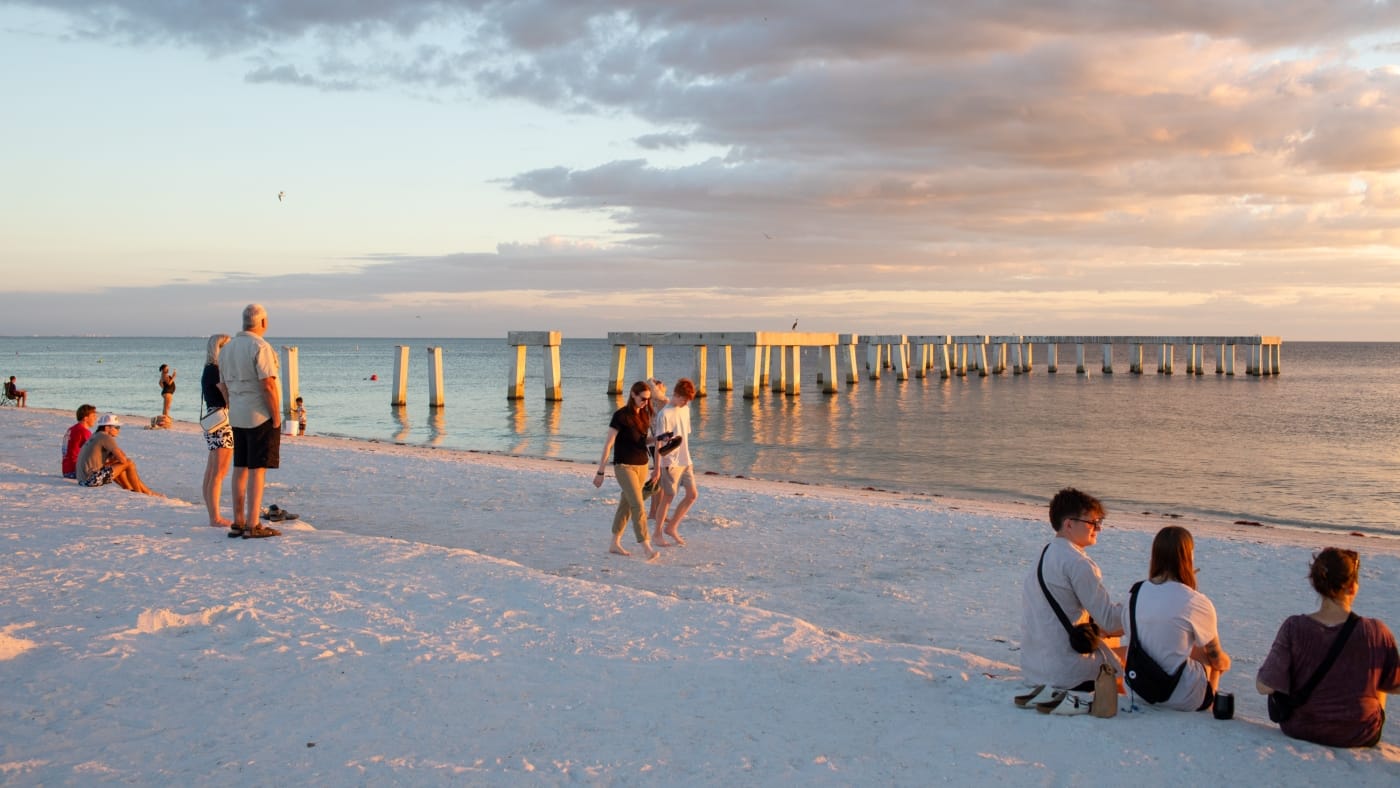
Fort myers beach sunset

Along the sun-washed edges of Fort Myers Beach, where fishermen cast lines beside broken piers and families once rented charming wood-framed cottages, a new Florida is emerging—one reshaped by disaster, soaring insurance costs, and a housing market strained to its limits. What was once a haven for middle-class families is becoming a dramatic battleground between affordability and survival.

This transformation is detailed in an in-depth report from NPR, which you can explore directly at their link:
Read the full NPR story.

The Aftermath That Never Ended

Three years after Hurricane Ian tore through Fort Myers Beach, the echoes of rebuilding still reverberate. New construction stands beside empty lots, and many residents are still reckoning with the financial shockwaves.

“We are nowhere near where we thought we would be three years ago,” says Jacki Liszak, CEO of the Fort Myers Beach Chamber of Commerce, whose hotel was washed away. “I don’t think we understood the extent of what happened to us.”

Homes once filled with decades of memories are being replaced by more resilient—but dramatically more expensive—structures. With costs rising on all fronts, long-time residents, service workers, and small family-owned businesses are finding it nearly impossible to return.

Insurance Costs: The Breaking Point

Florida’s insurance market has been battered by climate-intensified storms and years of litigation pressures. As a result, homeowners are now staring down average premiums of more than $5,700 per year, which is over $3,300 above the national average.

Flood insurance rates are also skyrocketing under FEMA’s updated risk-based pricing model. For some families, a once-manageable bill has ballooned into a $10,000 annual burden—a cost many simply can’t absorb.

“Unless you really have a lot of money to stay down here, it’s a challenge,” says Tara Boyd, who was displaced from Fort Myers Beach after Ian.

Realtors Sound the Alarm

Local real estate professionals are witnessing the pressure in real time. Homes are sitting longer. Many owners are pouring money into repairs only to face higher premiums and falling property values.

Realtor Jessica Gatewood recalls a client who spent $20,000 on flood gates just to sell a home that kept flooding—and even that was barely enough.

“If this economy continues like it is for another year, we’re going to have a lot of foreclosures,” Gatewood warns.

Gentrification on Fast-Forward

Hurricane Ian didn’t create gentrification—but it accelerated it. Older, affordable homes were wiped out, and rebuilding to new state and federal standards pushed many long-time locals out of the market.

Small, family-run shops that once gave Fort Myers Beach its signature charm are disappearing, replaced by national chains and luxury developments. To many residents, the island feels increasingly unfamiliar.

The Emotional Toll

Renters face the same squeeze as landlords push rising insurance costs down the line. Some families have seen rent double in only two years—forcing them to consider leaving Florida entirely.

“Sometimes it makes me cry,” says resident Melyssa Caballero. “Little by little, you’re going to see everybody going away.”

Florida saw more than 500,000 residents move out in 2023—many of them young workers essential to the region’s economy.

A State at a Crossroads

From contractors to nonprofits, many agree on one thing: the region is rebuilding, but the next storm could redraw the map all over again.

“We need development to sustain the tax base,” says councilman Scott Safford. “But we also need some luck with the weather.”

Yet despite it all, hope persists. As Jacki Liszak put it:

“You go over that bridge, and you feel home. People will come, build, and stay.”

What This Means for Florida Real Estate Professionals

For agents, brokers, mortgage professionals, and insurers, this is a defining moment. Understanding risk, insurance structures, building codes, and climate-driven migration is no longer optional—it’s essential.

This is why strong, modern education matters. At Cameron Academy, Florida’s trusted real estate school, professionals gain the tools to navigate an evolving market with confidence and insight.

As Florida’s landscape shifts, informed professionals will be the ones guiding communities toward sustainable growth—one license, one transaction, one rebuilt neighborhood at a time.

To explore NPR’s full reporting, visit:
NPR: Disaster & Insurance Costs Are Rising

More Articles

Getting licensed or staying ahead in your career can be a journey—but it doesn’t have to be overwhelming. Grab your favorite coffee or tea, take a moment to relax, and browse through our articles. Whether you’re just starting out or renewing your expertise, we’ve got tips, insights, and advice to keep you moving forward. Here’s to your success—one sip and one step at a time!

Commercial Real Estate Slows Again as Investors Flock to Larger, Safer Deals

November marked another cooldown for commercial real estate, with total deal volume dropping 10% year over year and falling below even 2020’s levels. While overall activity is slowing, investors are concentrating their money on bigger, more resilient assets—driving a 51% surge in deals over $100 million and pushing average transaction sizes well above historical norms. Multifamily remains the strongest sector, office deals are becoming more strategically focused, and medical office and data centers continue to outperform as long‑term demand stays solid.

Lower Rates Could Spark a Commercial Real Estate Comeback in 2026

After years of stalled activity, commercial real estate may finally be nearing a rebound. Experts say that expected interest‑rate drops in 2026 could reignite investor confidence, unlock sidelined capital, and boost deal flow across multiple sectors. But the outlook isn’t uniformly sunny—multifamily faces oversupply, industrial is cooling after years of rapid growth, and weakening employment conditions may slow absorption. For professionals across real estate, mortgage, insurance, and finance, the shifting landscape presents both challenges and major opportunities for those who stay informed and properly licensed.

Consumer Reports Warns Congress About Rising Fintech Risks in 2026

Consumer Reports delivered a major warning to Congress, highlighting how rapidly expanding fintech tools—especially AI‑driven platforms—are outpacing consumer protections. In testimony before the House Subcommittee on Digital Assets, Financial Technology and AI, CR called for stronger, clearer rules to prevent hidden fees, predatory practices, and confusion within digital financial products. For professionals in real estate, mortgages, insurance, and finance, these emerging regulations may soon influence lending decisions, underwriting, credit evaluations, and compliance expectations across the industry.

Amazon’s Massive Corporate Shakeup Signals a New Era of AI‑Driven Workforce Transformation

Amazon is preparing to cut up to 30,000 corporate jobs by mid‑2026 as it pivots aggressively toward automation and AI. Following 14,000 layoffs in late 2025, the company is eliminating layers of management to redirect billions into robotics, generative AI systems, and supercomputing partnerships. While warehouse hiring continues for seasonal demand, Amazon’s internal shift reveals a broader nationwide trend: white‑collar roles across tech, finance, logistics, and more are being reshaped by automation at unprecedented speed.

Chuck Bonfiglio Steps In as 2026 Florida Realtors President, Signaling a Year of Big Industry Shifts

Florida’s real estate market enters 2026 with new leadership at the helm as Chuck Bonfiglio, broker-owner of AAA Realty Group, is officially installed as President of Florida Realtors. With more than 230,000 members behind the association, Bonfiglio highlights affordability, insurance reform, and taxes as key priorities while expressing optimism about easing mortgage rates, stabilizing prices, and growing inventory. Backed by years of statewide and national Realtor leadership, he aims to guide professionals through another transformative year alongside a newly appointed 2026 leadership team.

Tampa’s Real Estate Market Enters Its Selective Era

Tampa isn’t cooling off—it’s getting smarter. After years of rapid expansion, the city’s commercial real estate market has shifted into a more disciplined, selective phase. Population growth remains strong, office leasing is outperforming national trends, industrial activity is normalizing sustainably, and retail is seeing renewed investor confidence. With capital becoming more cautious and health care real estate emerging as a major growth sector, Tampa is entering a new era focused on strategy, execution, and long‑term fundamentals.