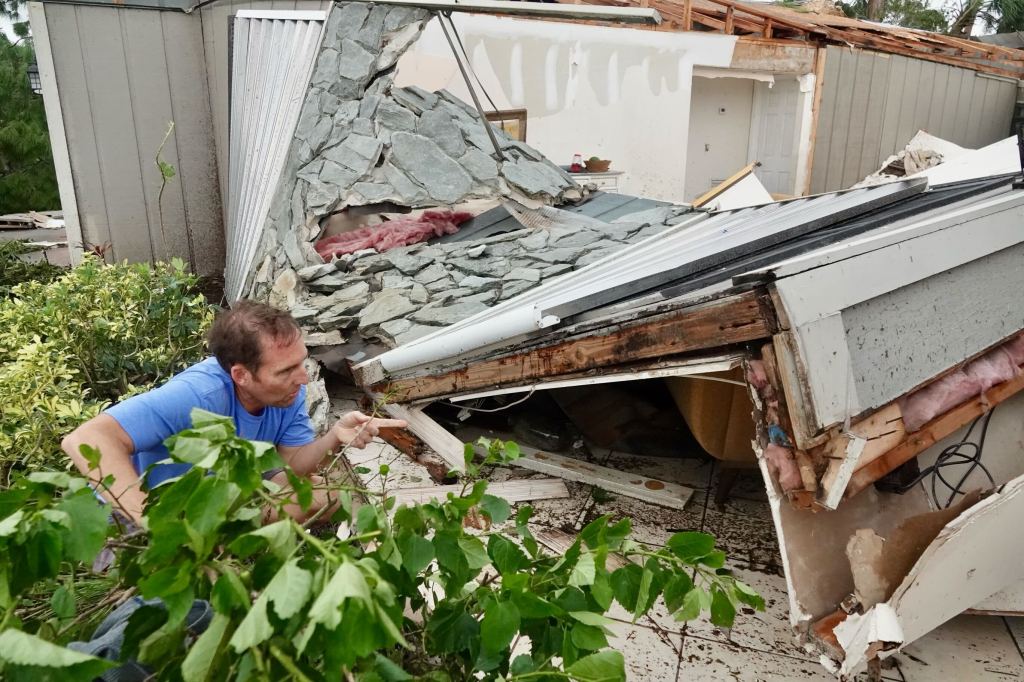
For Floridians, property insurance has shifted from a routine expense into a defining force shaping homeownership, business stability, and the state’s economic outlook. Yet despite skyrocketing costs and widespread consumer struggles, some legislative leaders indicate they may not address the crisis this session — a stance many residents see as unacceptable.
According to the Orlando Sentinel’s Editorial Board, that inaction is wildly out of touch with the reality Floridians face daily. Florida now holds the unwelcome title of most expensive state in the nation for property insurance — with rates averaging nearly three times the national cost.
Premiums Up, Coverage Down, and Consumer Rights Shrinking
Premiums exceeding $10,000 per year are becoming disturbingly common, even for modest homes in coastal counties. Worse, homeowners are paying more for less coverage, facing higher deductibles, and confronting increasingly restrictive claims processes.
In 2024, hurricanes Debby, Helene, and Milton ravaged parts of Florida — yet insurers closed 47% of homeowner claims with no payout. Nearly half.
And appeals? Not much better. Over 90% of claim denial appeals are rejected, a sharp consequence of recent reforms that removed insurers’ obligation to cover attorney fees even when they’re found liable.
The system isn’t just strained — it’s stacked. And the Sentinel argues it’s stacked exactly as intended.
The Laws That Were Supposed to “Fix” the Problem
Lawmakers passed major industry-friendly reforms in 2021 and 2022, promising stability and lower premiums. Instead, rates continue to climb, while consumers have fewer protections and fewer paths to challenge unfair decisions.
Yet Senate President Kathleen Passidomo and other leaders insist the laws “need more time to work.” For Floridians facing displacement, financial strain, or foreclosure, that call for patience is becoming harder to accept.
There Are Solutions — They’re Just Not Moving
Two bills that could offer real relief haven’t even been assigned to committees:
SB 128 by Sen. LaVon Bracy-Davis — allows property owners to use a qualified inspector before insurers deny a roof claim.
SB 320 by Sen. Carlos Guillermo-Smith — requires insurers to disclose financial data used to justify rate hikes.
Neither bill has advanced. Without hearings or debate, most homeowners never realize how much their struggles are shaped not only by insurers, but by the laws that govern them.
Real Estate Professionals Feel the Shockwaves
For real estate agents, brokers, and investors, the insurance crisis is far from abstract. Deals collapse when buyers receive shocking premium quotes. Sellers lose value as insurance availability becomes a neighborhood stress test. Coastal listings stall or disappear entirely.
At Cameron Academy, we hear these stories every day from Florida real estate professionals. Clients are overwhelmed, confused, and often discouraged. Today, understanding property insurance is as essential as understanding contracts, ethics, or appraisals — which is exactly why we continue to integrate real-world market challenges into our licensing and continuing education courses.
Time for Lawmakers to Step Up
As the Sentinel’s editorial board argues, leadership requires prioritizing what genuinely matters. While lawmakers push forward bills on unrelated cultural issues and development agendas, millions of Floridians watch their homeownership dreams erode under unmanageable premiums and evaporating coverage.
This is more than a policy debate — it’s a full-scale crisis. For many families, it’s the difference between staying in their homes and walking away forever.
The Orlando Sentinel’s Editorial Board — Krys Fluker, Roger Simmons, and Jay Reddick — offers a powerful call for legislative action. You can read their full editorial at the source linked above.
More Articles
Getting licensed or staying ahead in your career can be a journey—but it doesn’t have to be overwhelming. Grab your favorite coffee or tea, take a moment to relax, and browse through our articles. Whether you’re just starting out or renewing your expertise, we’ve got tips, insights, and advice to keep you moving forward. Here’s to your success—one sip and one step at a time!
The commercial real estate industry is finally confronting years of delayed financial reality as banks begin calling in billions in troubled loans, pushing office loan delinquencies to record highs. With more than 12 percent of office loans now delinquent and nearly a trillion dollars in commercial and multifamily debt maturing this year, lenders are tightening standards and forcing borrowers to present real data, stronger strategies, and actionable plans. Regional banks face the most risk, while real estate professionals who master data literacy and investment analysis will be best positioned to thrive in this new era.
CFP professionals are in higher demand than ever, and new data from SmartAsset and the CFP Board shows that some states are becoming hotspots for this booming field. California leads the nation, now home to nearly one in every ten Certified Financial Planners. As Americans seek deeper financial guidance, states with strong economies and growing populations are seeing the fastest rise in licensed advisors—signaling major opportunity for both new and seasoned professionals.
After years of market disruption, commercial real estate is finally showing strong signs of a comeback, with major investment firms projecting 2026 as the year the sector fully stabilizes. New reports from Hines, CBRE, and Colliers point to rising leasing activity, renewed buyer appetite, and a rebound toward pre‑pandemic investment levels. Manhattan is leading the recovery, premium office spaces are dominating demand, and suburban markets are gaining traction—setting the stage for significant opportunities for real estate professionals, investors, and brokers preparing for the next market cycle.
The 2026 labor market is entering a “low‑hire, low‑fire” freeze—job openings remain above pre‑pandemic levels, yet companies are delaying hiring decisions as they navigate economic uncertainty, tariffs, and shifting immigration policies. Despite the slowdown, major pockets of growth remain, especially in healthcare, construction, civil engineering, and Sunbelt regions. AI is reshaping some industries but replacing very few jobs, with less than 1% of skills at high risk of automation. For professionals willing to adapt, upskill, or shift industries, 2026 offers strategic opportunities—particularly in licensed fields like real estate, mortgage, insurance, and finance, where education and credentials can unlock stability and upward mobility.
Mortgage rates slipped to 6.09% this week, marking their lowest point in three years and surprising analysts after strong job numbers. The drop improves affordability for many families and signals a pivotal moment for buyers, investors, and real estate professionals as market conditions cool and stabilization continues into 2026.
Artificial intelligence is now the driving force behind the fastest‑growing proptech companies, with AI-native startups claiming the majority of the $16.7 billion invested in real estate technology last year. From tenant communication automation to self‑navigating construction vehicles and AI-powered investor management systems, four new unicorns—EliseAI, Bedrock Robotics, Juniper Square, and Vantaca—are leading a sweeping shift across commercial real estate. Their rise signals a new era where professionals must embrace automation, data skills, and continuous education to stay competitive in an industry evolving at record speed.