Florida’s Property Tax Shake-Up: Big Ideas, Big Uncertainty as Session Nears Finale
A massive property tax overhaul is barreling through Tallahassee, and depending on who you ask, it’s either a historic breakthrough or a dramatic risk to Florida’s financial stability. As lawmakers enter the final stretch of the legislative session, the debate over how far to go — and how fast — has become one of the most closely watched political battles of the year.
The Florida House recently approved what some are calling the boldest property tax proposal in state history. But with the Senate signaling hesitation and Gov. Ron DeSantis floating his own ideas, the path forward is anything but clear.
The House’s Big Swing: Eliminating Most Property Taxes on Primary Homes
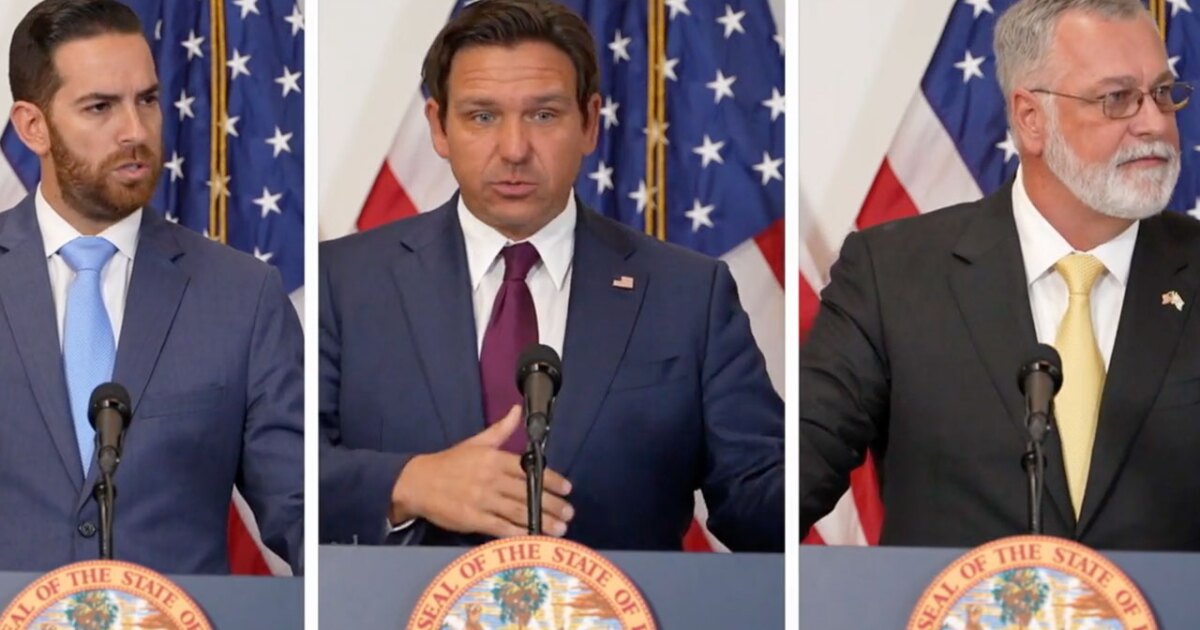
The House plan aims to eliminate all non-school property taxes for Floridians’ primary residences, pending voter approval on the 2026 ballot. Speaker Danny Perez admitted the road ahead may be rocky:
“What happens in the days ahead will decide if we will be here another three weeks or another three months,” he said during a pre-vote speech.
The effort was guided by Rep. Toby Overdorf, who acknowledged the pressure of the ticking legislative clock:
“So, we still have three weeks technically left in session, and we’ll see what happens with our partners across the rotunda.”
Senate President Ben Albritton made it clear the upper chamber isn’t ready to rubber-stamp the House’s plan. Instead, he says the Senate is working with the governor to craft a version with wider support.
“At the end of the day, what we’re looking for… is something to build consensus around,” Albritton noted.
Gov. DeSantis has publicly suggested going even further by eliminating homestead taxes entirely, though details are still sparse. In a CNBC appearance, he reaffirmed his push to get something on the 2026 ballot requiring 60% voter approval.
Democrats Sound the Alarm
Opposition has come loudest from Democrats who argue the proposals — especially the House version — could gut local budgets and force municipalities to rely more heavily on state funding.
House Minority Leader Fentrice Driskell warned the move could create “welfare counties” unable to support themselves. Senate Minority Leader Lori Berman echoed the concern, saying Democrats have seen “no concrete alternative” and that she opposes the House plan outright.
The Bigger Picture: A Legislature Under Pressure
Property taxes aren’t the only item on lawmakers’ plates. The session has been packed with debates over artificial intelligence rules, firearm legislation, rural infrastructure, and the looming state budget.
So far, only seven bills have made it to the governor’s desk — a sign of how much work remains and how tightly packed the final weeks will be.
Why This Matters for Florida’s Real Estate Professionals
If non-school property taxes on primary residences disappear, the ripple effects would be enormous. Home values, buyer demand, local service funding, insurance markets — they all shift. Whether this ends in major tax relief or a long-term restructuring of Florida’s revenue system, real estate professionals must stay ahead of the curve.
At Cameron Academy, we keep Florida agents, brokers, appraisers, and mortgage professionals prepared for every shift in the market and every policy pivot that affects property ownership. Legislative moments like this are exactly why staying educated and license-ready matters.
Getting licensed or staying ahead in your career can be a journey—but it doesn’t have to be overwhelming. Grab your favorite coffee or tea, take a moment to relax, and browse through our articles. Whether you’re just starting out or renewing your expertise, we’ve got tips, insights, and advice to keep you moving forward. Here’s to your success—one sip and one step at a time!
A new national survey shows that while most real estate agents now use AI for everyday tasks like writing listing descriptions and social posts, many remain uneasy trusting the technology with higher‑stakes responsibilities. Agents report major time savings and better communication thanks to AI, but lingering concerns about accuracy, compliance and data interpretation reveal a growing skills gap. The industry’s next big need: stronger AI tools, clearer standards and hands‑on training — a gap education providers like Cameron Academy are poised to fill.
Florida homeowners and real estate professionals are being crushed by skyrocketing insurance premiums, shrinking coverage, and a claims system stacked against consumers. While residents face the highest insurance costs in the nation, meaningful reform bills are being ignored in Tallahassee, leaving families, businesses, and the entire real estate market exposed.
Artificial intelligence is exposing the real estate industry's biggest weakness: fragmented, inconsistent data scattered across disconnected systems. Unlike finance and e‑commerce, real estate never built a unified digital foundation—and now AI can’t function without one. As companies scramble to standardize information, organizations like OSCRE are pushing shared data models that could transform everything from leasing to property management. The result may be the industry’s most collaborative era yet, where clean, interoperable data becomes the key to unlocking AI’s full power.
Off‑market networks, rising small‑investor buying, regulatory shifts, and intensifying portal competition are reshaping how homes are found and sold. With inventory tight and traditional listings declining, agents who understand investor behavior, private deal flow, and evolving rules are gaining a major edge in today’s fast‑changing housing landscape.
Despite state leaders celebrating stabilization, Florida homeowners continue to face some of the highest insurance premiums in the country. Local experts say rates have stopped skyrocketing but have settled at levels that feel permanently elevated—especially for older or coastal homes. With insurers still avoiding high‑risk areas and demanding costly home upgrades, many Floridians are questioning whether this expensive reality is here to stay.
California is pushing a landmark proposal that would force insurers to offer coverage to homeowners who meet state‑approved wildfire‑mitigation standards. The new SB 1076, known as the Insurance Coverage for Fire‑Safe Homes Act, aims to stabilize the state’s distressed insurance market by guaranteeing coverage for fire‑hardened homes starting in 2028—backed by strict penalties for insurers who refuse. As supporters rally and critics warn of market strain, the bill could reshape real estate, insurance, and lending practices across wildfire‑prone regions.