Florida’s Property Tax Shake-Up: Big Ideas, Big Uncertainty as Session Nears Finale
A massive property tax overhaul is barreling through Tallahassee, and depending on who you ask, it’s either a historic breakthrough or a dramatic risk to Florida’s financial stability. As lawmakers enter the final stretch of the legislative session, the debate over how far to go — and how fast — has become one of the most closely watched political battles of the year.
The Florida House recently approved what some are calling the boldest property tax proposal in state history. But with the Senate signaling hesitation and Gov. Ron DeSantis floating his own ideas, the path forward is anything but clear.
The House’s Big Swing: Eliminating Most Property Taxes on Primary Homes
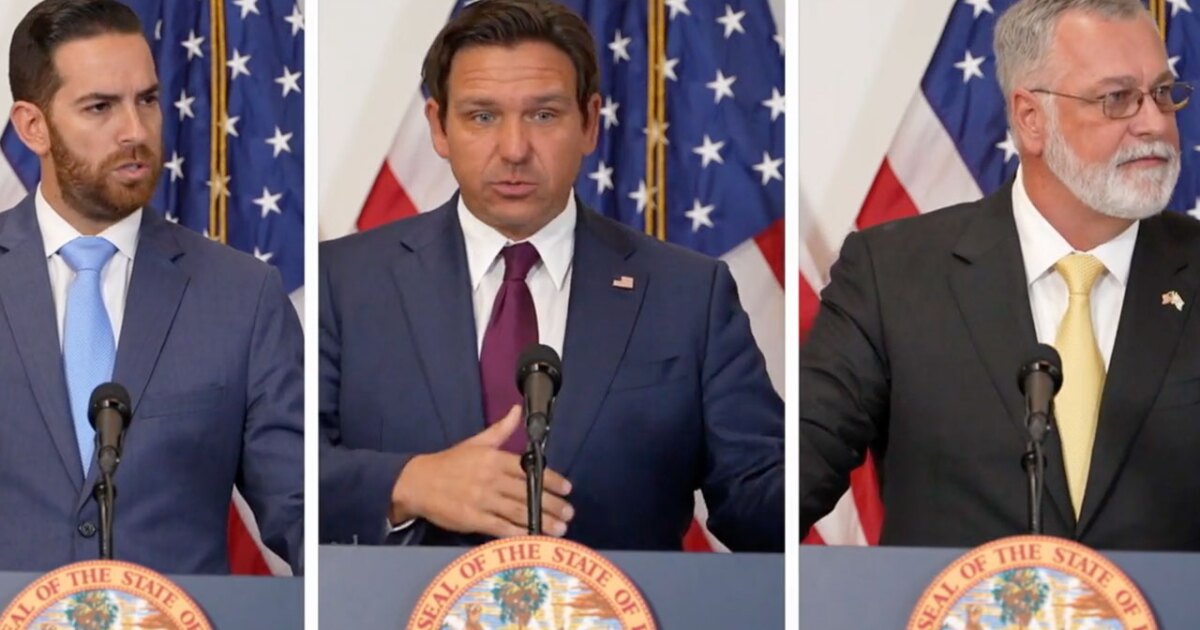
The House plan aims to eliminate all non-school property taxes for Floridians’ primary residences, pending voter approval on the 2026 ballot. Speaker Danny Perez admitted the road ahead may be rocky:
“What happens in the days ahead will decide if we will be here another three weeks or another three months,” he said during a pre-vote speech.
The effort was guided by Rep. Toby Overdorf, who acknowledged the pressure of the ticking legislative clock:
“So, we still have three weeks technically left in session, and we’ll see what happens with our partners across the rotunda.”
Senate President Ben Albritton made it clear the upper chamber isn’t ready to rubber-stamp the House’s plan. Instead, he says the Senate is working with the governor to craft a version with wider support.
“At the end of the day, what we’re looking for… is something to build consensus around,” Albritton noted.
Gov. DeSantis has publicly suggested going even further by eliminating homestead taxes entirely, though details are still sparse. In a CNBC appearance, he reaffirmed his push to get something on the 2026 ballot requiring 60% voter approval.
Democrats Sound the Alarm
Opposition has come loudest from Democrats who argue the proposals — especially the House version — could gut local budgets and force municipalities to rely more heavily on state funding.
House Minority Leader Fentrice Driskell warned the move could create “welfare counties” unable to support themselves. Senate Minority Leader Lori Berman echoed the concern, saying Democrats have seen “no concrete alternative” and that she opposes the House plan outright.
The Bigger Picture: A Legislature Under Pressure
Property taxes aren’t the only item on lawmakers’ plates. The session has been packed with debates over artificial intelligence rules, firearm legislation, rural infrastructure, and the looming state budget.
So far, only seven bills have made it to the governor’s desk — a sign of how much work remains and how tightly packed the final weeks will be.
Why This Matters for Florida’s Real Estate Professionals
If non-school property taxes on primary residences disappear, the ripple effects would be enormous. Home values, buyer demand, local service funding, insurance markets — they all shift. Whether this ends in major tax relief or a long-term restructuring of Florida’s revenue system, real estate professionals must stay ahead of the curve.
At Cameron Academy, we keep Florida agents, brokers, appraisers, and mortgage professionals prepared for every shift in the market and every policy pivot that affects property ownership. Legislative moments like this are exactly why staying educated and license-ready matters.
Getting licensed or staying ahead in your career can be a journey—but it doesn’t have to be overwhelming. Grab your favorite coffee or tea, take a moment to relax, and browse through our articles. Whether you’re just starting out or renewing your expertise, we’ve got tips, insights, and advice to keep you moving forward. Here’s to your success—one sip and one step at a time!
In a landscape where student loan debt is a growing concern, borrowers are exploring creative methods to manage their financial obligations. According to EducationData.org's 2023 report, the average federal student loan borrower owes $37,574, while private borrowers face an even steeper average of $54,921. With these daunting figures, many are considering unconventional methods to ease their financial burden.
As inflation trends downward, the construction industry faces a paradox: the relentless rise in residential construction material costs since early 2024. This surge, marking its peak in June 2024, presents a formidable challenge for home builders already navigating inflated expenses.
Pittsburgh, Pennsylvania, emerges as the front-runner, showcasing a harmonious blend of low median home prices and affordable homeowner costs. With a median home price of $236,067, Pittsburgh homeowners spend just 14.8% of their median household income on housing costs, making it an attractive destination for budget-conscious buyers.
Traditional construction methods have posed significant environmental challenges. Increasingly, technology plays a crucial role in transforming the industry, fostering eco-friendly construction methods.
Sacramento, the capital of California, has seen notable shifts in its real estate market over the years. The city's significant population growth has led to increased housing demand. As job opportunities expand, particularly in the tech and healthcare sectors, the potential for property value appreciation becomes enticing for investors.