Florida Treasure Coast Opens the Year With a Surge of New Home Listings
The Florida Treasure Coast kicked off the new year with something real estate watchers have not seen in years: a massive flood of new home listings. According to local Realtor data highlighted by TCPalm, January delivered 1,905 fresh listings, marking a bold 22 percent jump from the same month last year.
But more listings were not the only surprise. Martin County saw its median home-sale price fall by nearly 100,000 year over year, even while neighboring St. Lucie and Indian River counties experienced steady price growth.
For aspiring and active Florida real estate professionals, these fast-moving trends underline the importance of strong market analysis skills. At Cameron Academy, you gain the practical insight needed to help clients price properly, buy strategically, and move confidently regardless of market shifts.
Home Prices
The counties moved in dramatically different directions:
Martin: 507,000, down from 619,000
St. Lucie: 389,000, up from 383,900
Indian River: 423,125, up from 390,500
Interact Tip: If you are considering becoming a real estate agent, take note: markets can behave completely differently even when they share borders. This is why strong, success-focused education like the training at Cameron Academy teaches you to understand micro-trends that clients depend on.
Home Sales
Closed sales grew across all three counties:
Martin: 148, up from 115
St. Lucie: 363, up from 310
Indian River: 256, up from 171
More inventory plus elevated sales shows that demand is still strong despite mortgage rates pushing upward, closing January near 6.95 percent for 30-year loans.
Home Listings
Active listings also increased year over year:
Martin: 952, up from 892
St. Lucie: 2,587, up from 2,580
Indian River: 1,863, up from 1,312
These increases point toward a more balanced or even buyer-friendly spring selling season.
Inventory Levels
Inventory months tell the clearest story of all. A balanced market sits at 5.5 months. Anything above that favors buyers. Indian River made the biggest shift:
Martin: 5.4 months, unchanged
St. Lucie: 5.6, slightly down from 5.7
Indian River: 8.1, up from 6.0
Career Insight: A rising-inventory market is a powerful time to enter the profession. Buyers need guidance, sellers need strategy, and agents who understand market signals immediately stand out. At Cameron Academy, you learn exactly how to read these trends and communicate them like a seasoned pro.
Time to Contract
Homes took longer to go under contract in two of the three counties:
Martin: 52 days, unchanged
St. Lucie: 57 days, up from 52
Indian River: 64 days, up from 52
Longer time on market usually means buyers can negotiate with more confidence, while sellers need sharper pricing strategies. This is where knowledgeable agents become invaluable.
Final Takeaway
The Treasure Coast real estate landscape is shifting quickly and becoming more dynamic as 2026 begins. Whether you are already licensed or preparing to enter the field, understanding local market trends gives you the ability to guide clients with clarity and confidence.
If you want to sharpen your expertise or begin your Florida real estate career with a curriculum built for real-world success, explore Cameron Academy. Our flexible, modern licensing programs prepare you for opportunity in every kind of market environment.
Source: Reporting by Jack Randall, TCPalm Real Estate and Economy
More Articles
Getting licensed or staying ahead in your career can be a journey—but it doesn’t have to be overwhelming. Grab your favorite coffee or tea, take a moment to relax, and browse through our articles. Whether you’re just starting out or renewing your expertise, we’ve got tips, insights, and advice to keep you moving forward. Here’s to your success—one sip and one step at a time!
In 2026, financial advisors are no longer just experimenting with AI — they’re relying on it. Once confined to back-office duties, AI now supports meeting prep, portfolio analysis, and even early-stage financial planning. Advisors say the tech is strengthening client relationships by freeing them from administrative overload, though entry-level roles like paraplanners may feel the squeeze as automation accelerates.
Cybercriminals are weaponizing AI to launch highly convincing email scams and system breaches across the mortgage industry, overwhelming lenders and servicers whose cybersecurity measures can’t keep up. With major companies already hit and regulation lagging behind, experts warn the sector—now considered critical infrastructure—must rapidly upgrade protections, collaborate on threat intelligence, and improve AI governance before the risks escalate further.
Escrow payments are quietly surging across the country as property taxes and insurance premiums spike—pushing many homeowners toward delinquencies and even foreclosure. New data from Cotality shows the sharpest increases hitting the South and Midwest, with Florida among the hardest‑hit states. Even with fixed mortgage rates, rising escrow requirements are driving monthly payments higher and threatening affordability heading into 2026.
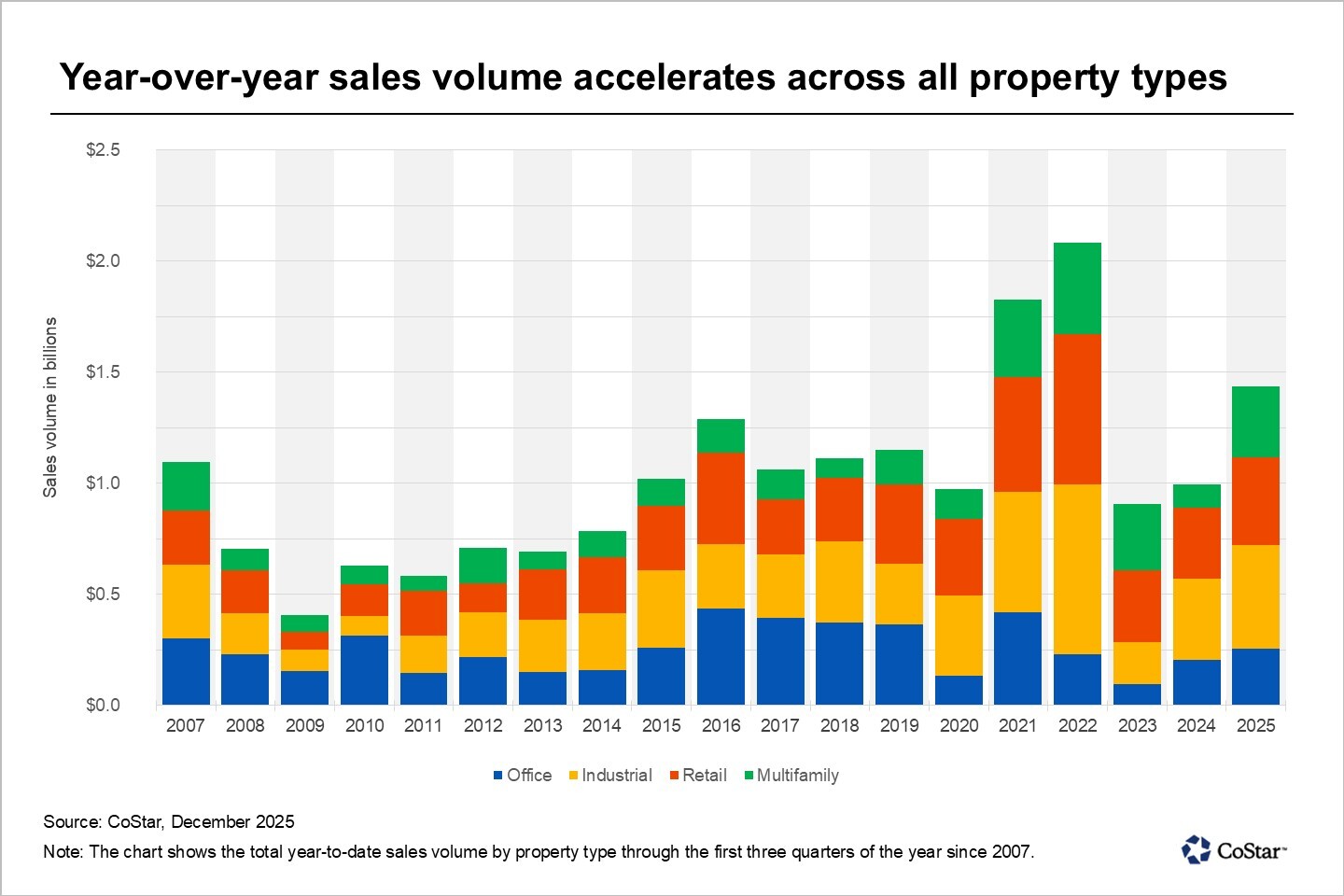
Milwaukee entered 2025 with renewed momentum, posting its strongest commercial real estate sales volume in three years. After a period of uncertainty and high capital costs, investors are returning with a sharper focus on quality assets, realistic pricing, and reliable cash flow. Activity is increasing across industrial, office, multifamily, and retail sectors, signaling a broad-based recovery fueled by stabilizing interest rates and improved market confidence.
As 2026 approaches, the title insurance industry is navigating a complex mix of market recovery, rising fraud threats, and sweeping regulatory changes. Industry leaders say the path forward centers on smarter technology, leaner operations, and stronger support for title agents. With AI-driven workflows, enhanced fraud prevention, and new compliance demands—including FinCEN’s expanded Geographic Targeting Orders—companies like Stewart and First American are reshaping how title work gets done. For real estate and mortgage professionals, the year ahead promises more automation, heightened standards, and major opportunities for those who stay ahead of the curve.
The real estate industry is undergoing a major transformation in 2025 as advancements in AI, proptech, blockchain, and data intelligence redefine how properties are marketed, valued, financed, and experienced. From instant digital valuations and immersive virtual tours to tokenized investments and predictive analytics, technology is reshaping every stage of the real estate lifecycle. Professionals who embrace these innovations—while maintaining the human expertise clients still rely on—will lead the next era of the industry.