Forecasting the Future: Housing Market Insights for 2025 to 2028
As we look to the horizon of the U.S. housing market, Fannie Mae’s Home Price Expectations Survey offers a crucial glimpse into the coming years. Compiled from the insights of over 100 housing experts, this survey predicts notable changes in home prices from 2025 to 2028. The analysis, originally detailed by Norada Real Estate Investments, suggests a shift in market dynamics that could impact homeowners and investors alike.
Slowing Growth in Home Prices
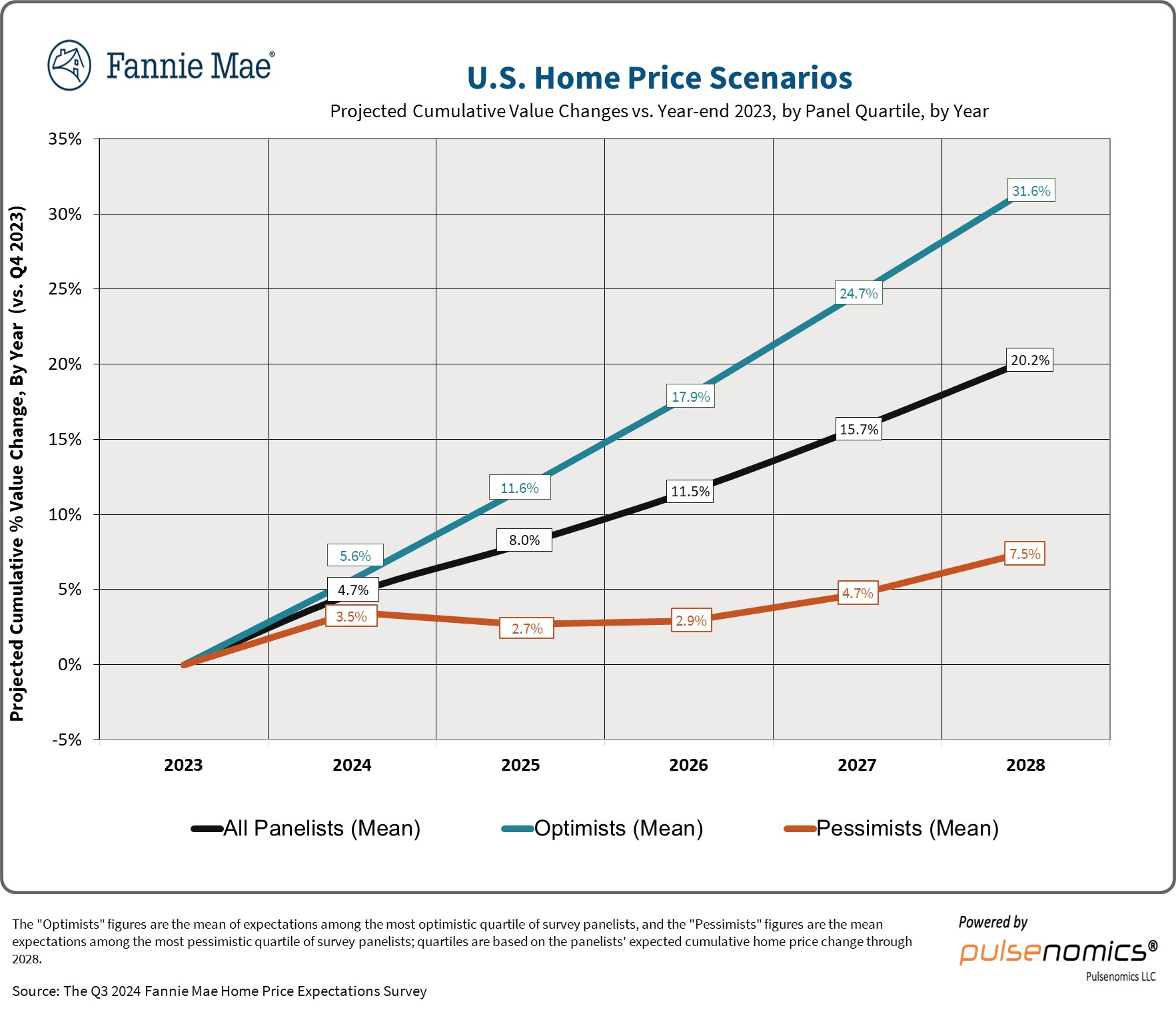
The survey anticipates a slower pace of home price growth in the coming years compared to the robust 6% increase seen in 2023. For 2024, experts forecast a 4.7% growth, with a further decline to 3.1% in 2025. This trend reflects a potential cooling of the market, influenced by policy changes and ongoing supply constraints.
Diverging Predictions and Market Uncertainty
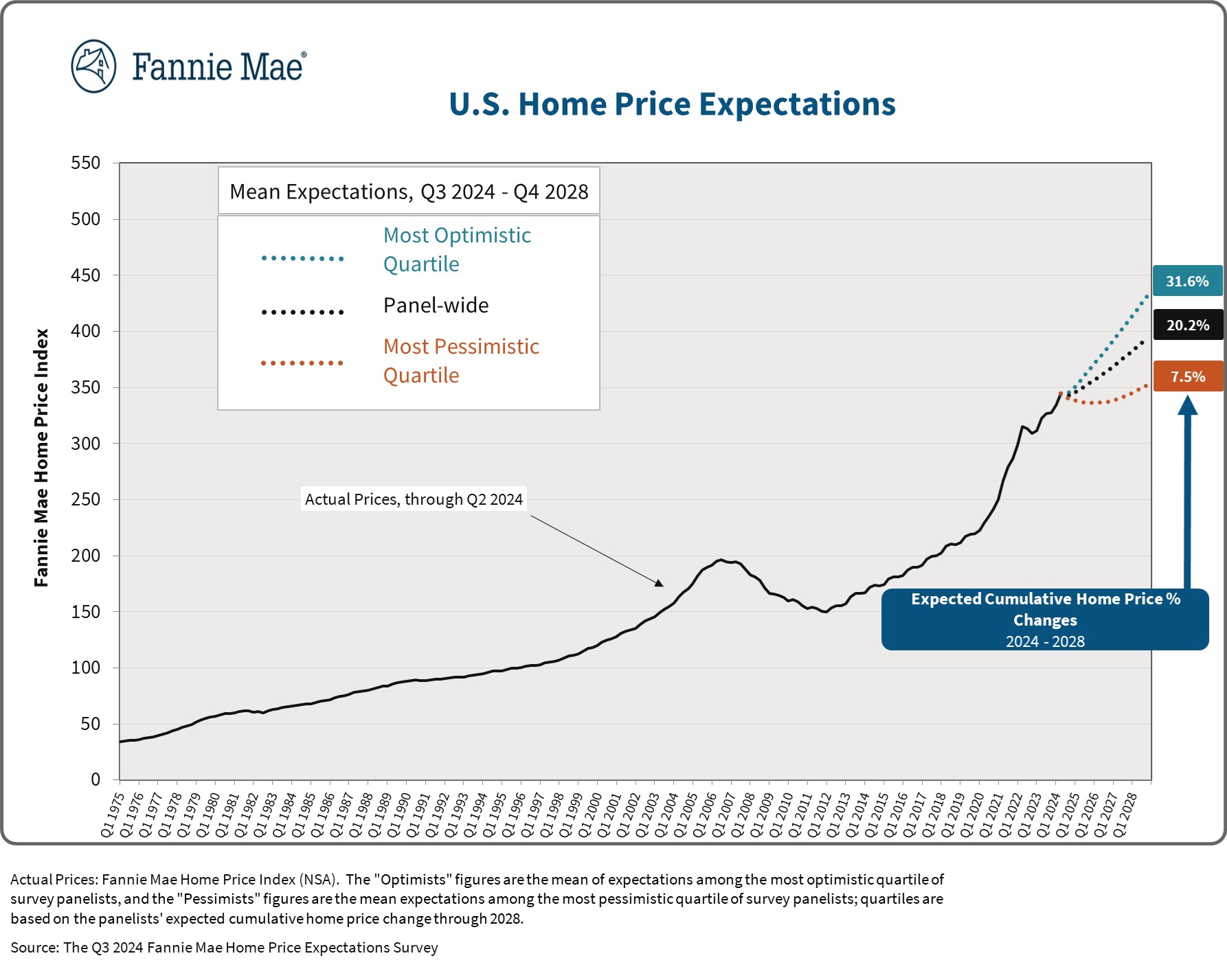
The panel’s projections reveal a wide range of outcomes, from optimistic to pessimistic scenarios. By the end of 2028, the most optimistic forecasts suggest a 31.6% cumulative gain in home prices, while the most pessimistic predict only a 7.5% increase. This divergence highlights the uncertainty and complexity of the market’s future.
Historical Context and Future Implications
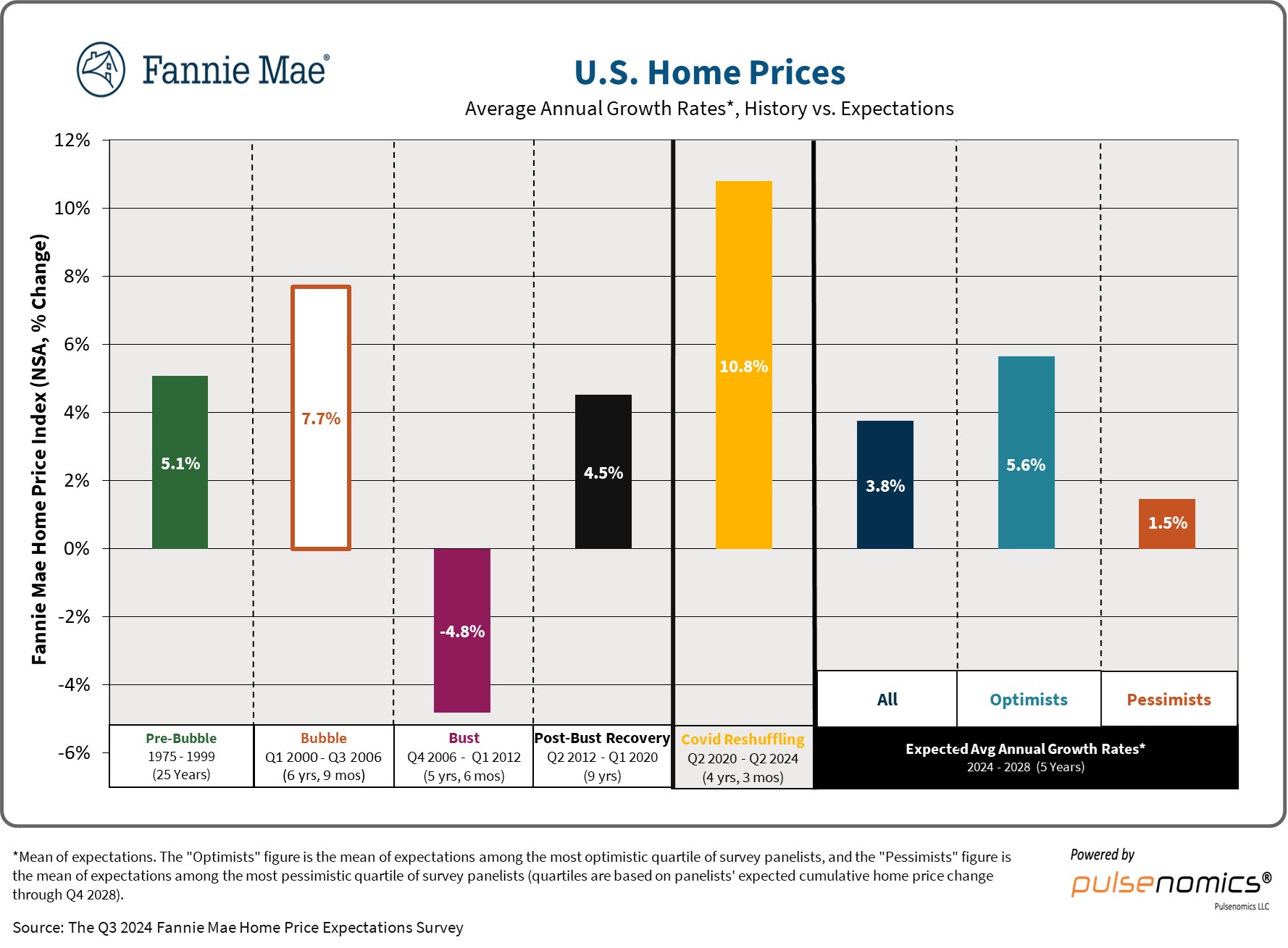
Examining historical data from key periods such as the “Pre-Bubble”, “Bubble”, “Bust”, and “Covid Reshuffling” phases, the survey provides a comprehensive view of market fluctuations. These insights are invaluable for buyers, sellers, and investors, each facing unique challenges and opportunities in light of the projected trends.
For Buyers: Expect a more moderate pace of price appreciation and continued affordability challenges due to the housing shortage.
For Sellers: Anticipate slower home price appreciation and a potentially more balanced market.
For Investors: Returns might moderate, but rental demand is likely to remain strong.
The Role of Policy and Supply Constraints
The persistent shortage of housing remains a major issue, with an estimated deficit of approximately 2.8 million homes. Potential policy reforms, such as zoning and permitting changes, could positively impact housing supply, but there is skepticism about their widespread adoption and effectiveness.
The Path Ahead
While home prices are expected to continue their upward trend, albeit at a reduced pace, the future of the housing market remains intricately linked to external factors such as policy reform and economic conditions. For a deeper understanding, readers are encouraged to explore the original article and related reports provided by Norada Real Estate Investments.
More Articles
Getting licensed or staying ahead in your career can be a journey—but it doesn’t have to be overwhelming. Grab your favorite coffee or tea, take a moment to relax, and browse through our articles. Whether you’re just starting out or renewing your expertise, we’ve got tips, insights, and advice to keep you moving forward. Here’s to your success—one sip and one step at a time!
Tampa Bay’s real estate market is entering a rare sweet spot in 2026—balancing rising inventory, steady demand, and booming commercial development. With housing supply up to 4.3 months and prices stabilizing, the region is shifting from frenzy to sustainable growth. Population migration, modernized commercial spaces, and lifestyle-focused districts like Water Street and Midtown continue to fuel Tampa’s evolution. But even amid luxury expansion, affordability remains the top challenge shaping the next phase of opportunity for real estate professionals.
Each year, AZ Big Media spotlights the visionaries shaping Arizona’s fast‑growing commercial real estate landscape. The 2026 AZ Big 100 list highlights 50 influential builders, developers, architects, and innovators who are driving sustainable growth, expanding infrastructure, and redefining community-focused design. For professionals in real estate, construction, finance, and related fields, this roundup offers a powerful look at the leadership and trends guiding Arizona’s next era of development.
After years of relentless premium increases, State Farm has filed for a 10% homeowners insurance rate reduction in Florida, signaling that recent legislative reforms may finally be stabilizing the state’s turbulent insurance market. This move could pressure other insurers to follow and marks one of the first meaningful signs of relief for Florida homeowners and real estate professionals.
Illinois has updated its insurance supplier diversity reporting requirements, impacting insurers, HMOs, dental plan corporations, and accredited reinsurers with at least $50 million in admitted assets. Beginning April 1, 2026, companies must use the state’s new PDF template and file through SERFF, following strict formatting rules for procurement, certification types, and diversity goals. The update signals a stronger statewide push for transparency and equitable contracting, making accurate compliance essential for insurance and finance professionals.
YouTube superstar MrBeast has officially moved into the world of finance with his acquisition of Step, a fast‑growing youth money management app backed by Stripe and major venture investors. Now operating under Beast Industries, Step is poised to bring modern financial tools—like credit building, investing, and budgeting—to millions of teens and young adults. With MrBeast’s massive reach and Step’s existing user base of over 7 million, this move could reshape how the next generation learns essential financial skills, giving future professionals a stronger foundation whether they pursue real estate, mortgage, insurance, finance, or any career where smart money decisions matter.
Long Island’s commercial market just hit an all‑time high, closing $4.1 billion in commercial real estate sales across Nassau and Suffolk counties in 2025—a 71 percent jump from the prior year. Specialty-use properties like assisted living and self‑storage led the surge, fueled by lower interest rates and renewed investor confidence.