Forecasting the Future: Housing Market Insights for 2025 to 2028
As we look to the horizon of the U.S. housing market, Fannie Mae’s Home Price Expectations Survey offers a crucial glimpse into the coming years. Compiled from the insights of over 100 housing experts, this survey predicts notable changes in home prices from 2025 to 2028. The analysis, originally detailed by Norada Real Estate Investments, suggests a shift in market dynamics that could impact homeowners and investors alike.
Slowing Growth in Home Prices
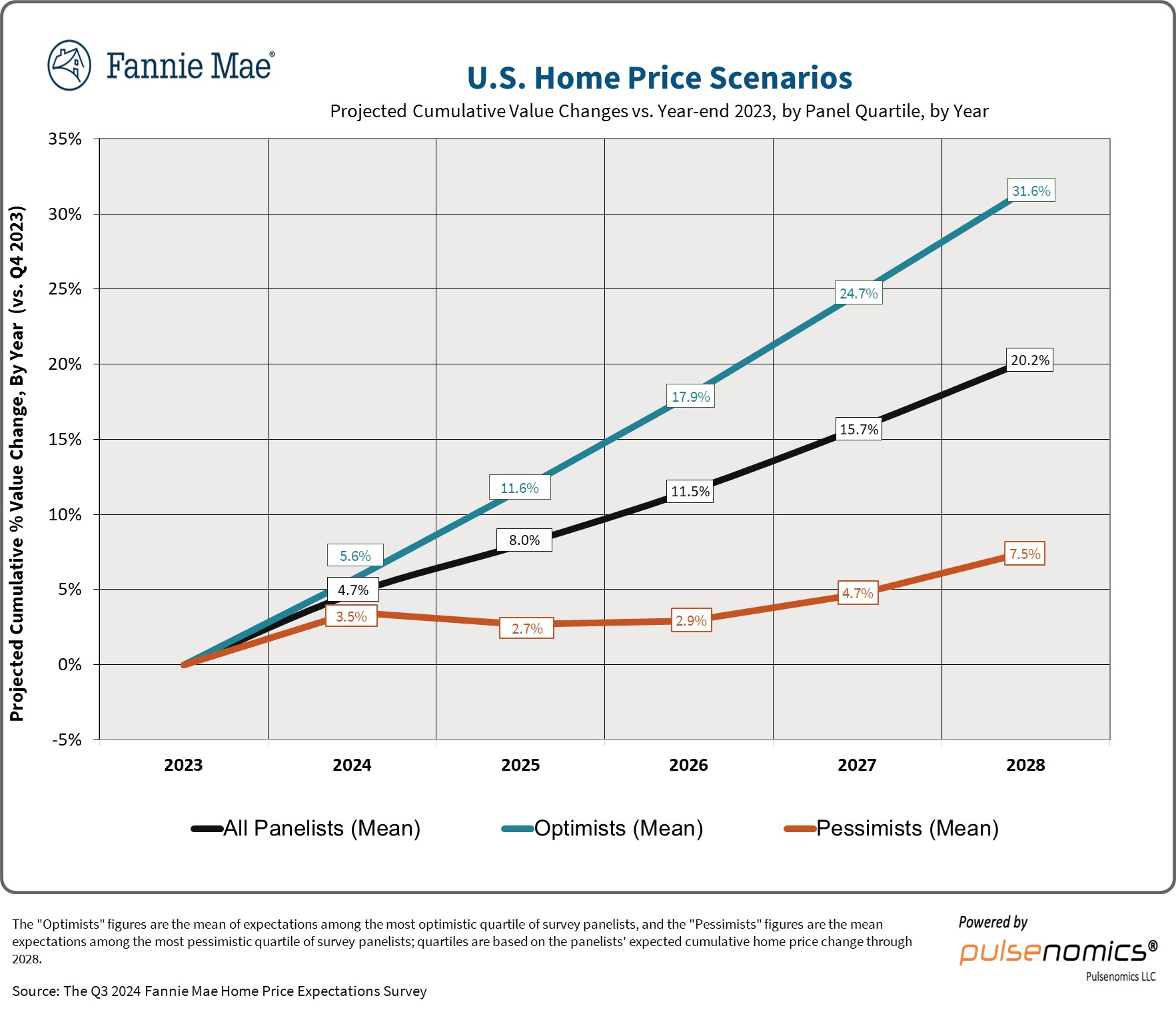
The survey anticipates a slower pace of home price growth in the coming years compared to the robust 6% increase seen in 2023. For 2024, experts forecast a 4.7% growth, with a further decline to 3.1% in 2025. This trend reflects a potential cooling of the market, influenced by policy changes and ongoing supply constraints.
Diverging Predictions and Market Uncertainty
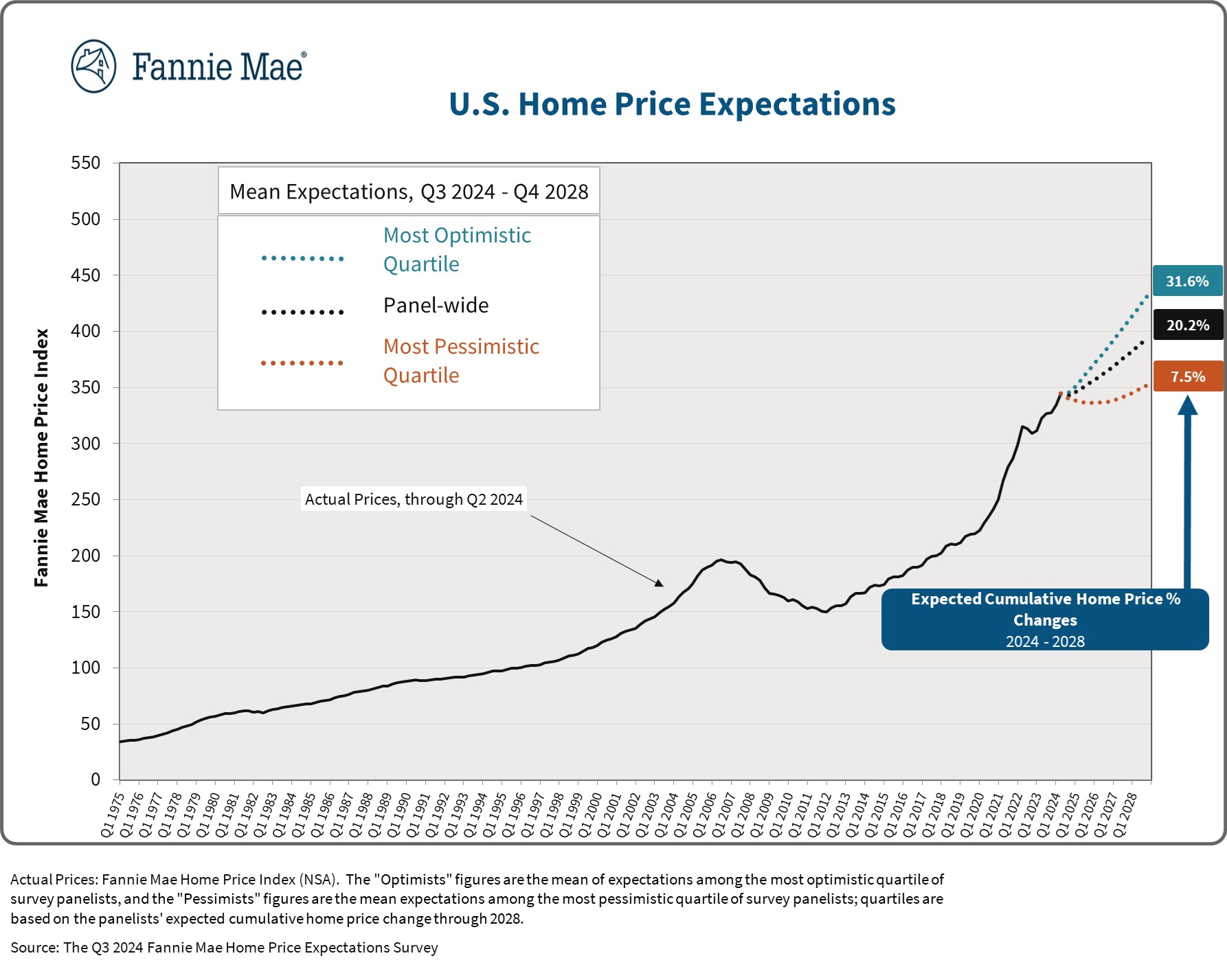
The panel’s projections reveal a wide range of outcomes, from optimistic to pessimistic scenarios. By the end of 2028, the most optimistic forecasts suggest a 31.6% cumulative gain in home prices, while the most pessimistic predict only a 7.5% increase. This divergence highlights the uncertainty and complexity of the market’s future.
Historical Context and Future Implications
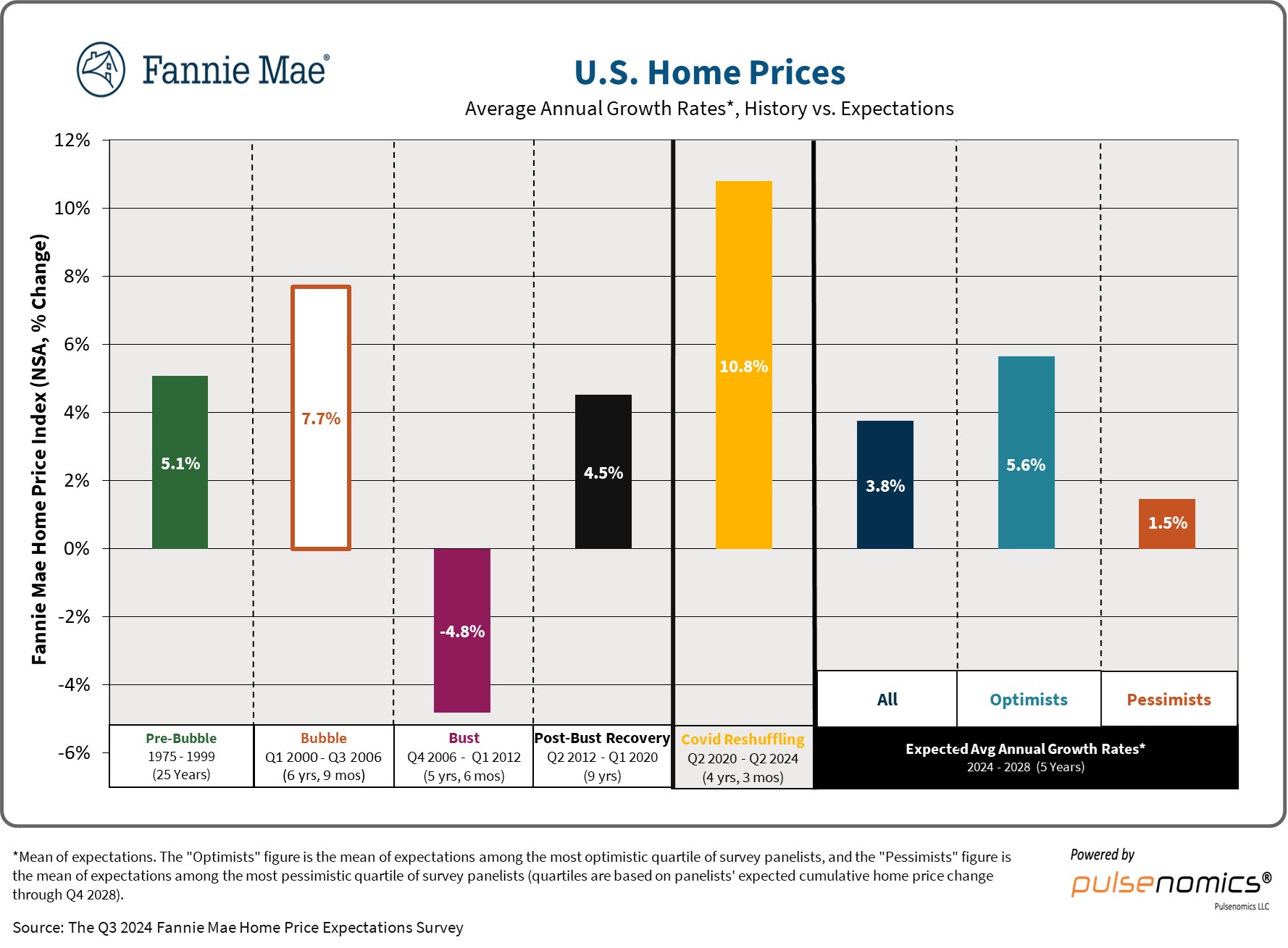
Examining historical data from key periods such as the “Pre-Bubble”, “Bubble”, “Bust”, and “Covid Reshuffling” phases, the survey provides a comprehensive view of market fluctuations. These insights are invaluable for buyers, sellers, and investors, each facing unique challenges and opportunities in light of the projected trends.
For Buyers: Expect a more moderate pace of price appreciation and continued affordability challenges due to the housing shortage.
For Sellers: Anticipate slower home price appreciation and a potentially more balanced market.
For Investors: Returns might moderate, but rental demand is likely to remain strong.
The Role of Policy and Supply Constraints
The persistent shortage of housing remains a major issue, with an estimated deficit of approximately 2.8 million homes. Potential policy reforms, such as zoning and permitting changes, could positively impact housing supply, but there is skepticism about their widespread adoption and effectiveness.
The Path Ahead
While home prices are expected to continue their upward trend, albeit at a reduced pace, the future of the housing market remains intricately linked to external factors such as policy reform and economic conditions. For a deeper understanding, readers are encouraged to explore the original article and related reports provided by Norada Real Estate Investments.
More Articles
Getting licensed or staying ahead in your career can be a journey—but it doesn’t have to be overwhelming. Grab your favorite coffee or tea, take a moment to relax, and browse through our articles. Whether you’re just starting out or renewing your expertise, we’ve got tips, insights, and advice to keep you moving forward. Here’s to your success—one sip and one step at a time!
As the dawn of smart cities emerges, the landscape of urban development is undergoing a seismic shift, particularly in the realms of real estate and construction. These futuristic urban areas are becoming a tangible reality, integrating the Internet of Things, artificial intelligence, and big data to enhance the quality of life for residents, bolster sustainability, and invigorate economic growth.
In the ongoing quest to tackle the housing crisis, urban planners and policymakers are exploring a myriad of solutions. The relationship between zoning and housing affordability remains a complex puzzle. As highlighted in a recent article from The Urbanist, the multifaceted approach to resolving these issues includes proposals ranging from the abolition of zoning to the implementation of stricter inclusionary zoning policies.
As we stand on the cusp of 2025, the real estate market is poised for a technological revolution that promises to transform the way properties are bought, sold, rented, and managed.
In a concerted effort to address the pressing housing crisis in the United States, Congress is demonstrating robust support for increased federal funding for the Housing Choice Voucher program, commonly known as Section 8. This initiative is the nation's largest rental assistance program, providing essential support to low-income families, enabling them to afford modest housing in the private market. As the 2025 appropriations bills are being finalized, the urgency to prioritize housing assistance funding is more critical than ever.
The allure of investing in high-value properties in urban centers like New York, London, Dubai, Los Angeles, Paris, and Singapore remains as compelling as ever. Each city offers not only financial returns but also a lifestyle that is as luxurious as it is distinctive.