Future of Telehealth Uncertain As Congress Deliberates Budget
As the clock ticks down to December 31, 2024, the future of telehealth services in the United States hangs in the balance. The looming deadline has healthcare providers, hospitals, and stakeholders on high alert. At the heart of this uncertainty is the need for Congress to extend key policy flexibilities that have supported telehealth and Hospital-at-Home programs for Medicare patients since the COVID-19 pandemic. Without these extensions, Medicare coverage for many telehealth services could cease on January 1, 2025, potentially disrupting healthcare access for countless Americans, especially seniors.
The Legislative Tug of War
Despite bipartisan support for telehealth, recent attempts to pass a Continuing Resolution (CR) have met with obstacles. A proposed CR that included a two-year extension for telehealth flexibilities was rejected on December 18, 2024, due to unrelated controversies. However, a newer proposal, the American Relief Act, 2025, introduced on December 19, 2024, offers a glimmer of hope. This act seeks to extend telehealth flexibilities and the Acute Hospital Care at Home program through March 31, 2025, albeit without addressing other significant healthcare provisions.
Advocacy and Impact
The uncertainty surrounding telehealth policy has mobilized advocacy groups like the American Telemedicine Association’s ATA Action group, who are urging Congress and the White House to act swiftly. The stakes are high: without action, clinicians and practices face the daunting task of reorganizing their operations to comply with more restrictive Medicare policies come January 1, 2025.
The potential expiration of these policies could significantly impact Medicare services, limiting the types of telehealth services clinicians can provide. While some mental healthcare services may continue under existing Medicare policies, the more restrictive geographic requirements could hinder access for many patients. Notably, clinicians at federally qualified health centers or rural health clinics will remain unaffected due to coverage under the 2025 Physician Fee Schedule.
The Broader Repercussions
Beyond Medicare, the failure to extend telehealth flexibilities could ripple through other reimbursement policies. Private insurers and Medicaid programs might eventually adjust their policies to align with Medicare, potentially affecting hospitals, clinicians, and patients nationwide. The advocacy efforts underscore the critical need for Congress to address these concerns promptly.
DEA Prescribing Rules Remain Unchanged
Amidst the budgetary deliberations, it’s important to note that the DEA’s decision regarding controlled substance prescribing in telehealth remains unaffected. The DEA has extended these flexibilities through December 31, 2025, ensuring continuity in this aspect of telehealth services.
Conclusion
The outcome of these legislative efforts will have profound implications for the future of telehealth in the United States. As the deadline approaches, the healthcare community continues to advocate for the inclusion of telehealth provisions in any budget resolution. For more information, resources such as the Alliance for Connected Care and the American Telemedicine Association offer valuable guidance.
Stay Updated
For live updates on congressional efforts, follow the Associated Press.
More Articles
Getting licensed or staying ahead in your career can be a journey—but it doesn’t have to be overwhelming. Grab your favorite coffee or tea, take a moment to relax, and browse through our articles. Whether you’re just starting out or renewing your expertise, we’ve got tips, insights, and advice to keep you moving forward. Here’s to your success—one sip and one step at a time!
Florida families are feeling the squeeze as everyday costs, insurance premiums, and homeownership barriers continue to climb. House District 102 candidate Jayden D’Onofrio is calling for a broader, more unified affordability strategy—one that tackles the state’s insurance crisis, supports first‑time homebuyers, and restores real competition in the market. His message centers on transparency, practical solutions, and keeping Florida livable for the professionals, workers, and families who power its economy.
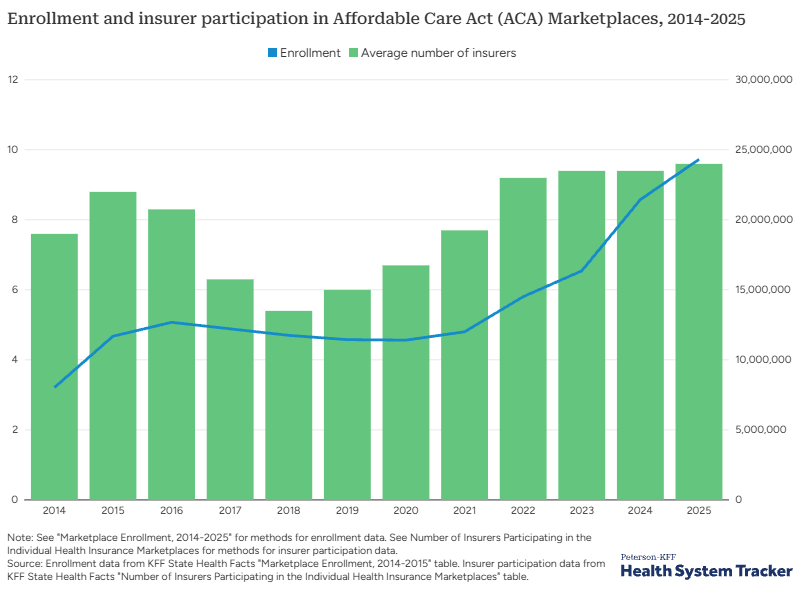
A decade of dramatic change is reshaping America’s health insurance markets. Employer group plans are becoming increasingly dominated by a few powerful insurers, while the ACA individual marketplace is experiencing record‑breaking competition and enrollment. Self‑funded plans are surging, small‑group premiums are driving employers to new coverage models, and major policy shifts in 2025 could redefine affordability for millions. This data‑driven Peterson‑KFF analysis breaks down the trends every insurance, finance, and business professional needs to understand as the industry enters a transformative new era.
Sarasota County is inching closer to approving Winchester Ranch, a massive 8,999‑home community planned for more than 3,100 acres in North Port. With a 7‑1 vote from the Planning Commission and a final decision expected in early 2026, the project could become one of Southwest Florida’s largest developments in decades—bringing new housing, commercial space, and industry while raising fresh questions about growth, the environment, and the region’s rapidly evolving real estate market.
Lument Finance Trust has closed a major $663.8 million commercial real estate CLO, marking one of the standout CRE finance deals of 2025. The transaction, LMNT 2025-FL3, features a strong reinvestment period, non‑recourse and non‑mark‑to‑market financing, and a diversified pool of 32 loans tied to 49 properties nationwide. With J.P. Morgan leading the structuring and more than $585 million placed in investment‑grade securities, the deal highlights renewed stability in transitional CRE debt—making it a development real estate and finance professionals will want to watch closely.
Walmart has partnered with Alquist 3D to roll out the nation’s first large‑scale wave of 3D‑printed commercial buildings, signaling a major shift in how future retail and industrial spaces will be constructed. After completing an 8,000‑square‑foot 3D‑printed expansion in Tennessee—the largest of its kind—the company is moving forward with over a dozen new projects nationwide, accelerating a tech‑driven transformation in commercial real estate.
Citizens Property Insurance Corp. is recommending statewide rate reductions for 2026—the first proposed decrease in more than a decade. Most Citizens policyholders could see an average 11.5% drop, reflecting recent insurance‑market reforms that have stabilized Florida’s turbulent property sector. With hundreds of thousands of policies moving back to private insurers and state‑backed Citizens shrinking to record‑low enrollment, real estate and insurance professionals should prepare for how lower premiums may influence affordability, buyer confidence, and market activity heading into 2026.