In the rapidly evolving landscape of healthcare, genetic testing is emerging as a pivotal force, promising to transform patient care through precision medicine. The insights derived from our genetic codes hold the potential to not only prevent diseases but also optimize treatments and promote healthier living. Yet, as highlighted in a recent MedCity News article, the journey towards realizing this potential is fraught with challenges, particularly around patient privacy and data sharing.
The Role of Information Technology
A critical component in addressing these challenges is information technology security. Organizations are turning to certifications like HITRUST to establish standards for safeguarding sensitive information. By aligning with these standards, they can protect data while facilitating the sharing necessary to enhance medical knowledge and patient care.
Collaborative Efforts and Data Sharing
Collaboration is at the heart of advancing genetic testing. Companies are contributing de-identified variant data to public health databases such as ClinVAR and the SEER Cancer Registries. These efforts, supported by cancer research registries, deepen insights and expedite advancements in patient care.
The analysis of expansive data sets is crucial for understanding diseases, allowing researchers to access, assess, and test hypotheses. This collaborative approach is paving the way for tailored treatment plans and new biological discoveries, enhancing early disease detection and intervention.
Integration with Electronic Health Records
Integrating genetic testing with Electronic Health Records (EHR) is another key strategy for improving patient outcomes. Collaborations with EHR vendors like Epic, Flatiron, and Athena streamline processes, making it easier for providers to order genetic products, optimize screening protocols, and identify potential pharmacogenetic interactions. Such collaborations break down silos, enhancing data exchange for more effective research and patient care.
Challenges and Future Trends
Despite the promising progress, the integration of genetic testing into mainstream medicine presents challenges, including managing the vast volume of genomic data. Companies are focusing on presenting complex clinical interpretations, integrating common data ontologies, overcoming data fragmentation, and ensuring data privacy to address these hurdles.
Looking ahead, the industry anticipates significant advancements, with trends like developing tests for early cancer recurrence detection and embracing a multi-omics approach that integrates RNA, proteins, and AI insights. The integration of generative AI for documentation and genetic counseling is another notable development on the horizon.
A New Era in Healthcare
Genetic testing represents more than just a scientific advancement; it signifies a fundamental shift in how we approach health and wellness. As public understanding grows and technology advances, we find ourselves at the dawn of a new era in healthcare, where our genetic code becomes a roadmap to better health and longevity.
About the Author
Kevin Haas, Ph.D., serves as the Chief Technology Officer at Myriad Genetics, where he leads the development of the precision medicine platform. With expertise in molecular simulation and machine learning, Haas is advancing genomics and digital patient/provider experiences. He has co-authored 16 peer-reviewed publications and nine patent applications, bringing a wealth of experience to his role.
More Articles
Getting licensed or staying ahead in your career can be a journey—but it doesn’t have to be overwhelming. Grab your favorite coffee or tea, take a moment to relax, and browse through our articles. Whether you’re just starting out or renewing your expertise, we’ve got tips, insights, and advice to keep you moving forward. Here’s to your success—one sip and one step at a time!
In 2026, financial advisors are no longer just experimenting with AI — they’re relying on it. Once confined to back-office duties, AI now supports meeting prep, portfolio analysis, and even early-stage financial planning. Advisors say the tech is strengthening client relationships by freeing them from administrative overload, though entry-level roles like paraplanners may feel the squeeze as automation accelerates.
Cybercriminals are weaponizing AI to launch highly convincing email scams and system breaches across the mortgage industry, overwhelming lenders and servicers whose cybersecurity measures can’t keep up. With major companies already hit and regulation lagging behind, experts warn the sector—now considered critical infrastructure—must rapidly upgrade protections, collaborate on threat intelligence, and improve AI governance before the risks escalate further.
Escrow payments are quietly surging across the country as property taxes and insurance premiums spike—pushing many homeowners toward delinquencies and even foreclosure. New data from Cotality shows the sharpest increases hitting the South and Midwest, with Florida among the hardest‑hit states. Even with fixed mortgage rates, rising escrow requirements are driving monthly payments higher and threatening affordability heading into 2026.
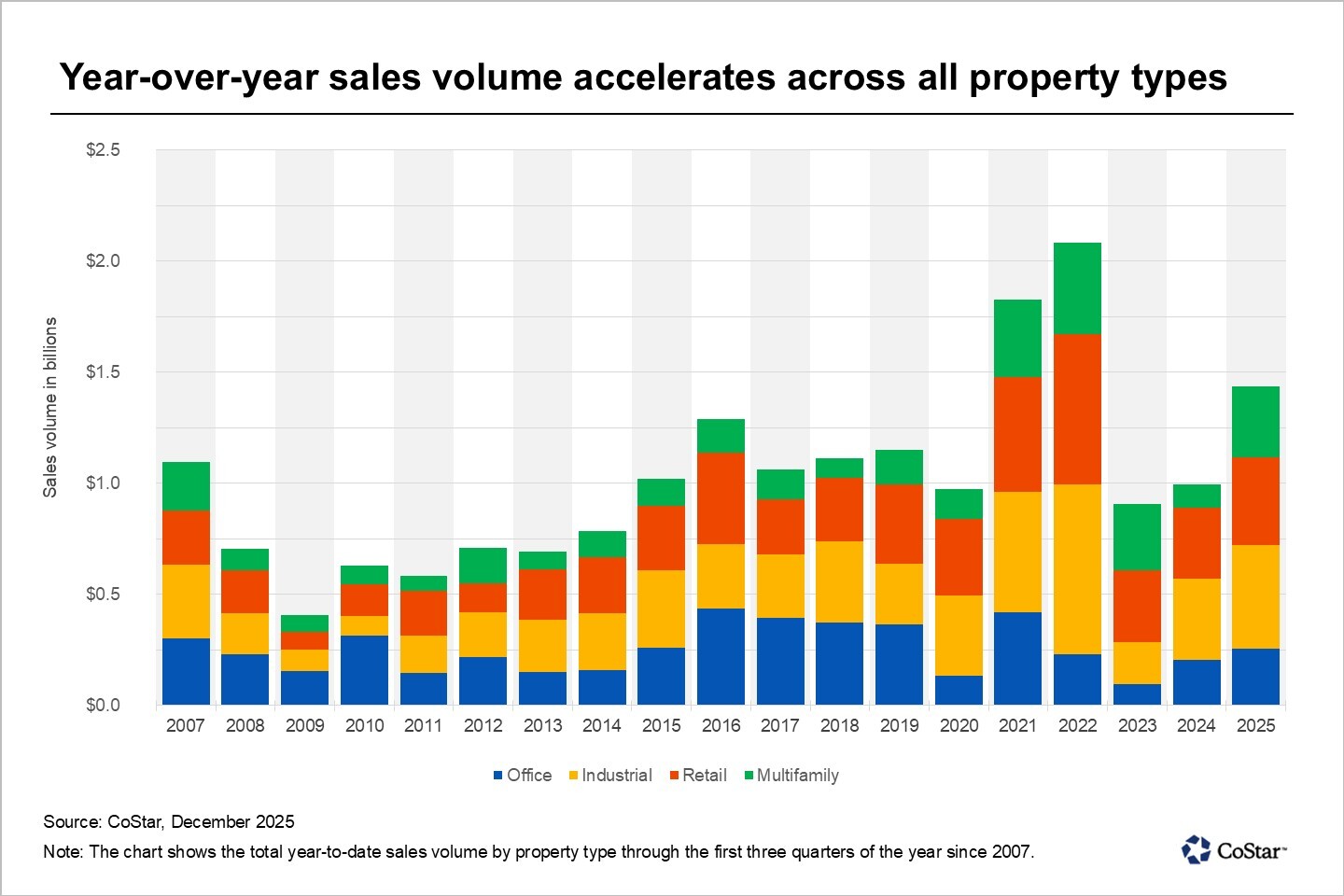
Milwaukee entered 2025 with renewed momentum, posting its strongest commercial real estate sales volume in three years. After a period of uncertainty and high capital costs, investors are returning with a sharper focus on quality assets, realistic pricing, and reliable cash flow. Activity is increasing across industrial, office, multifamily, and retail sectors, signaling a broad-based recovery fueled by stabilizing interest rates and improved market confidence.
As 2026 approaches, the title insurance industry is navigating a complex mix of market recovery, rising fraud threats, and sweeping regulatory changes. Industry leaders say the path forward centers on smarter technology, leaner operations, and stronger support for title agents. With AI-driven workflows, enhanced fraud prevention, and new compliance demands—including FinCEN’s expanded Geographic Targeting Orders—companies like Stewart and First American are reshaping how title work gets done. For real estate and mortgage professionals, the year ahead promises more automation, heightened standards, and major opportunities for those who stay ahead of the curve.
The real estate industry is undergoing a major transformation in 2025 as advancements in AI, proptech, blockchain, and data intelligence redefine how properties are marketed, valued, financed, and experienced. From instant digital valuations and immersive virtual tours to tokenized investments and predictive analytics, technology is reshaping every stage of the real estate lifecycle. Professionals who embrace these innovations—while maintaining the human expertise clients still rely on—will lead the next era of the industry.