Global Capital Is on the Move: What Colliers’ 2026 Outlook Means for the Future of Real Estate
A new wave of global capital is reshaping the real estate landscape, and investors across the world are gearing up for a high‑momentum 2026. Colliers’ freshly released
2026 Global Investor Outlook reveals something the industry has been eager to hear: confidence is returning, liquidity is improving, and investors are becoming far more hands‑on in shaping their portfolios.
Investors Shift Into Active, Hands-On Strategies
Nearly half of global investors (49%) now prefer direct investments and separate accounts—signaling a decisive break from passive structures. Platform joint ventures and M&A activity are rising, giving investors more influence, more flexibility, and more strategic control.
Damian Harrington, Director and Head of Research for Global Capital Markets & EMEA at Colliers, highlights this shift clearly: investors want control, agility, and scale. With only 9% of fundraising targeting core and core‑plus strategies—despite 37% of investors seeking them—a major disconnect is driving investors toward strategies where they can steer progress themselves.
Global Diversification Is Accelerating
International capital is moving across borders at remarkable speed. Multi‑regional strategies now represent nearly 30% of global fundraising, reflecting a stronger appetite for diversified, global exposure. Europe saw fundraising jump 50% year‑over‑year, while Asia Pacific surged an incredible 130%, with Japan, Australia, and India leading the demand.
Data Centers Dominate as Offices Rebound
Digital infrastructure continues to soar, with data centers representing a massive 31% of global real estate funds raised in 2025. This makes them the second‑most favored asset class worldwide. At the same time, office properties—once overshadowed by pandemic‑era uncertainty—are experiencing a meaningful rebound thanks to widespread return‑to‑office policies.
Meanwhile, alternative sectors such as student housing, self‑storage, and healthcare are seeing significant growth driven by demographic pressures. Industrial, multifamily, and retail remain strong, supported by solid fundamentals and limited supply.
Value-Add Strategies Drive Redevelopment
Investors are leaning heavily into value‑add and adaptive reuse strategies, particularly in supply‑constrained markets. With construction and operating costs climbing, repositioning existing properties has become a preferred path. Office buildings across APAC and Europe are being modernized with sustainability upgrades, advanced tech integration, and fresh tenant‑oriented designs.
Regional Highlights
United States: High activity driven by pent‑up capital and attractive pricing—especially in multifamily, industrial, and data centers.
EMEA: Strong liquidity and a resurgence in office and industrial activity draw global capital back to Europe.
APAC: Allocations continue rising across logistics, office, data centers, and student housing.
Canada: Multifamily and retail remain national safe‑haven assets amid severe supply constraints.
Why This Matters for Real Estate Professionals
For agents, brokers, and aspiring professionals, understanding global capital movement is an essential edge. These trends influence everything from local inventory to commercial redevelopment opportunities. Whether you’re preparing to enter the industry or sharpening your competitive skills, staying informed is an undeniable advantage.
That’s why institutions like
Cameron Academy continue to stand out as a trusted resource for real estate, mortgage, insurance, finance, and other professional licensing education across all 50 states. In a fast‑shifting market, being properly trained and confidently licensed positions you ahead of the curve.
Getting licensed or staying ahead in your career can be a journey—but it doesn’t have to be overwhelming. Grab your favorite coffee or tea, take a moment to relax, and browse through our articles. Whether you’re just starting out or renewing your expertise, we’ve got tips, insights, and advice to keep you moving forward. Here’s to your success—one sip and one step at a time!
Artificial intelligence is rapidly reshaping the mortgage industry, boosting productivity, reducing manual work, and accelerating loan closings. From automated document data extraction to AI‑generated underwriting narratives and predictive analytics, lenders are using new tools that improve accuracy and drastically speed up processing times. With chatbots, next‑gen point‑of‑sale systems, and end‑to‑end automation, preapprovals that once took days now take minutes. For mortgage and real estate professionals, mastering AI is becoming a major competitive advantage—one that defines who will thrive in the future of lending.
Florida’s property insurance rates are finally starting to drop, but many homeowners are still seeing higher monthly bills. The reason isn’t insurer price hikes—it’s soaring replacement costs driven by construction inflation, labor shortages, and rising home values. Nearly 75 percent of recent premium increases came from higher property values alone. Understanding this gap between “rates” and “premiums” helps homeowners—and real estate and insurance professionals—navigate the shifting Florida market and make smarter coverage decisions.
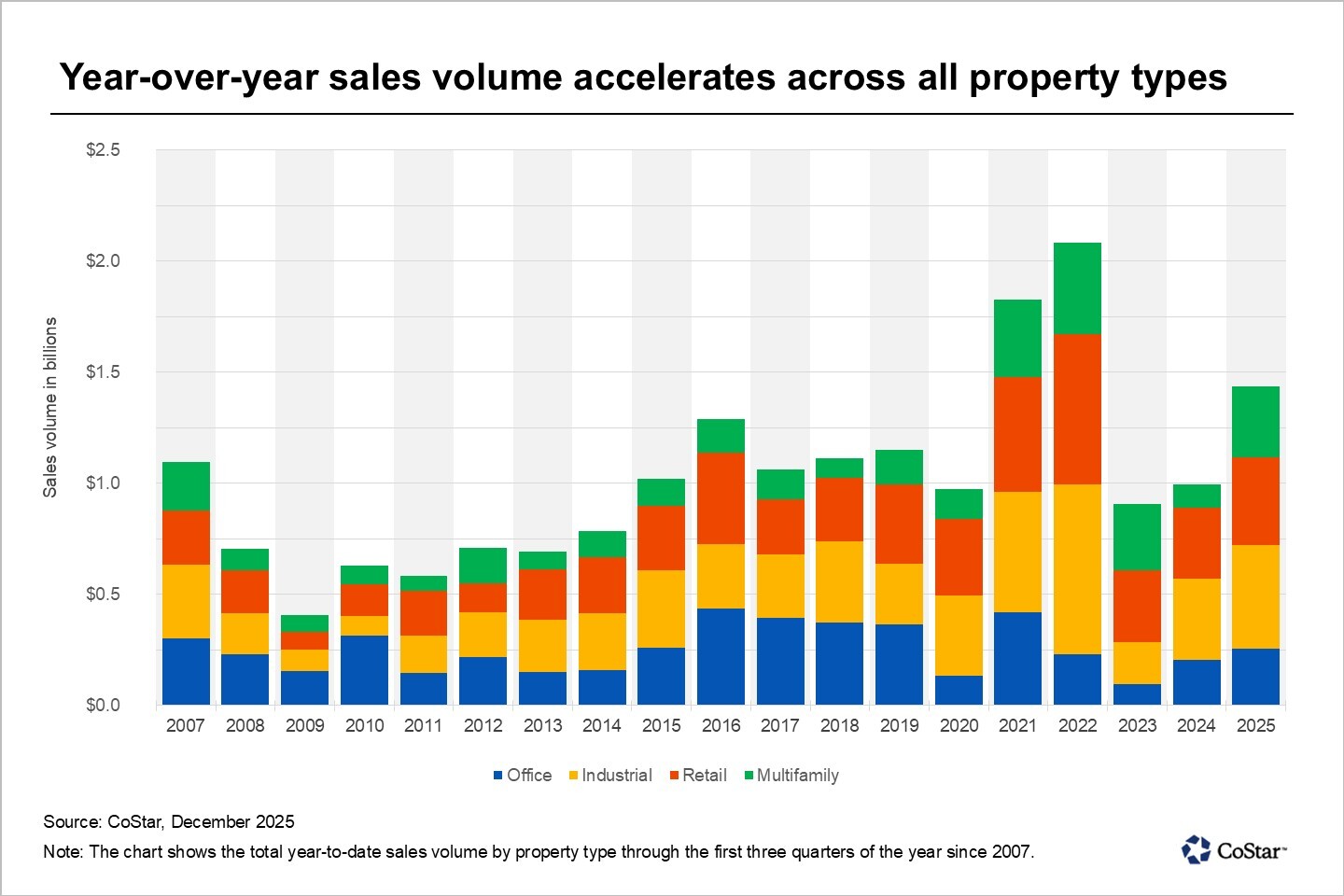
Milwaukee’s commercial real estate market is finally showing real signs of recovery, with 2025 sales volume hitting a three‑year high and investor confidence steadily returning. Driven by selective, fundamentals‑focused buying—favoring strong cash flow, quality assets, and strategic pricing—the city is moving from a period of correction into a healthier, opportunity‑rich phase. For real estate professionals nationwide, Milwaukee’s momentum reflects broader CRE market stabilization and the growing importance of disciplined underwriting and market expertise.
Industry leaders project a major surge in reverse mortgage activity heading into 2026, fueled by rising proprietary products, lender innovation, and strong investor interest. As high interest rates push originators to adopt new strategies, flexible private‑label options, senior‑focused HELOCs, and a wave of big‑capital investment are reshaping the market. With education and policy shifts poised to unlock even more demand, reverse mortgages are entering their most transformative era yet.
Experts forecast that 2026 may bring long‑awaited relief to homebuyers, with both existing and new home inventory expected to rise. NAR predicts a boost in home sales, a slight drop in mortgage rates, and a modest 4% increase in prices—conditions that could motivate more homeowners to list while builders add over a million new homes to the market. For first‑time buyers, higher loan limits and easing qualification standards may make entering the market more achievable than in recent years.
South Florida enters 2026 with renewed optimism as falling mortgage rates, improving buyer confidence, and a strong job market help stabilize a housing landscape that struggled in 2025—especially in the condo sector. While single-family homes remained resilient last year, condos faced price drops, rising fees, and hesitation tied to new safety regulations. With rates projected to fall to around 5.8% by year’s end, buying power is increasing, inventory may loosen, and activity is expected to pick up. Still, affordability challenges persist, Miami’s rental market remains intensely competitive, and the condo sector’s recovery will take time.


 The Mortgage Industry’s AI Transformation: Automation Reshapes Lending From Application to Approval Gallery