Global Capital Is Redrawing the Real Estate Map for 2026
Capital is on the move again. After a stretch of global uncertainty, investors are stepping back into the real estate arena with renewed confidence and strategic precision. According to the Colliers 2026 Global Investor Outlook, institutional players are crossing borders, shifting strategies, and pursuing more hands‑on, high‑control investment structures.
For real estate professionals—and anyone in licensed fields from finance to insurance—this evolving landscape signals one of the most dynamic years ahead. Understanding these trends could give you a meaningful edge, whether you’re advising clients, expanding your portfolio, or advancing your career through education providers like Cameron Academy.
A Major Shift Toward Active Strategies
Nearly half of global investors now favor direct investments, separate accounts, and platform joint ventures—structures allowing speed, control, and nimble decision-making. While 37% still prefer traditional core and core‑plus assets, only 9% of real estate funds target these lower‑risk options. This mismatch is pushing investors toward creative capital deployment.
Luke Dawson, Colliers’ Head of Global Capital Markets, explains: “Capital is moving decisively toward stability and opportunity… controlled strategies and partnerships are driving value as the market regains its footing.”
Diversification Goes Global
One of the report’s standout insights is the acceleration of global diversification. Multi‑regional strategies now represent nearly 30% of all capital raised. Europe jumped 50%, while APAC surged an incredible 130%—driven by growing demand in Japan, India, and Australia.
North America remains a powerhouse, but global investors are clearly expanding their reach.
The Sectors Everyone Is Watching
The market’s evolution is reshaping asset preferences in real time. Key sectors gaining attention include:
Data Centers: Now the second‑most targeted asset type (31% of 2025 fundraising).
Offices: A surprising global rebound thanks to rising return‑to‑office policies.
Alternatives: Student housing, self‑storage, and healthcare real estate remain steady performers.
Industrial & Logistics: Continues to shine amid tight, demand‑packed supply.
Multifamily & Retail: Strong due to necessity‑driven demand and demographic stability.
The Value-Add Era
Investors worldwide are doubling down on value creation. With construction costs elevated and sustainability pressures rising, adaptive reuse is becoming a defining strategy. Aging office buildings are being transformed into efficient, environmentally upgraded assets—especially throughout Europe and APAC.
Dawson emphasizes, “The year ahead will reward investors who combine speed with strategy.”
Regional Breakdown: Where Capital Is Flowing
United States: Pent‑up capital and attractive pricing boost multifamily, industrial, and data center activity.
EMEA: Renewed transparency and liquidity fuel returns to office and industrial sectors.
APAC: Increased allocations power logistics, office, and emerging alternative assets.
Canada: Institutional re‑entry driven by tightening multifamily and retail supply.
Why This Matters for Professionals
Whether you’re a seasoned agent in Florida real estate, a mortgage advisor, or a professional expanding into new licensed industries, global capital trends directly influence your opportunities. Knowing where the money is going helps you stay ahead.
That’s why continuing education is more important than ever. Cameron Academy equips professionals with the up‑to‑date insights and licensing education needed to stay competitive—across real estate, finance, insurance, and more.
As global capital continues to redraw the real estate map, now is the perfect moment to elevate your expertise and prepare for the opportunities waiting in 2026 and beyond.
More Articles
Getting licensed or staying ahead in your career can be a journey—but it doesn’t have to be overwhelming. Grab your favorite coffee or tea, take a moment to relax, and browse through our articles. Whether you’re just starting out or renewing your expertise, we’ve got tips, insights, and advice to keep you moving forward. Here’s to your success—one sip and one step at a time!
The Association of American Medical Colleges (AAMC) reports that while breast cancer mortality has decreased, Black women still face a 40% higher death rate compared to their White counterparts. This inequity is partly due to the fact that Black women are less frequently offered genetic screenings that could potentially save their lives.
In the rapidly evolving landscape of healthcare, two fields stand at the forefront of innovation: MedTech and BioTech. While both are pivotal in enhancing patient care, they operate in distinct domains.
The nanomedicine market is set to experience a remarkable expansion, projected to surge from USD 223.6 billion in 2023 to a staggering USD 634.2 billion by 2032.
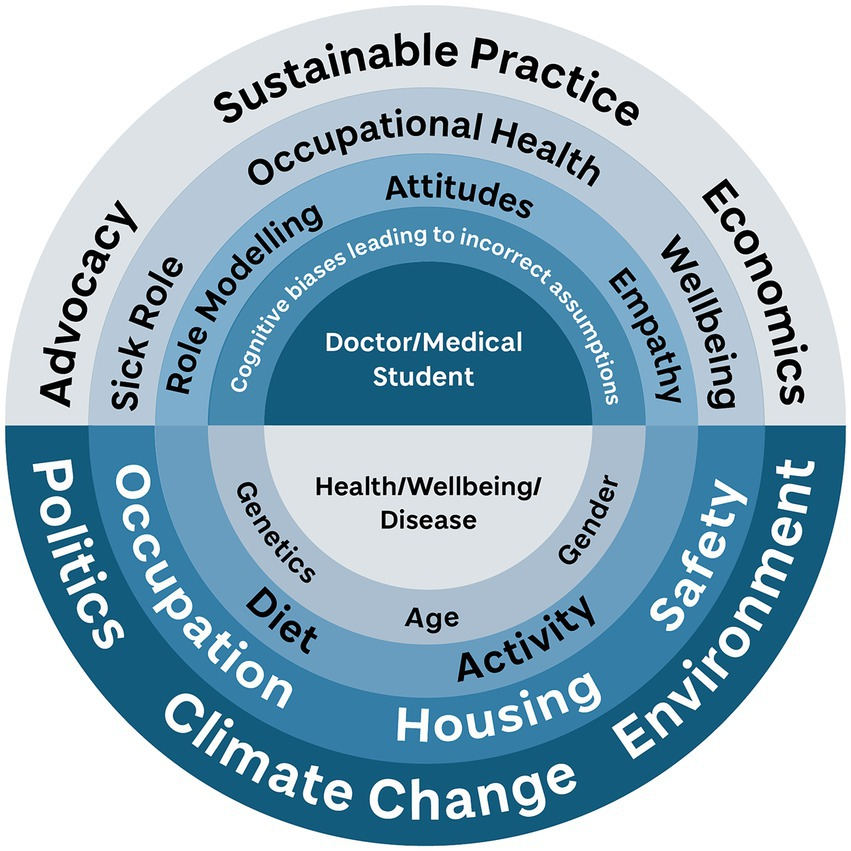
In a world where healthcare and its education are undergoing seismic shifts, the University of Dundee is pioneering a transformative approach. The institution is integrating public health into its medical curriculum, responding to the rapid technological, political, and social changes reshaping the medical landscape.