Global Surge in Wearable Healthcare Devices Market
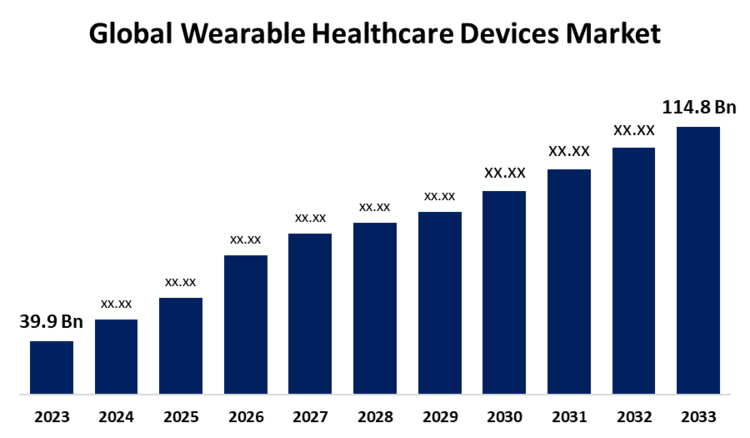
The global wearable healthcare devices market is on a remarkable growth trajectory, projected to escalate from USD 39.9 billion in 2023 to an impressive USD 114.8 billion by 2033. This surge, at a compound annual growth rate (CAGR) of 11.15%, underscores the increasing demand for proactive health management and advancements in sensor technology.
Wearable healthcare devices, including smartwatches and trackers, have become essential tools for individuals eager to monitor and manage their health proactively. These devices are more than just fitness trackers; they offer a multitude of functions such as heart rate monitoring, smartphone notifications, and integration with third-party applications. However, the continuous health monitoring they provide raises significant concerns about the security and privacy of sensitive health data.
Market Segmentation and Trends
The market is categorized by product types, applications, and distribution channels. Smartwatches are anticipated to lead the product segment, while the general health and fitness application segment is expected to dominate due to the growing focus on real-time health monitoring. E-commerce emerges as the leading distribution channel, facilitating the availability of these devices through digital platforms.
Geographical Insights
North America holds the largest market share, driven by favorable reimbursement laws, high per capita spending on advanced technologies, and significant investments by market players. Meanwhile, the Asia-Pacific region is expected to experience the fastest growth, propelled by initiatives to reduce patient hospital stays in countries like China, Japan, and India.
Competitive Landscape
The competitive landscape features major vendors such as Dr. Reddy’s Laboratories Ltd, Samsung Electronics, Huawei Technologies, Fitbit, and Apple. These companies continue to innovate and collaborate, fueling the market’s expansion. A notable development is the introduction of Nerivio, a non-invasive wearable for managing migraines, by Dr. Reddy’s Laboratories in Germany, marking its expansion in the European digital therapy market.
For those interested in delving deeper, the complete report and related documents are accessible through the following link. This information is crucial for stakeholders aiming to strategize and capitalize on burgeoning opportunities within the wearable healthcare devices marketplace.
More Articles
Getting licensed or staying ahead in your career can be a journey—but it doesn’t have to be overwhelming. Grab your favorite coffee or tea, take a moment to relax, and browse through our articles. Whether you’re just starting out or renewing your expertise, we’ve got tips, insights, and advice to keep you moving forward. Here’s to your success—one sip and one step at a time!
Chat‑driven AI tools now let real estate professionals edit listing photos instantly—removing clutter, brightening rooms, updating décor, and even virtually staging a space using simple text prompts. This speed and flexibility help agents create stronger first impressions, accelerate turnover, and present properties more honestly and attractively. With interactive tools becoming common on property sites and transparent editing standards emerging, AI photo enhancement is quickly becoming an essential part of modern real estate marketing.
The commercial real estate landscape is heading into 2026 with powerful momentum and a fresh set of challenges. PwC’s latest Emerging Trends report places Jersey City and North Jersey among the top U.S. markets to watch, driven by redevelopment energy, tech‑driven infrastructure needs, and the surge of mixed‑use communities. But developers also face rising construction costs, high interest rates, and municipal fatigue that’s stalling projects statewide. From booming demand for data centers to the transformation of retail corridors and the rise of community‑based health care facilities, the year ahead is set to redefine how—and where—growth happens.
The Federal Reserve has lowered rates to their lowest level since 2022, marking the third cut in four months and setting the stage for gradual downward pressure on mortgage rates in 2026. While mortgage rates don’t drop automatically when the Fed cuts, easing inflation and a softening 10‑year Treasury yield suggest improved affordability, renewed refinancing opportunities and a more active market ahead for real estate and mortgage professionals.
New research reveals that a growing share of Gen Z no longer believes homeownership is within reach, leading to major behavioral changes. With first-time buyer age nearing 40 and affordability hitting new lows, young adults are saving less, working less, and taking on riskier investments. Studies from Northwestern and the University of Chicago show that when the dream of owning a home feels impossible, motivation declines—and financial priorities shift dramatically.
The FTC has issued warning letters to 13 rental software companies over concerns that their systems may hide mandatory fees and prevent landlords from displaying accurate rental prices. While not formal allegations, the move signals rising federal scrutiny following major enforcement actions against Greystar, RealPage, and Invitation Homes. For real estate professionals, this development highlights the growing importance of transparent pricing, ethical advertising, and staying ahead of regulatory shifts in today’s tech‑driven rental market.
A New York man employed only as a driver for a hedge fund founder allegedly reinvented himself as a seasoned investment professional, convincing three investors to trust him with their money. According to the SEC’s complaint, he created a deceptive LLC, used firm marketing materials to appear legitimate, and conducted risky, unauthorized trades that wiped out accounts. The scheme left the victims with more than $1 million in combined losses, prompting the SEC to pursue fraud charges and a permanent industry ban.