Griffin Funding Appoints John Jones as SVP of Growth, Aiming for Bold 2030 Expansion
The mortgage world received a jolt of momentum this week as consumer-direct non-QM lender Griffin Funding announced the appointment of John Jones as Senior Vice President of Growth and EOS Integrator. The move signals a bold shift in the company’s expansion strategy and its long-term ambitions in the non-QM market.
Leadership Built for Scale
Jones has already been deeply embedded in the Griffin Funding ecosystem, serving as the company’s fractional integrator and COO since April 2025. His new role, effective December 1, is crafted around accelerating performance, refining operations, and ultimately steering the company toward a monumental goal: reaching $3 billion in annual non-QM loan volume by 2030.
“John has brought tremendous structure and clarity to our organization,” said founder and CEO Bill Lyons. “Moving him into a full-time Integrator and SVP of Growth role allows us to scale responsibly, deepen our non-QM leadership, and continue delivering a 5-star borrower experience.”
Multi‑Year Expansion Fueled by Strategy & Execution
Jones’s mandate is broad — and bold. His focus areas include leadership development, new market penetration, performance optimization, and strengthening both sales and operational channels. The company’s VP of Strategy, Chloe Shubin, highlighted Jones’s influence across departments, emphasizing how he aligns long‑term strategy with real‑time execution.
Griffin Funding currently operates from San Diego, Irvine, and Scottsdale, supported by $72.5 million in warehouse line liquidity. As of mid‑November, the company’s closed deal amount stands at an impressive $346.3 million — a powerful foundation for the expansion strategies now underway.
Why This Matters for Mortgage Pros & Aspiring Leaders
This leadership transition serves as a compelling reminder of how evolving skillsets, strategic planning, and operational mastery can shape the future of the mortgage sector. For professionals in real estate, finance, or lending, moves like this underscore the value of continuous education and leadership development.
Institutions like Cameron Academy play a key role in helping today’s mortgage professionals elevate their credentials and prepare for tomorrow’s leadership positions. With licensing programs, advanced coursework, and flexible online education, Cameron Academy supports professionals looking to rise with — and beyond — the rapidly expanding non‑QM market.
Get the Full Story
To explore Griffin Funding’s leadership update in greater detail, read the original HousingWire report here: Read the full article.
More Articles
Getting licensed or staying ahead in your career can be a journey—but it doesn’t have to be overwhelming. Grab your favorite coffee or tea, take a moment to relax, and browse through our articles. Whether you’re just starting out or renewing your expertise, we’ve got tips, insights, and advice to keep you moving forward. Here’s to your success—one sip and one step at a time!
In 2026, financial advisors are no longer just experimenting with AI — they’re relying on it. Once confined to back-office duties, AI now supports meeting prep, portfolio analysis, and even early-stage financial planning. Advisors say the tech is strengthening client relationships by freeing them from administrative overload, though entry-level roles like paraplanners may feel the squeeze as automation accelerates.
Cybercriminals are weaponizing AI to launch highly convincing email scams and system breaches across the mortgage industry, overwhelming lenders and servicers whose cybersecurity measures can’t keep up. With major companies already hit and regulation lagging behind, experts warn the sector—now considered critical infrastructure—must rapidly upgrade protections, collaborate on threat intelligence, and improve AI governance before the risks escalate further.
Escrow payments are quietly surging across the country as property taxes and insurance premiums spike—pushing many homeowners toward delinquencies and even foreclosure. New data from Cotality shows the sharpest increases hitting the South and Midwest, with Florida among the hardest‑hit states. Even with fixed mortgage rates, rising escrow requirements are driving monthly payments higher and threatening affordability heading into 2026.
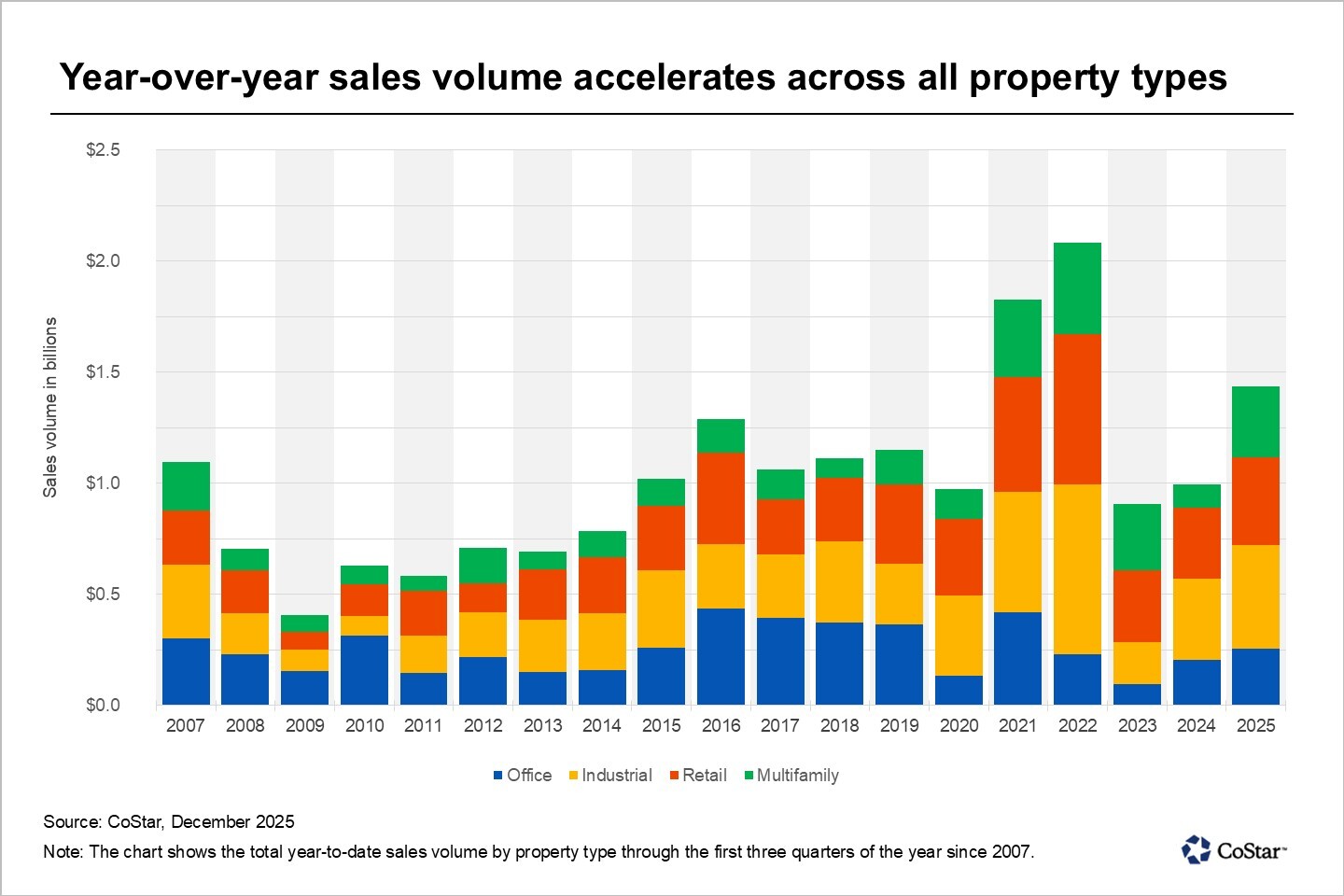
Milwaukee entered 2025 with renewed momentum, posting its strongest commercial real estate sales volume in three years. After a period of uncertainty and high capital costs, investors are returning with a sharper focus on quality assets, realistic pricing, and reliable cash flow. Activity is increasing across industrial, office, multifamily, and retail sectors, signaling a broad-based recovery fueled by stabilizing interest rates and improved market confidence.
As 2026 approaches, the title insurance industry is navigating a complex mix of market recovery, rising fraud threats, and sweeping regulatory changes. Industry leaders say the path forward centers on smarter technology, leaner operations, and stronger support for title agents. With AI-driven workflows, enhanced fraud prevention, and new compliance demands—including FinCEN’s expanded Geographic Targeting Orders—companies like Stewart and First American are reshaping how title work gets done. For real estate and mortgage professionals, the year ahead promises more automation, heightened standards, and major opportunities for those who stay ahead of the curve.
The real estate industry is undergoing a major transformation in 2025 as advancements in AI, proptech, blockchain, and data intelligence redefine how properties are marketed, valued, financed, and experienced. From instant digital valuations and immersive virtual tours to tokenized investments and predictive analytics, technology is reshaping every stage of the real estate lifecycle. Professionals who embrace these innovations—while maintaining the human expertise clients still rely on—will lead the next era of the industry.