Hawai‘i’s 2026 Economic Crossroads: What Professionals Across the U.S. Should Be Watching
If you’ve been tracking national economic trends, you know that 2026 is shaping up to be a transformational year. But nowhere is this shift more pronounced than in Hawai‘i—a place where global and domestic pressures don’t simply influence the economy… they reshape it entirely.
The team at Hawaii Business Magazine recently released one of the most thorough economic outlooks to date. Covering tourism, real estate, construction, banking, health care, and small business, it paints a compelling portrait of a state facing change—and opportunity.
The Big Picture: A Resilient But Vulnerable Island Economy
Hawai‘i steps into 2026 with a unique mix of strengths and vulnerabilities. Construction is accelerating, but tourism—the state’s largest private‑sector driver—is slowing. Federal spending, a major stabilizing force, faces looming reductions. Inflation and global trade tensions continue to ripple through every sector.
“Together, tourism and federal spending represent almost a third of Hawai‘i’s economy,” says UHERO’s Carl Bonham. “Any slowdown hits hard and spreads fast.”
Yet these challenges often spark opportunity—especially for professionals in construction, real estate, and finance who understand how shifting markets create new openings.
While other states face construction downturns, Hawai‘i’s sector is projected to remain robust. Billions in federal and military spending, major infrastructure upgrades, and critical housing projects are fueling long‑term demand.
NAVFAC alone is expected to award $8 billion in new contracts over the next decade—creating waves of opportunity for project managers, engineers, inspectors, and real estate‑adjacent professionals.
This boom intersects heavily with real estate licensing—an area where schools like Cameron Academy continue to help professionals enter fast‑growing markets nationwide.
Tourism: Slowing Down at the Worst Possible Time
Visitor arrivals are dropping, and because U.S. mainland travelers now make up roughly 80% of all visitors, any mainland slowdown has immediate effects.
International travel is also lagging. Japan and Canada remain far below pre‑pandemic numbers due to currency challenges and economic uncertainty.
With the Hawai‘i Convention Center partially closing for repairs until 2028, analysts expect up to 60% of convention business to temporarily disappear.
Residential Real Estate: A Flicker of Light at the End of the Tunnel
Finally—good news. Falling mortgage rates have already sparked rising demand on O‘ahu and beyond. Sales activity, buyer interest, and median prices all began trending upward in late 2025.
NAR Chief Economist Lawrence Yun predicts double‑digit sales growth in 2026. However, the market still faces:
high condo fees
elevated insurance premiums
limited supply
Even so, lower rates could unlock pent‑up movement from both hesitant buyers and long‑waiting sellers.
Commercial Real Estate: Stable, Surprisingly Steady
Compared to national volatility, Hawai‘i’s commercial market is holding steady:
Industrial space remains tight but growing
Retail continues to show resilience
Office vacancies remain below national averages
Local investors dominate recent acquisitions
Large land purchases signal strong long‑term confidence in Hawai‘i’s business environment.
Health Care & Small Business: The Pressure Points
Two crucial sectors are entering turbulent territory.
Health care faces:
anticipated cuts to Medicaid and ACA subsidies
tighter medical student loan caps
a worsening staffing shortage
Small businesses face:
higher shipping costs
tariff‑driven price increases
minimum wage hikes
a weakening tourism base
Banking and Finance: Cautious Optimism
Hawai‘i’s banking sector remains one of the strongest in the nation. Leaders expect cautious but improving conditions throughout 2026.
Lower interest rates may trigger increased lending, commercial expansion, and stronger housing activity.
“We have to be successful here in order to be successful—period,” says Peter Ho, CEO of Bank of Hawai‘i. “If Hawai‘i isn’t successful, none of us will be.”
Why This Matters to Professionals Everywhere
Hawai‘i’s economic challenges reflect broader national forces:
shifting federal priorities
global tariff fluctuations
AI‑driven disruptions
affordability crises
real estate recalibration
For professionals in fields like real estate, finance, construction, health care, or public policy, Hawai‘i serves as a preview of what’s emerging across the U.S.
Where Cameron Academy Fits In
As Hawai‘i and the nation continue to evolve, one truth remains: professionals who keep learning will lead the future.
Whether you’re entering a new field or expanding into multi‑state licensing, Cameron Academy supports learners nationwide in real estate, mortgage, insurance, medical administration, and more.
A Final Thought
Hawai‘i has reinvented itself many times—through the whaling boom, plantation era, and global tourism rise. Its next transformation will be shaped by AI, technology, sustainability, and long‑overdue housing reforms.
If history tells us anything, Hawai‘i won’t just endure 2026—it will evolve.
Explore the complete original analysis at
Hawaii Business Magazine.
It’s a must‑read for anyone tracking one of the most dynamic economies in America.
More Articles
Getting licensed or staying ahead in your career can be a journey—but it doesn’t have to be overwhelming. Grab your favorite coffee or tea, take a moment to relax, and browse through our articles. Whether you’re just starting out or renewing your expertise, we’ve got tips, insights, and advice to keep you moving forward. Here’s to your success—one sip and one step at a time!
Despite billions poured into proptech and a decade of flashy digital upgrades, the real estate experience remains largely unchanged. Apps made processes smoother, but not more transparent — because the industry’s core structures, data control and power dynamics stayed the same. True disruption will come from platforms that shift information and control to consumers, not just digitize outdated systems.
Early 2026 is delivering a clear message: commercial real estate is entering a recalibration phase. Construction is softening, pending home sales just saw a sharp drop, consumer sentiment is inching upward but remains fragile, and capital markets are tightening as major CRE sectors face rising distress. From data centers powering ahead to CMBS foreclosures climbing and office-to-residential conversions gaining momentum, professionals across real estate, mortgage, insurance, and finance need to stay sharp as the industry shifts.
Discover the real estate roles earning the biggest paychecks in 2026. From investment consultants to commercial leasing managers, this breakdown highlights the salaries, responsibilities, and career paths offering the strongest financial potential in today’s evolving market—perfect for newcomers and seasoned professionals mapping their next big move.
Montana is taking major steps to remove outdated licensing barriers and strengthen its workforce. Governor Greg Gianforte has created a new Licensing Reform Task Force aimed at modernizing regulations, speeding up approvals, and helping more professionals enter high‑demand fields like construction and healthcare. With licensing numbers doubling over the past decade and rural communities facing critical shortages, the state is pushing for faster, more efficient pathways to work. The task force begins meeting in February and will deliver its full reform report by September 2026 — a move that could influence licensing modernization efforts nationwide.
Artificial intelligence has officially moved from novelty to necessity in the real estate world. According to new industry data, 97% of brokerage leaders say their agents now rely on AI tools for everything from listing descriptions to full-scale marketing campaigns. As adoption skyrockets, so do concerns over training, accuracy, and compliance — especially among smaller firms. The message is clear: for today’s real estate professionals, AI literacy isn’t optional anymore.
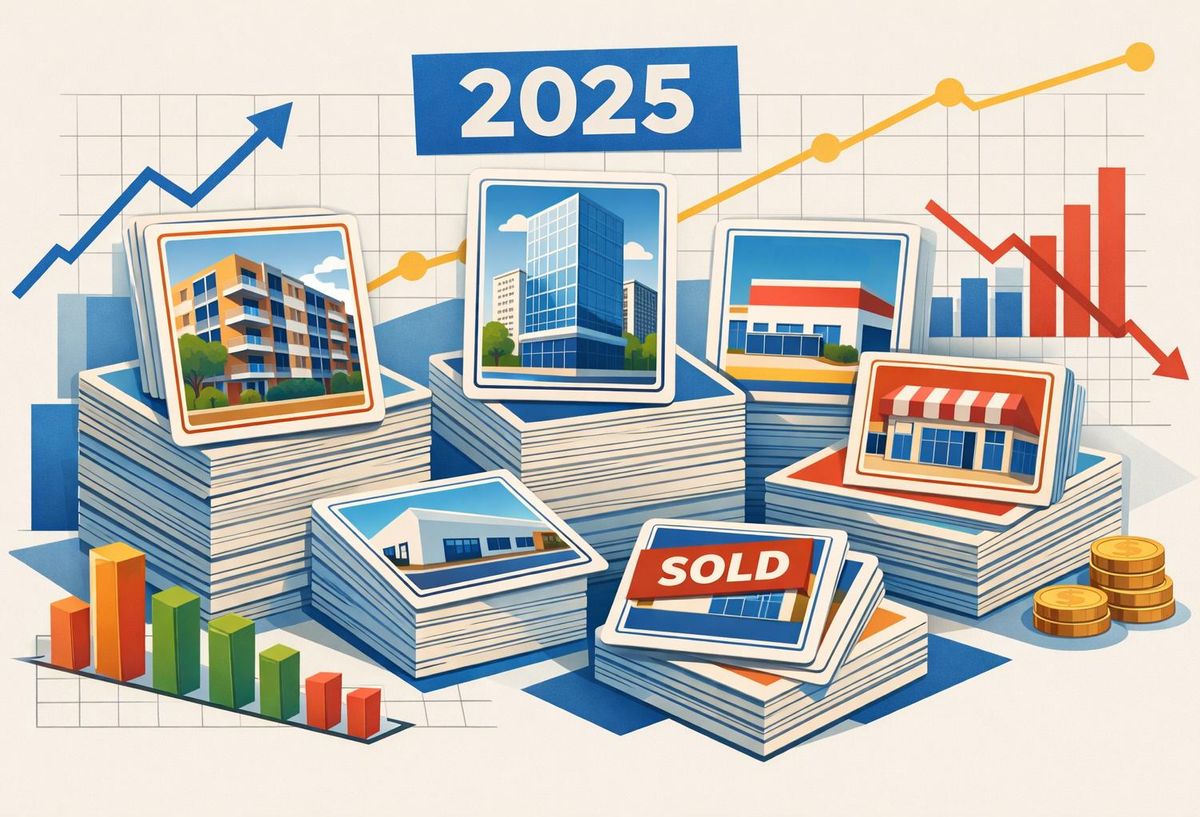
Commercial real estate roared back to life in 2025, with more than $255B pouring into multifamily, industrial, office and retail assets. Major investors moved fast on falling interest rates, improving bond yields and rising confidence across sectors. Multifamily dominated with over $115B in deals, industrial surged under private equity leadership, office saw renewed activity from owner-users and retail proved surprisingly resilient. For today’s real estate and finance professionals, the message is clear: opportunity favors those who stay informed and ready to act.